Henri Mabille, the promising rise of a young talent in Braine-l'Alleud
24 Feb 2026
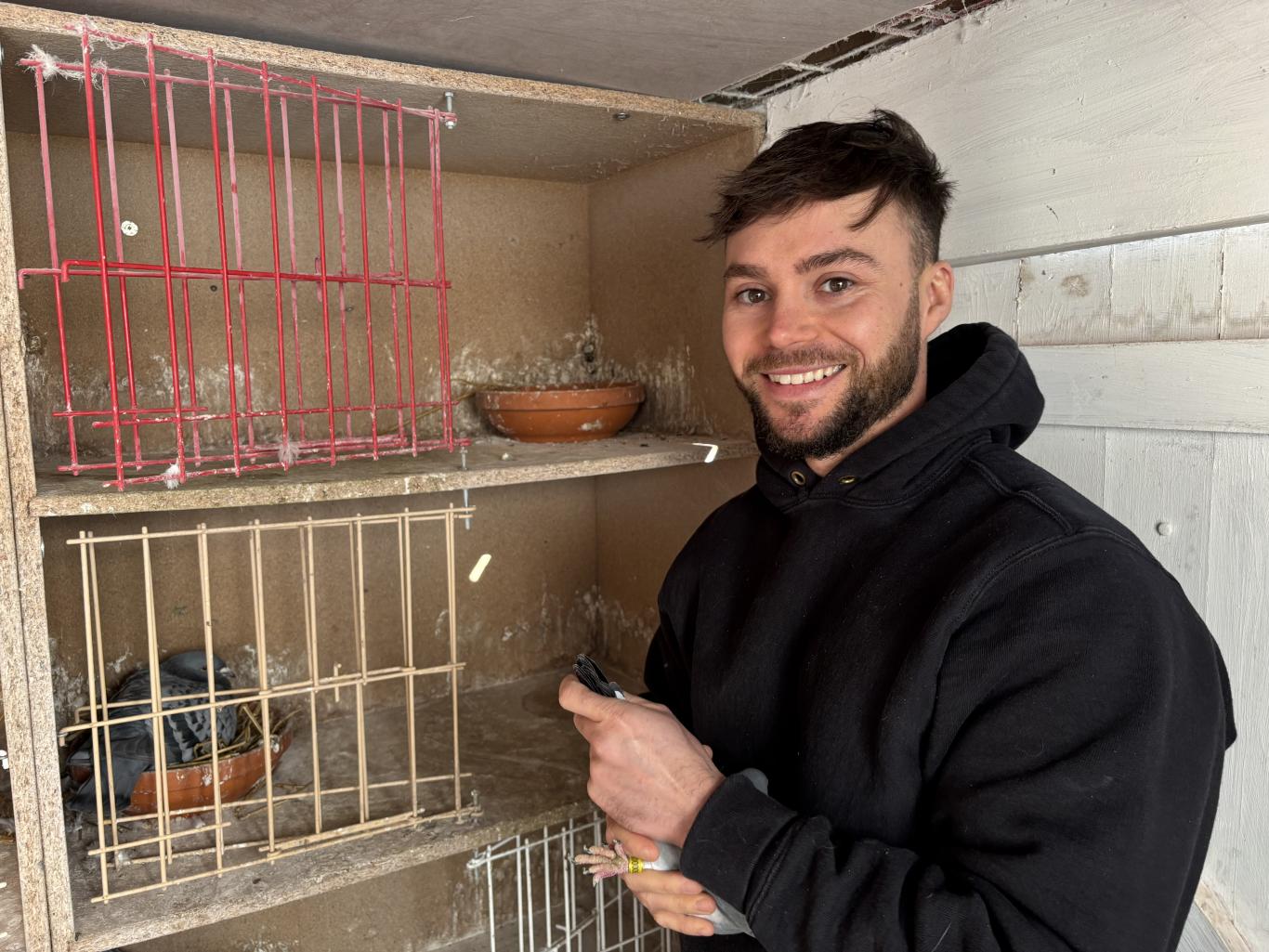
At only 28 years old, this young pigeon fancier from Braine-l'Alleud embodies the new generation of pigeon fanciers. A professional osteopath, he has been passionate about pigeons since childhood. He has transformed a childhood dream into a structured, ambitious, and already promising project.
A passion born in childhood.
It all began very early. As a child, already "mad about pigeons," he spent hours observing a small tower of ornamental pigeons given to him by Vantuyn. One memory still stands out vividly: when he was 10, on his way home from school, he stopped to admire the pigeons of the local fanciers. Back then, there were about ten of them competing in pigeon racing. Now there are only three... A change that only strengthened his desire to continue the tradition. At 11, driven by an unprecedented determination, he jumped on his bike and went to Jean-Pierre Palm's house to ask for advice. It would prove to be a crucial meeting. His future mentor welcomed him, gave him guidance, and guided him through his first steps. He purchased a small loft for Baka pigeons and began breeding with a dozen youngsters he had received from his mentor. Two intense learning periods followed.
A forced break… but an undiminished passion.
His studies took priority. He began a demanding osteopathy training program and had to put pigeon racing aside for a while. Yet, he never completely severed his ties with Jean-Pierre Palm: he continued to visit him to watch the pigeons being released. Palm became much more than an advisor: a true mentor in pigeon racing. Then came an even greater challenge: health problems that landed him in the hospital. At that time, he had only one thought: pigeons. This realization served as a catalyst. In 2021, he decided to return to the sport. He started modestly with two young pigeons from Descheemaecker. In 2022, he entered about fifteen young pigeons into the race. In 2023, he expanded his pigeon collection to around thirty and, due to a lack of space, had to purchase a 3.5-meter aviary. Things had really picked up.
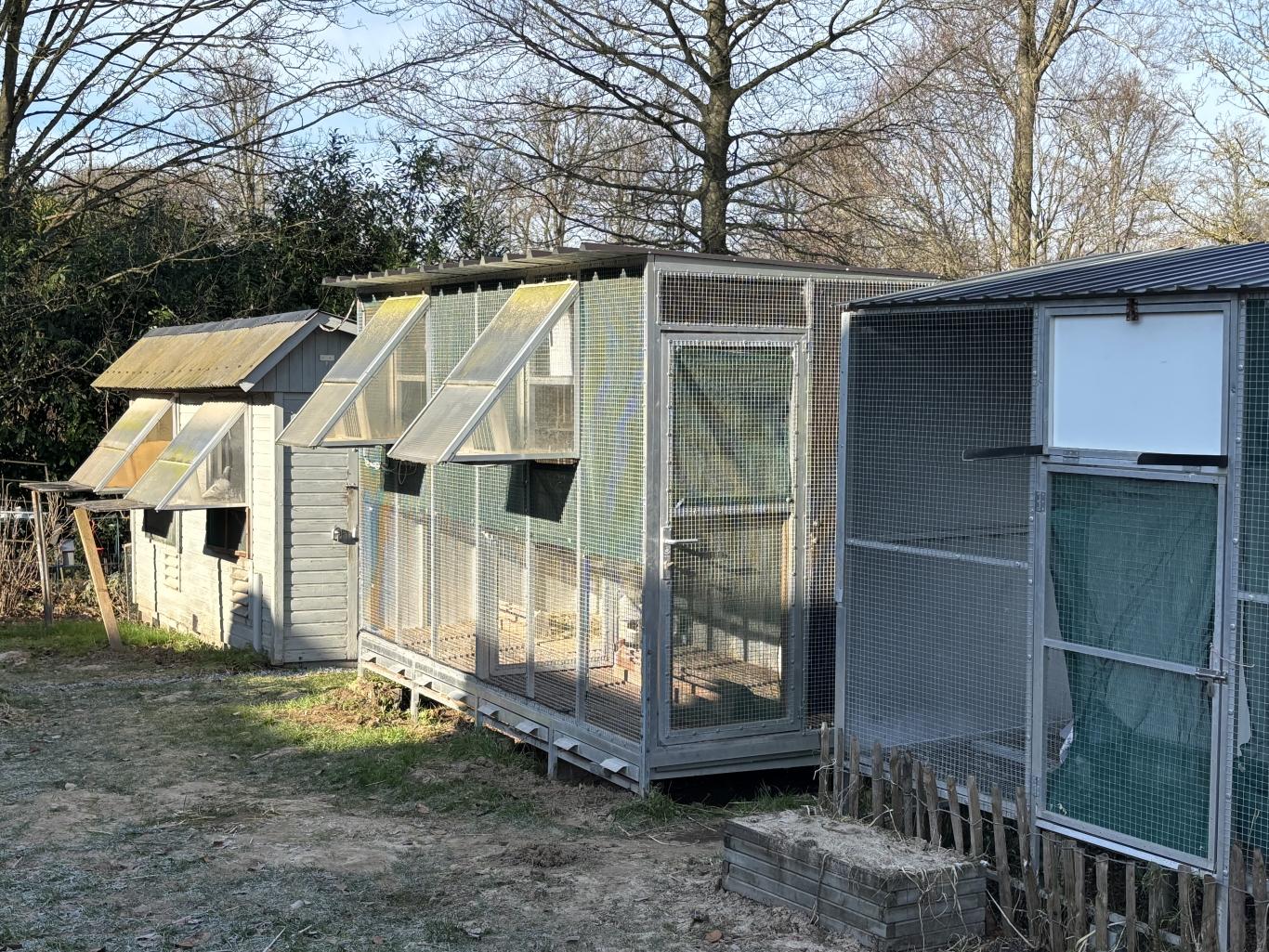
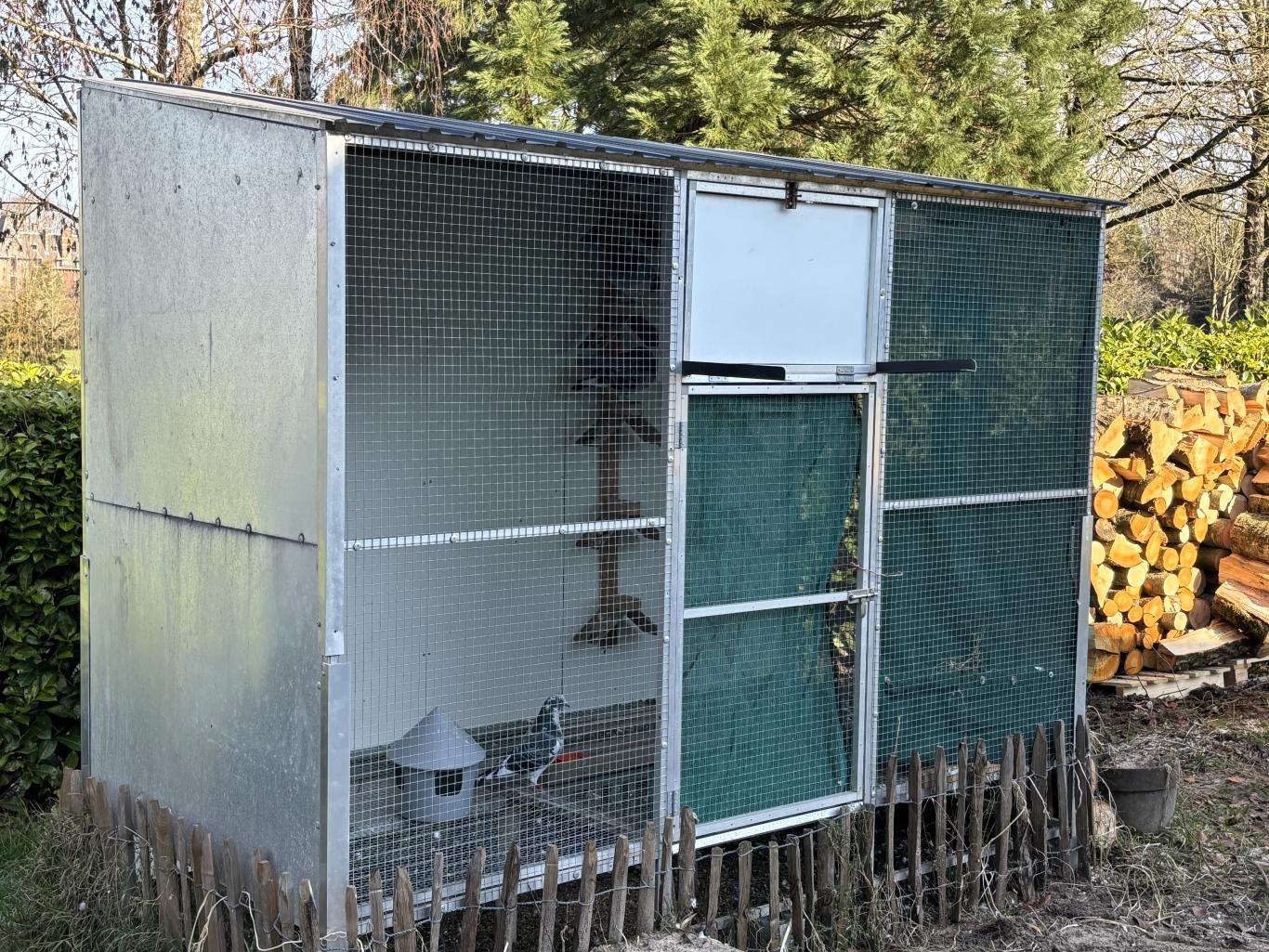
Solid and well-considered lineage
Today, 80% of his pigeons still come from Jean-Pierre Palm. This core line is supplemented by targeted contributions from Christian Derycke, as well as five breeding pigeons recently acquired from Olivier Andries to gradually increase his distance. Olivier Andries will also support and advise him as soon as possible, guiding him towards middle-distance racing. Regular exchanges with Steven Laurent from La Louvière, including a joint pairing, complete this gradual and carefully considered development.Een gestructureerd en ambitieus team
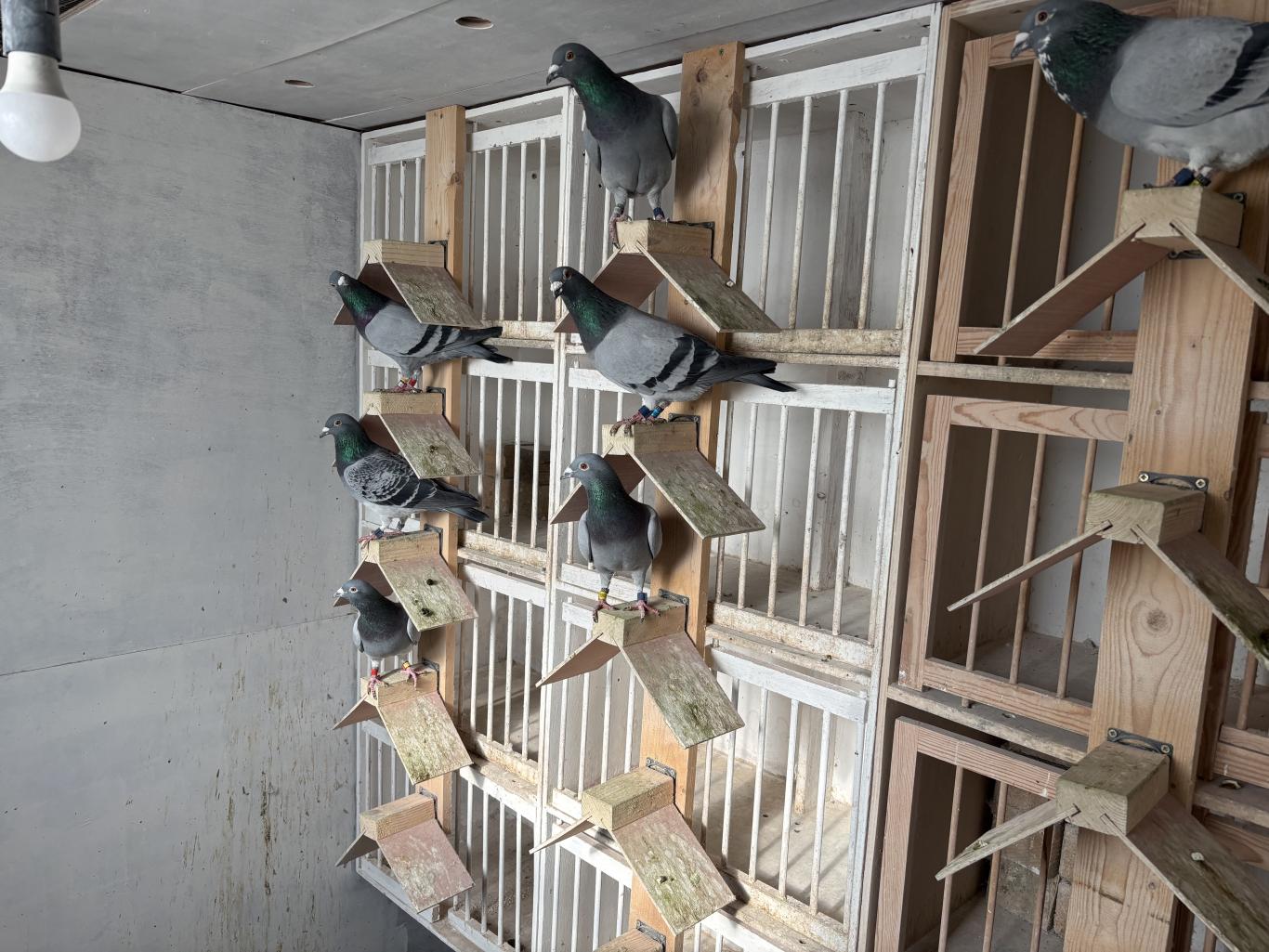
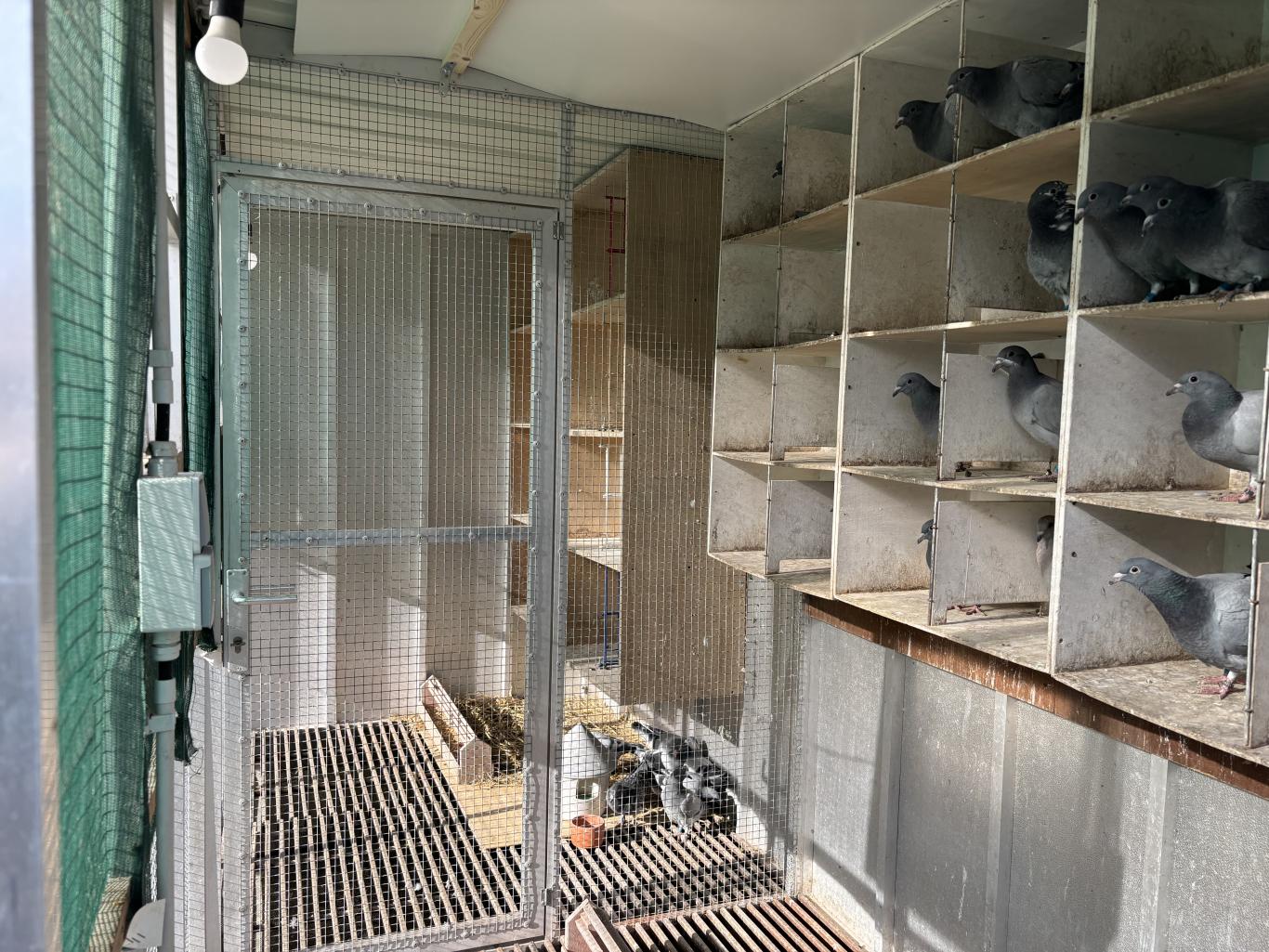
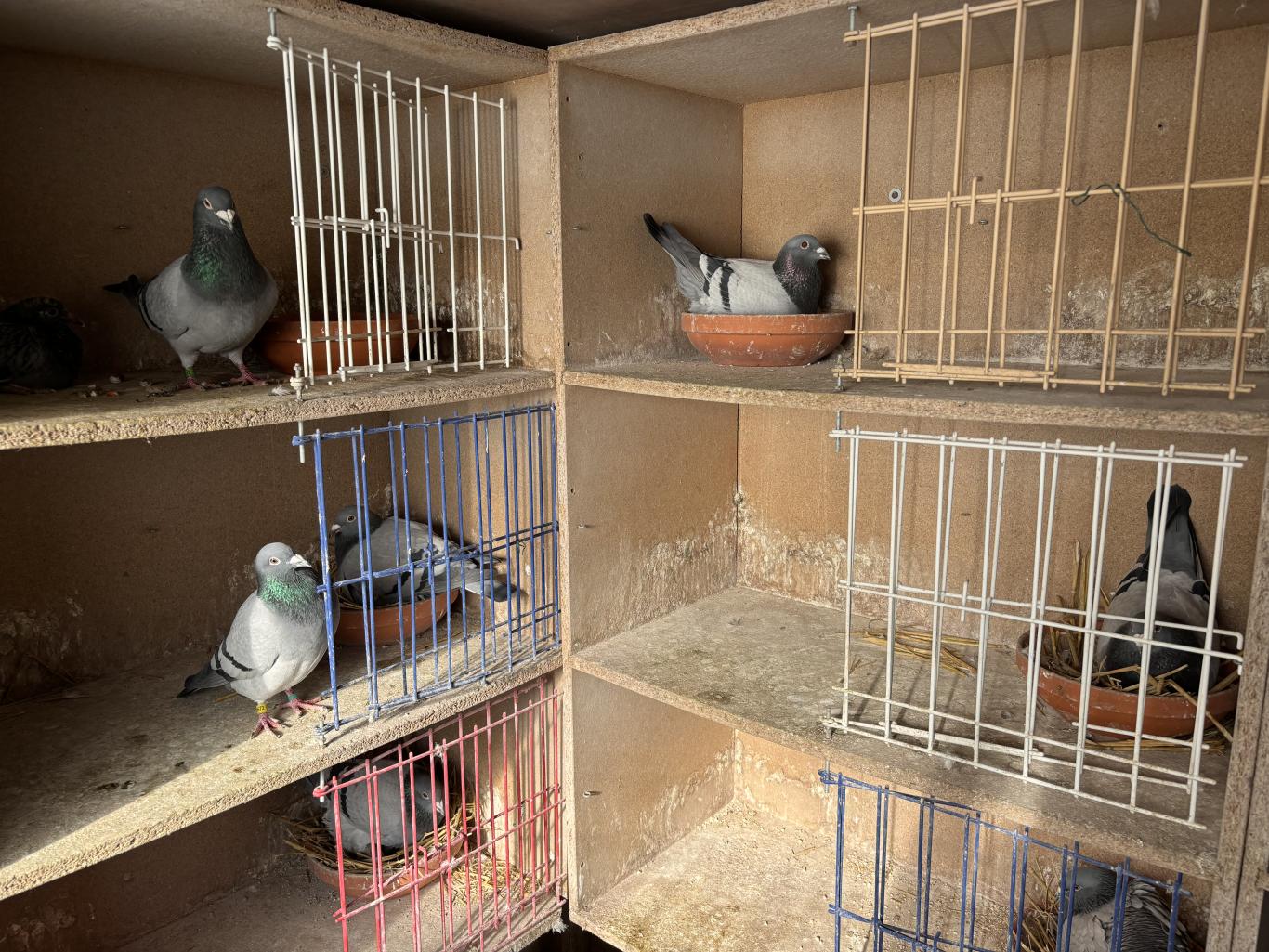
His current team consists of twelve cocks and seven hens. Each pigeon has its partner at home, but he doesn't breed with the racing pigeons. Pairing begins in early March, with the first releases around March 15th. He lets the pigeons brood for about ten days and then begins his season with the hens. The ten breeding pairs were paired on December 6th to produce early-maturing youngsters. Currently, there are about thirty youngsters in the lofts, with the goal of reaching forty. They are led in through a sliding door and will be kept in the dark. His goal is clear: to have them participate as much as possible, including in national competitions, to gain experience and to be able to apply a strict selection procedure.
Motivation and Competition Method
Motivation is gradual and carefully planned. The hens are first placed in the aviary. Before they are basketed, he lets them go to their nest box and takes the time to play with them. They are, as it were, "paired to him," and the partners are only gradually introduced.
The widowers fly in "their territory." Before basketing, they can go to their nest box, and after returning from the race, they are reunited with their hens. His principle is simple but essential: he wants the pigeons to be happy to return.
The training is methodical. The widowers are released around 6:00 a.m., the hens shortly thereafter. If the hens are less "motivated" after the first races, he releases them 30 kilometers away, specifically twice in Thieu, to rekindle their motivation. The young pigeons are gradually trained over short distances before flying two 30 kilometre races and then flying their first race.
Medical Care: Simplicity and Trust
Prevention is the foundation of his system. Breeding pigeons are vaccinated against paramyxovirus and paratyphoid in November. Racing pigeons, both widowers and hens, receive the rotaparamyxovirus vaccine in January. Young pigeons are vaccinated twice with RPvac and against pox.
He rarely uses preventative treatments. Before the start of the season, he schedules only a few days of treatment against trichomoniasis. During the season, he prefers natural solutions, such as tea for respiratory problems, and intervenes only when necessary with a mild booster shot against trichomoniasis.
He has complete confidence in veterinarian Kobe Herbots, whose advice he follows meticulously.
Precise and Tailored Nutrition
Last year, he used Vanrobaeys Sport Light and Sport Ultra mixtures, meticulously following the established schedule. The hens were fed a Versele-Laga Gerry mixture, without hemp, to prevent them from gaining form too quickly. Now that he wants to focus more on short and long-distance races, he plans to switch to richer mixtures, specifically Vandenabeele Beyers Premium for lighter races and Galaxy Energy for longer distances. He always adapts his feeding schedule to the weather to optimize preparation. The cocks are fed twice a day in the feeder, and three times on Thursdays when they participate in medium-distance races. The young pigeons receive one meal per day, and two during races. Until they are two months old, they receive a breeding mixture. Fresh grit is provided daily. He also uses Sedochol combined with brewer's yeast during the moult, apple cider vinegar in the water, Tollyamin, and Réavita Elixir, always in moderation and consistently.
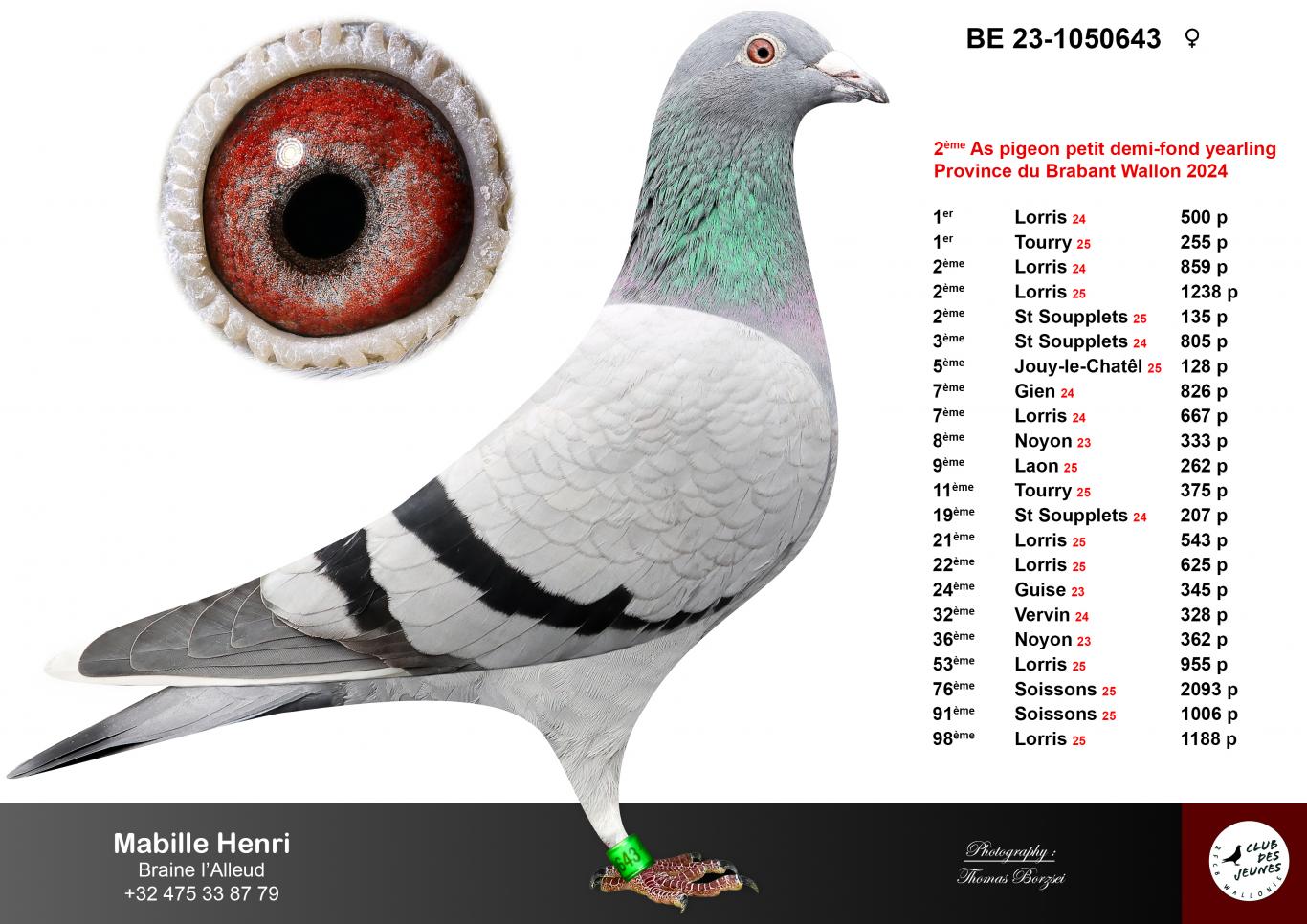
Results 2025
• 2nd in the National Youth Championship 2025 (22-35 years)
• 1st in the Walloon Youth Club Championship (22-35 years)
• 1st in the AWC Youth Championship 2025 (22-35 years) over 6 races
• 4th in the Short-Middle Distance (Old Pigeons) Hainaut-Walloon Brabant 2025
Looking ahead to 2026
Ambitious but realistic, he strives to gradually progress to the longer middle distance and national races. His goal is not to rush things, but to build a strong and successful loft in the long term. His strength lies in his unwavering passion, an experienced mentor, a well-thought-out method, and a deep respect for the pigeon.
This young fancier from Braine-l’Alleud represents the future of modern, structured, and passionate pigeon racing. Starting with a simple, admiring glance at flying pigeons at the age of 10, he is now patiently and determinedly building a cohesive and ambitious loft. Henri would also like to express his sincere gratitude to his mentor in pigeon racing, Jean-Pierre Palm, who has supported him from the beginning. He emphasizes how crucial Palm's support, advice, and guidance have been to his development. He sincerely hopes that every beginner will have the opportunity to be supported, strengthened, and guided in the same way as he has. He also thanks his sister, who is always there to care for the pigeons when he is on vacation, and his partner Camille, who meticulously follows instructions when he is not there. Without their invaluable help, he would not be able to pursue his passion with the same peace of mind.
We sincerely thank him for his hospitality, his availability, and his sincerity during this visit.
We wish him an excellent 2026 season, full of success and fulfillment!
On behalf of the Herbots team,
Julien Lelièvre-Damit