Outstanding performance by Aland Van Houcke: 1st, 2nd, 3rd, 5th… against 3,631 pigeons (old + yearlings) from Pont-Sainte-Maxence.
08 May 2026
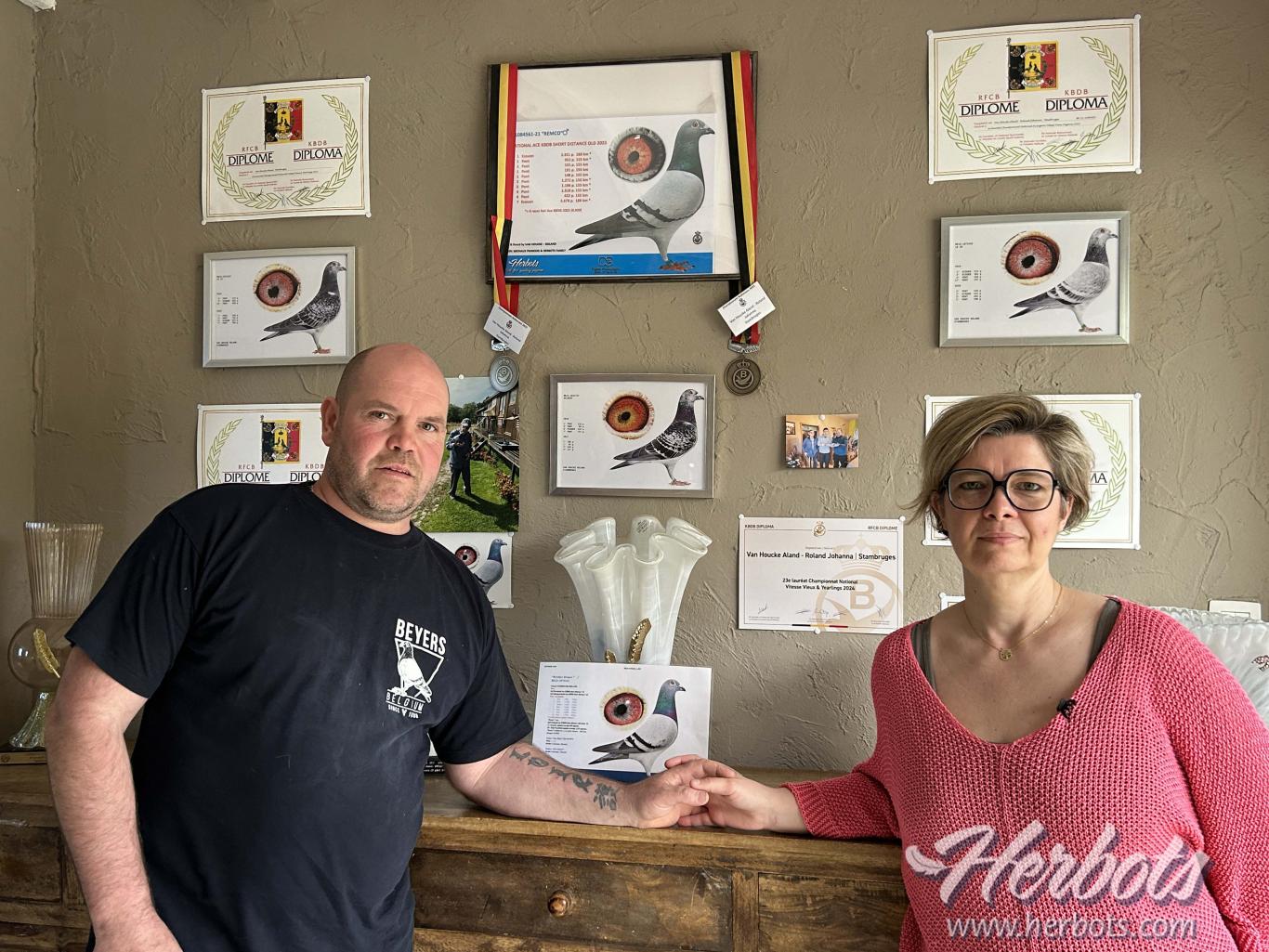
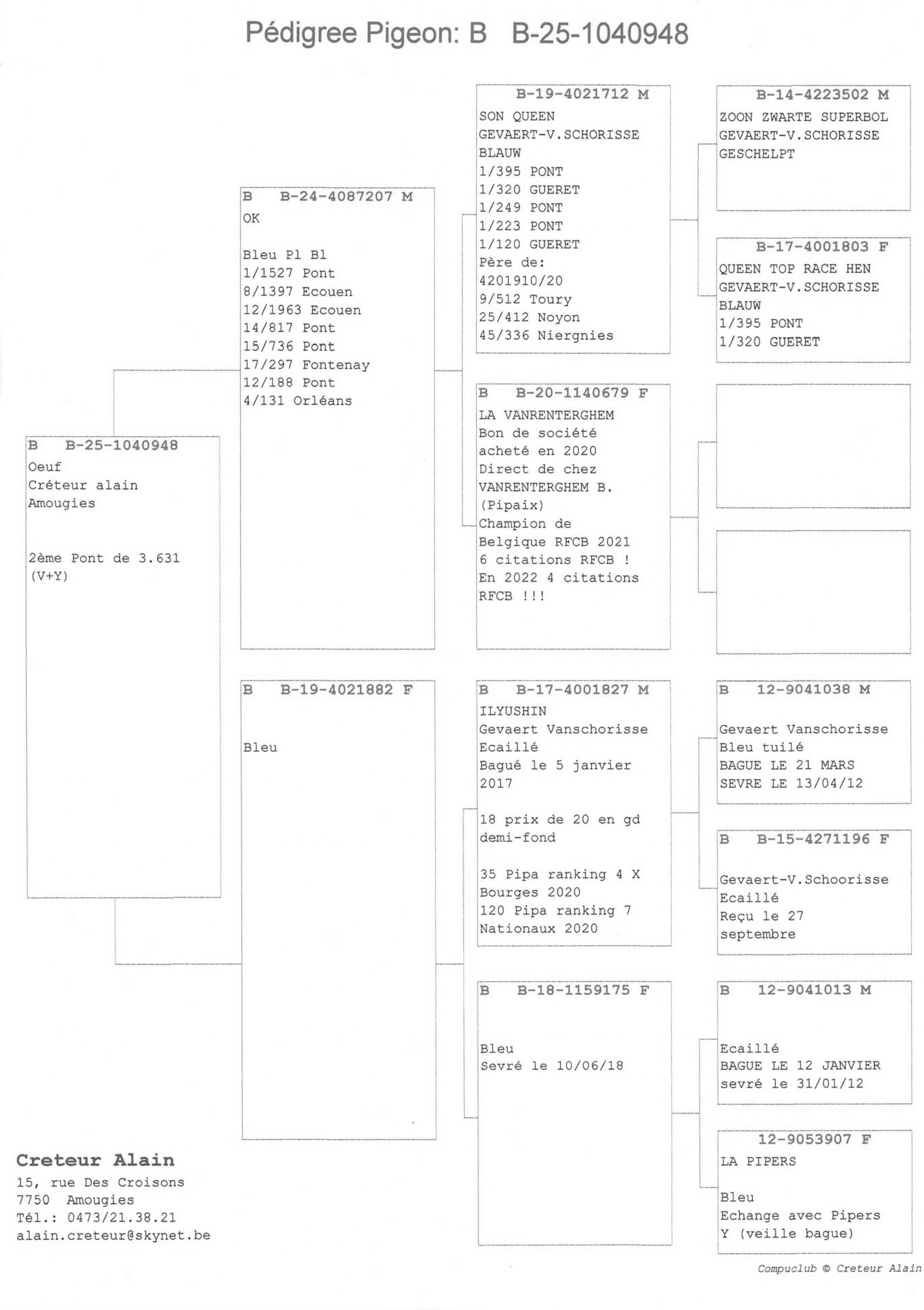
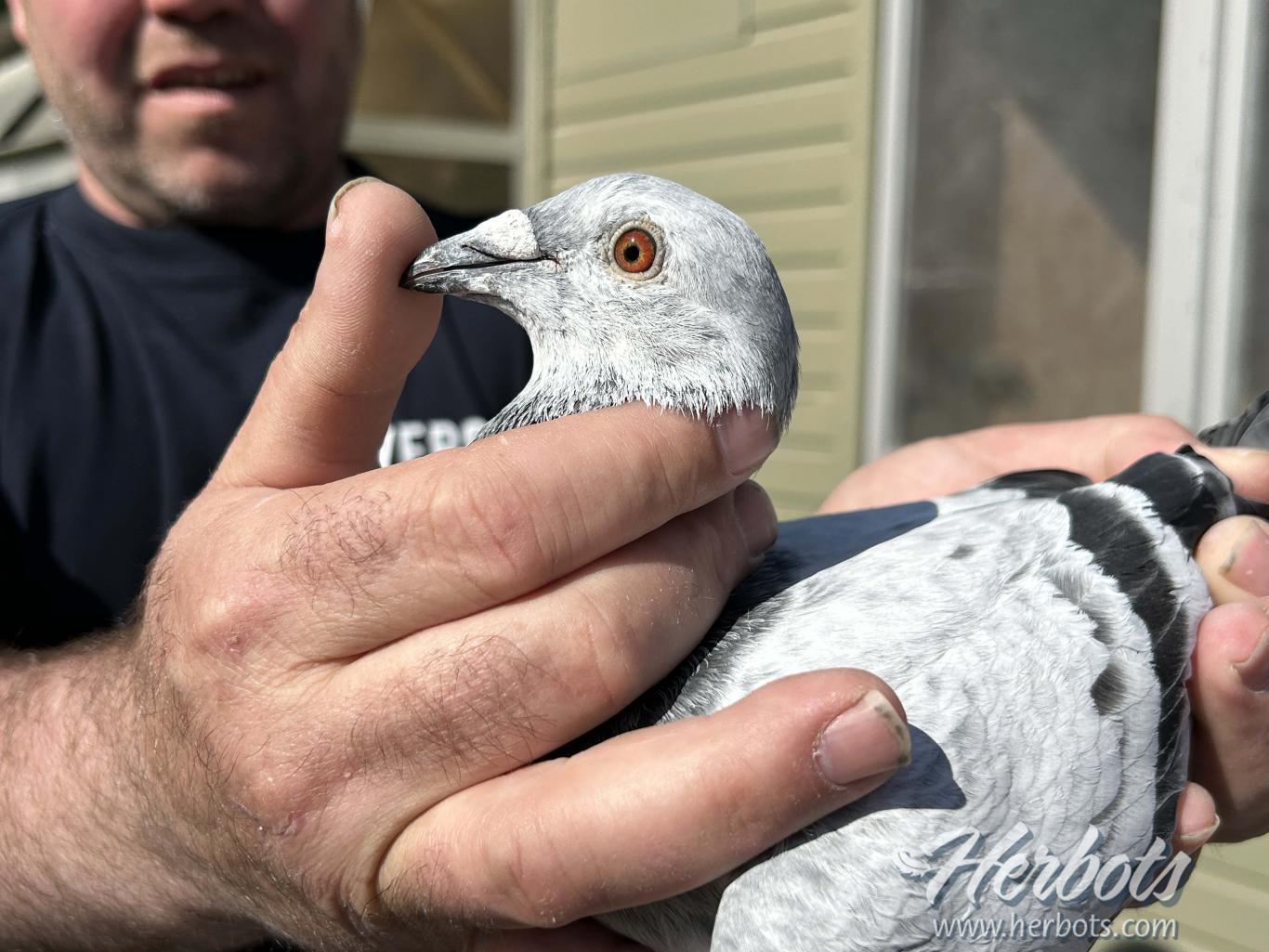
Aland Van Houcke from Stambruges achieved an impressive performance on April 19, 2026, in the Pont-Sainte-Maxence race (155 km), by winning 1st, 2nd, 3rd, 5th… place (20 prizes from 27 entered pigeons) against 3,631 pigeons (old birds + yearlings) released with a north-west wind after 2 days in the basket.
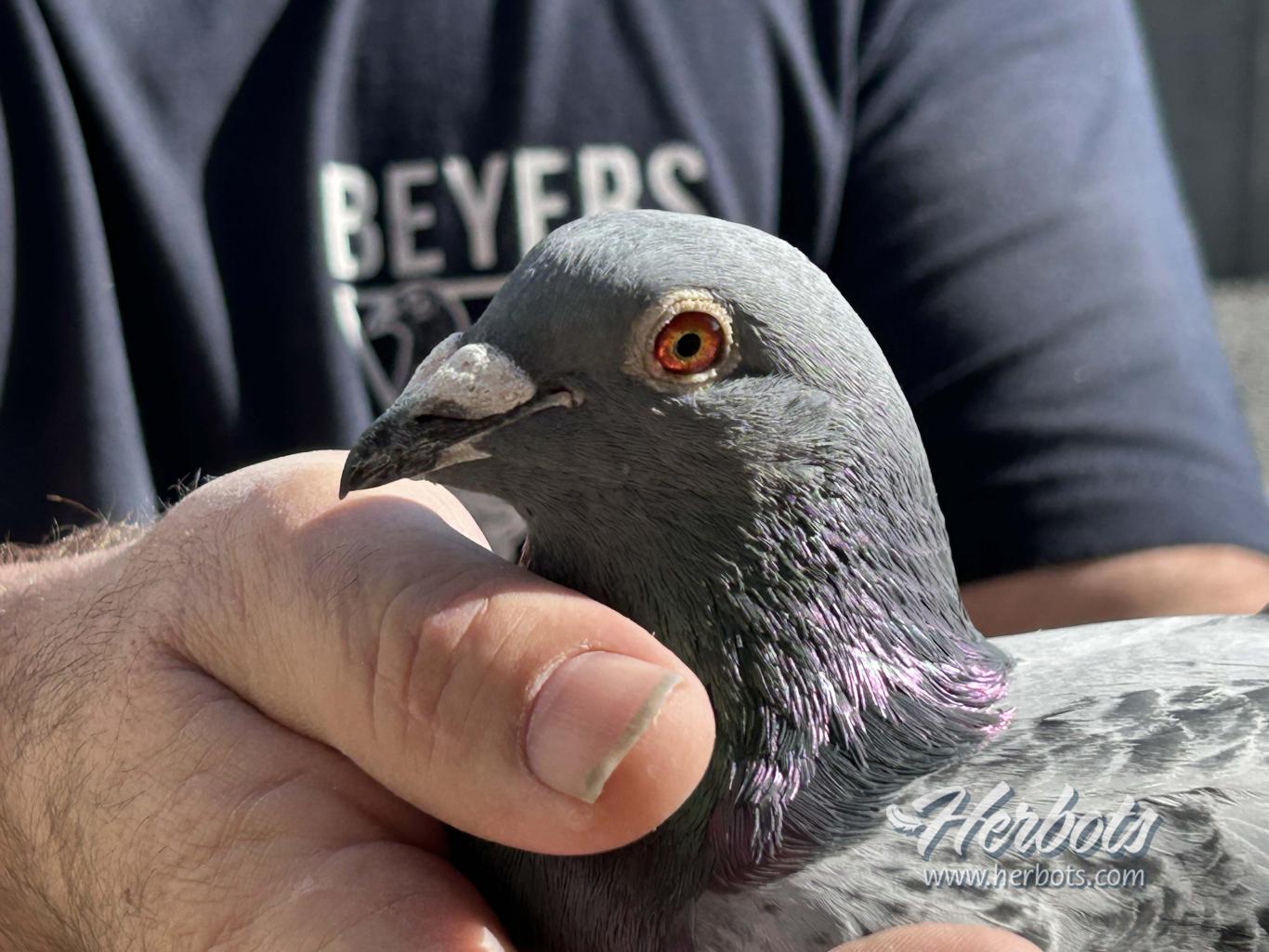
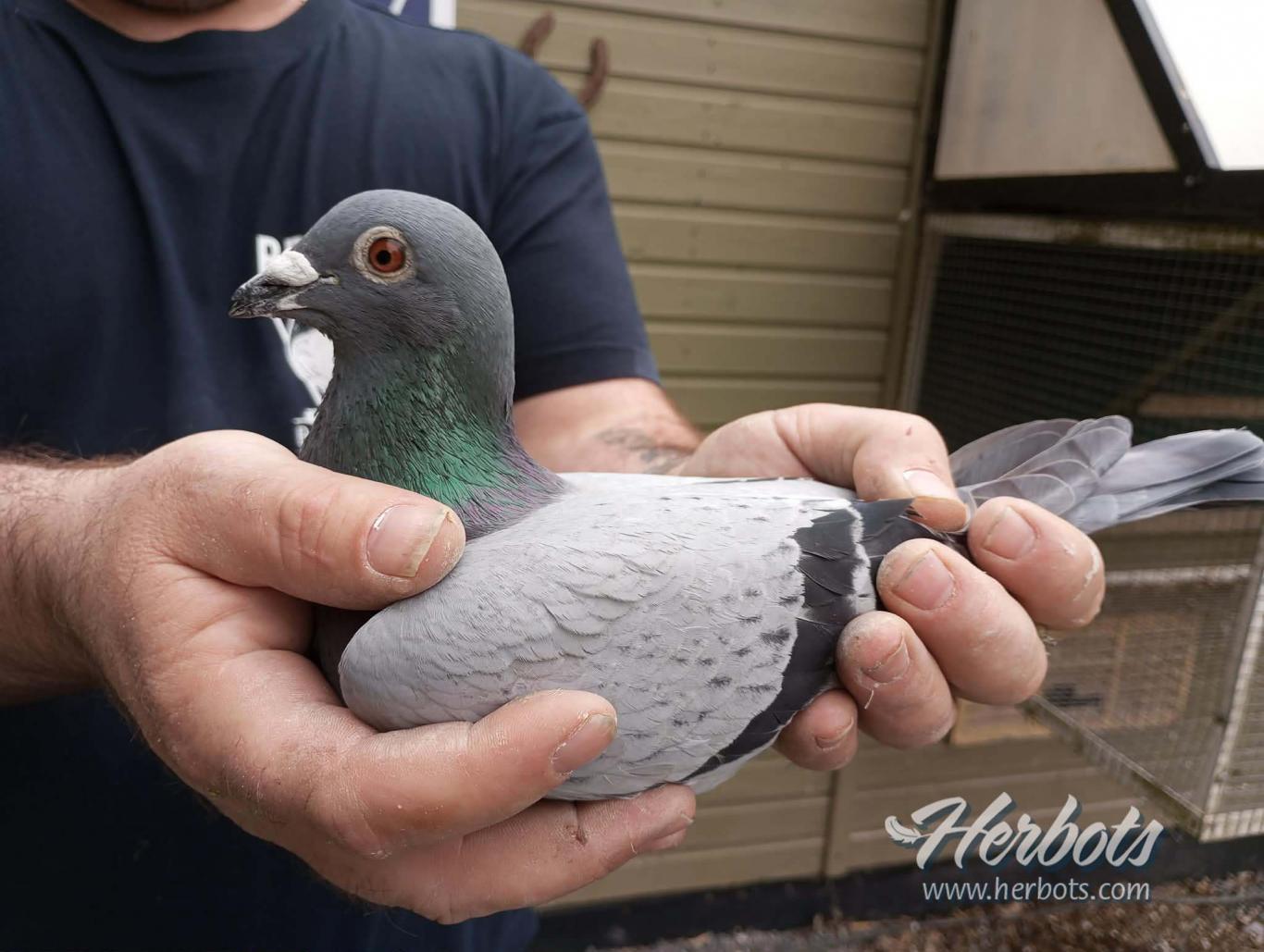
Aland Van Houcke is no stranger to the pigeon racing world, as he already has the following achievements on his record:
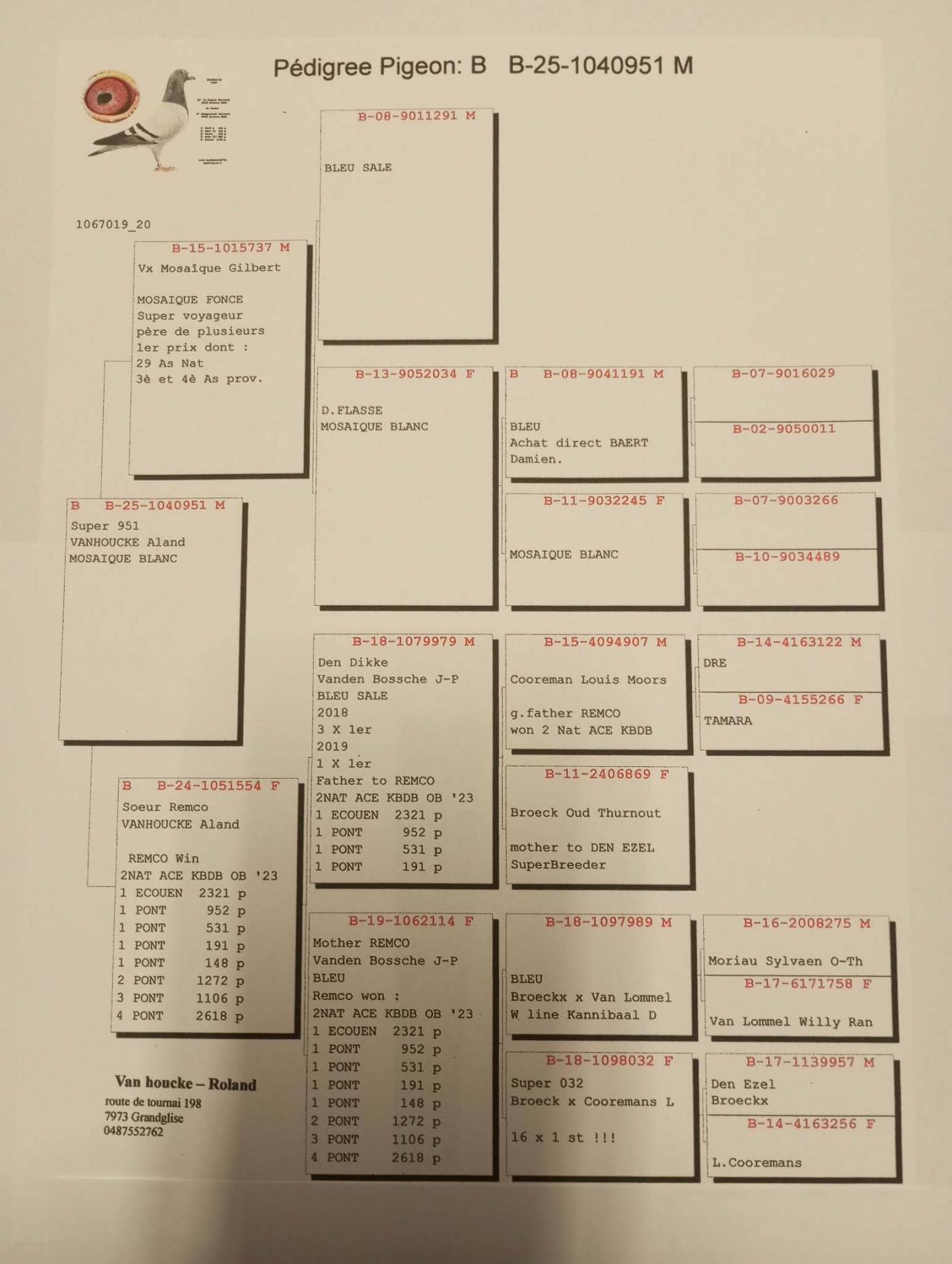
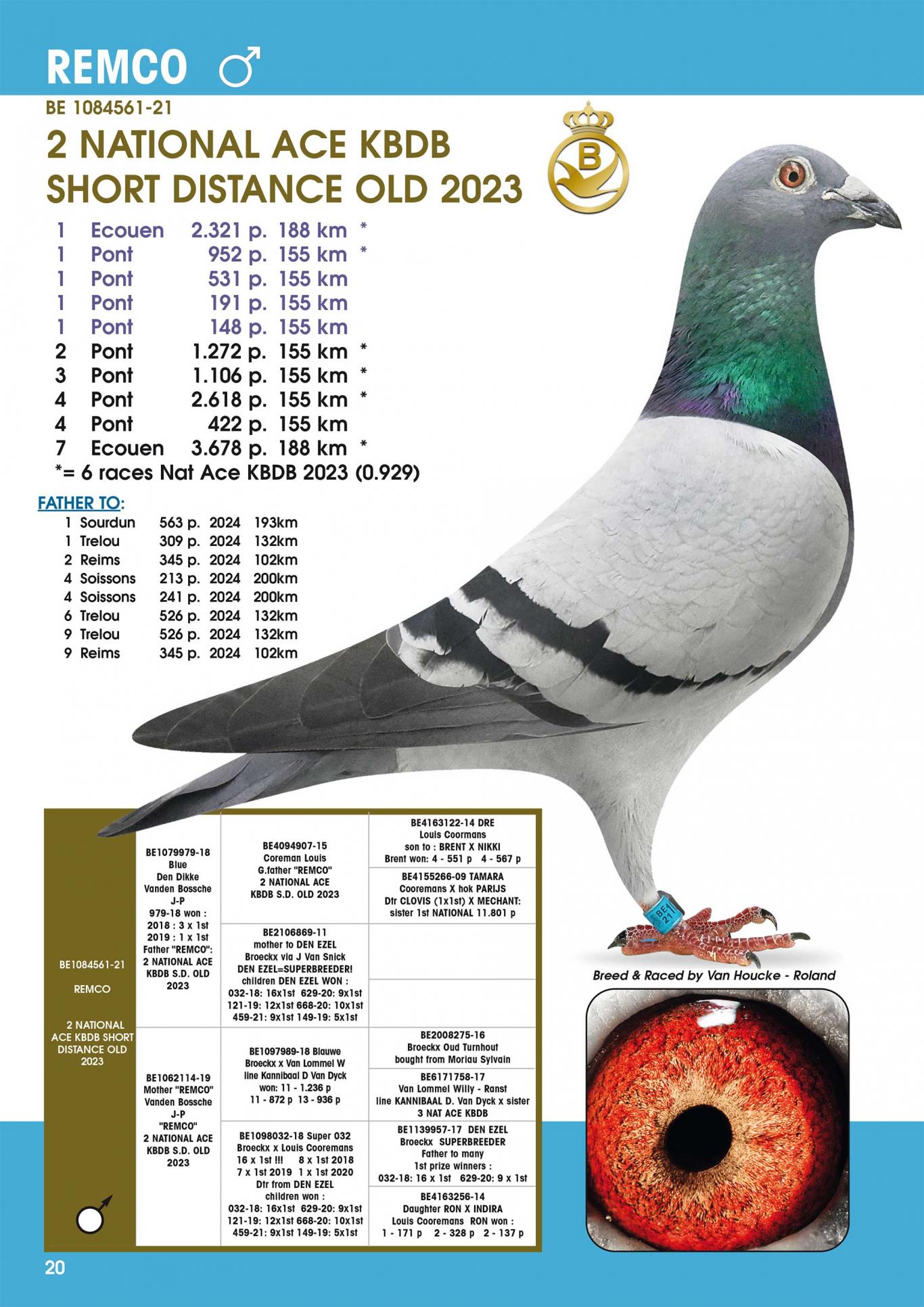
• 2nd National Ace Pigeon Speed Old Birds KBDB 2023 with his crack “Remco” (BE21-1084561)
• 10th National Champion Speed Old Birds & Yearlings KBDB 2023
• 23rd National Champion Speed Old Birds & Yearlings KBDB 2024
• 28th National Ace Pigeon Speed Yearlings KBDB 2023
• 29th National Champion Speed Old Birds & Yearlings KBDB 2022
Aland Van Houcke, 43 years old, and his wife Johanna Roland live in the village of Stambruges, a district of Beloeil in Western Hainaut, close to the French border. They are the parents of two strong sons aged 15 and 20. Aland works for a construction company and has little time to devote to his hobby, as he leaves home at 5 a.m. and only returns around 5 p.m. Fortunately, he can count on the valuable help of Johanna, a hospital caregiver, who releases the pigeons in the evening and takes care of their weekly bath. Since his wife is never short of ideas, Aland leads a very “active life,” and their days are therefore well filled.
After unexpectedly losing his father at the age of 9, it was his pigeon-loving grandfather who introduced him to the sport. From the age of 15, he helped with basketting the pigeons and cycled to his grandfather’s house to follow the arrivals of the pigeons. This is how his passion for pigeon racing naturally developed. A year later, he obtained his first pigeon fancier’s license and started racing independently. However, because the results were not consistent enough, he stopped the sport, only to resume in 2012.
The real breakthrough came in 2017, when, after reading an article about the performances of a local fancier, “Dany Leturcq” from Wadelincourt, he decided to contact him. Dany welcomed him warmly and gave him advice on feeding, racing methods, and pigeon management. Thanks to this wonderful meeting and the friendship that developed between them, the results became much better and more consistent. This gave a real boost to the Aland Van Houcke colony, which has continued to perform strongly ever since.
“The foundation of the colony.”
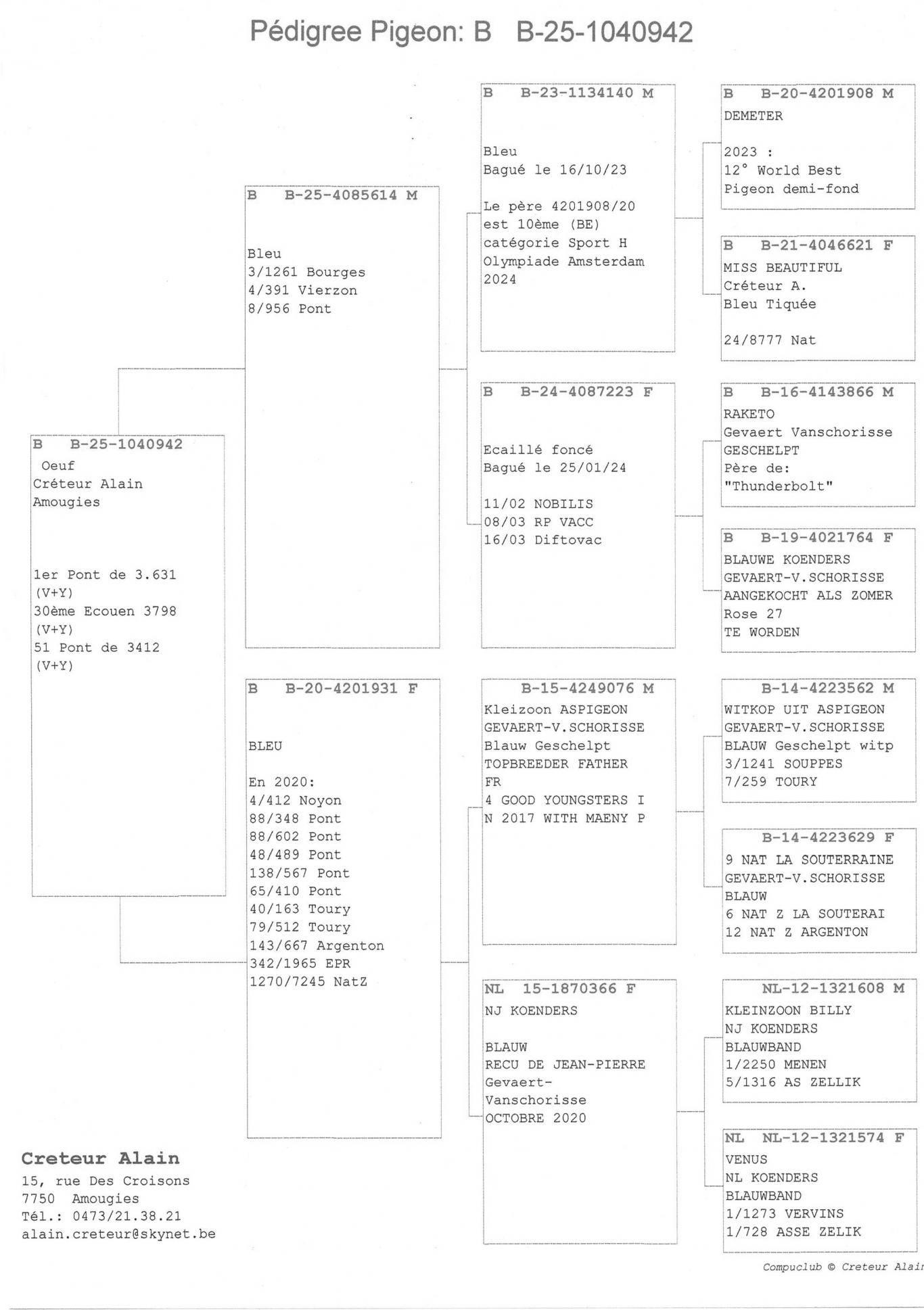
Initially, a mosaic cock named “Le Gilbert” (father originating from Mike Pauriche from Beloeil and mother from David Flasse from Audregnies) left his mark on the colony thanks to his consistent race results. Later, he grew into the foundation sire of the colony. Afterwards, pigeons from the following fanciers were added to the colony: Jean-Pierre Vanden Bossche (Bierghes), Bernard Van Renterghem (Pipaix), Alain François (Wadelincourt), and of course Dany Leturcq, with whom exchanges and joint breeding projects have been carried out for several years. More recently, new purchases were also made in order to compete in the national middle-distance races: Pascal Donnez (Esplechin), Jérôme Dewever (Beloeil), and Alain Créteur (Amougies). Remarkably, the 1st and 2nd prize winners of the Pont-Ste-Maxence race also originate from this latter colony, which preserves the Gevaert–Van Schoorisse bloodline from Ronse.
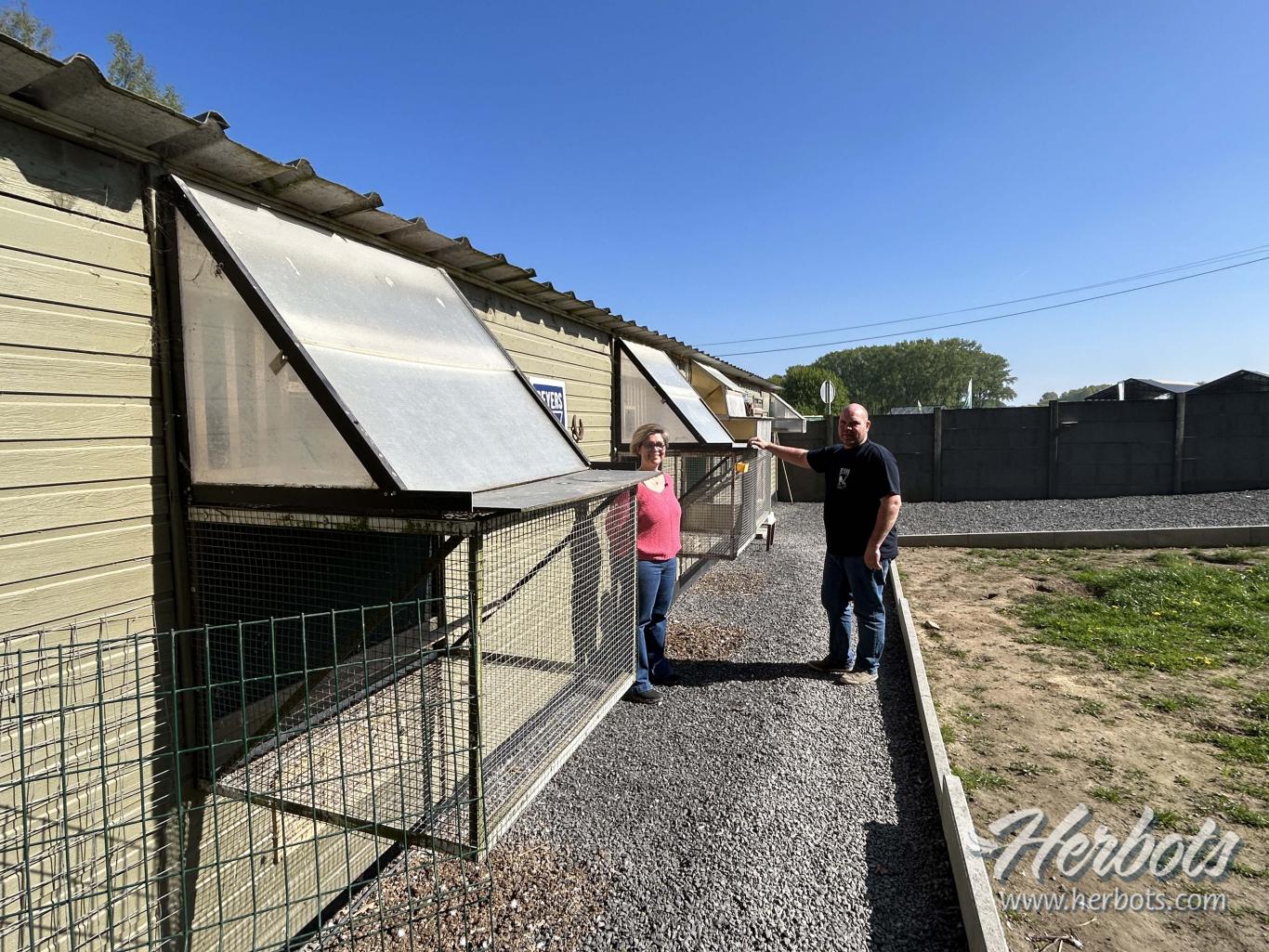
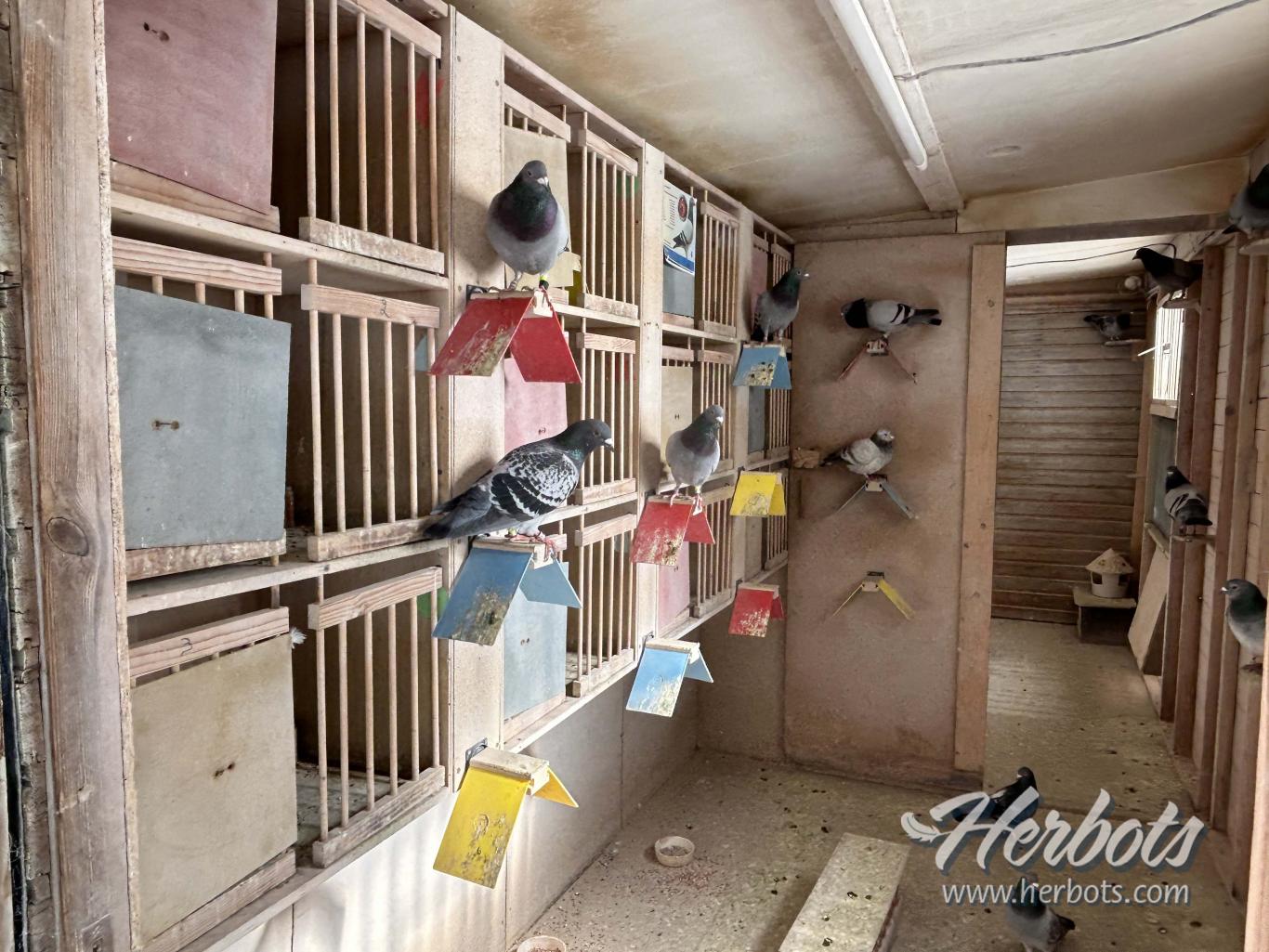
“Composition of the colony”
As far as the number of pigeons is concerned, this is a small colony. Aland has 5 stock cocks and 2 groups of 5 breeding hens each. This also allows him to pair his 5 best widowhood cocks with 5 breeding hens, with the aim of discovering a new breeder among his top racers. Regarding the widowhood cocks, there are 32 males (8 old birds and 24 yearlings), divided over 3 sections of the loft. It should be noted that this total of 32 at the start of the season is the result of several new “additions” that still need to be tested. The goal is to reduce their number and, in the future, race with a maximum of 24 widowhood cocks. As for breeding, both the breeders and the racers are paired on January 1st, during the holiday period of workers in the construction sector. Aland keeps the third round from his breeders and 25 youngsters from his best racers. The first and second rounds from the breeders are given to Dany Leturcq, and in return he receives a round of youngsters from Dany’s breeders. Each year, around forty young pigeons are raced in sprint races. In 2026, the intention is also to test them in the small and great middle-distance races, raced using the sliding-door system.
“Method and care”
The racing pigeons (cocks raced on the classic widowhood system), which are paired in January, raise two youngsters. At the end of the breeding period, the hen and one of the two youngsters are removed and placed in the aviary, while the cock continues feeding the second youngster alone in his nest box until weaning. At the beginning of April, the racers are paired again so that they can stay with their partner for three days. During this period, they are trained daily (5, 15, and 20 km) before starting the first sprint races. For practical reasons, the nest boxes are then closed during the racing season, and the racing cocks stay on a perch in front of their respective nest box. Before basketing for races, the racers receive one final meal, approximately one hour beforehand. After that, the nest boxes are opened and the bowls are turned over, but the hens are not shown. Upon returning from the races, the hens are present. They are then allowed to stay together for a certain period, after which they are separated again. The only daily training session for the racers takes place around 4:30 p.m., and that of the youngsters around 6:00 p.m. The racers are always released the day after the race so that their recovery condition can be assessed. The lofts are cleaned once a day. During the racing season, the racers only have access to the aviary once a week to take a bath. In winter, all old pigeons stay in the aviary while the yearlings occupy their places in the loft. Once that has happened, the racers (old birds and yearlings) are given free access to the aviaries, allowing them to get fresh air whenever they wish. Indeed, no training takes place from October until the end of February. Regarding feeding, Aland Van Houcke keeps things simple. The racers are fed in a communal feeding trough with the Beyers “Sport Light Galaxy” mix, every day of the week.
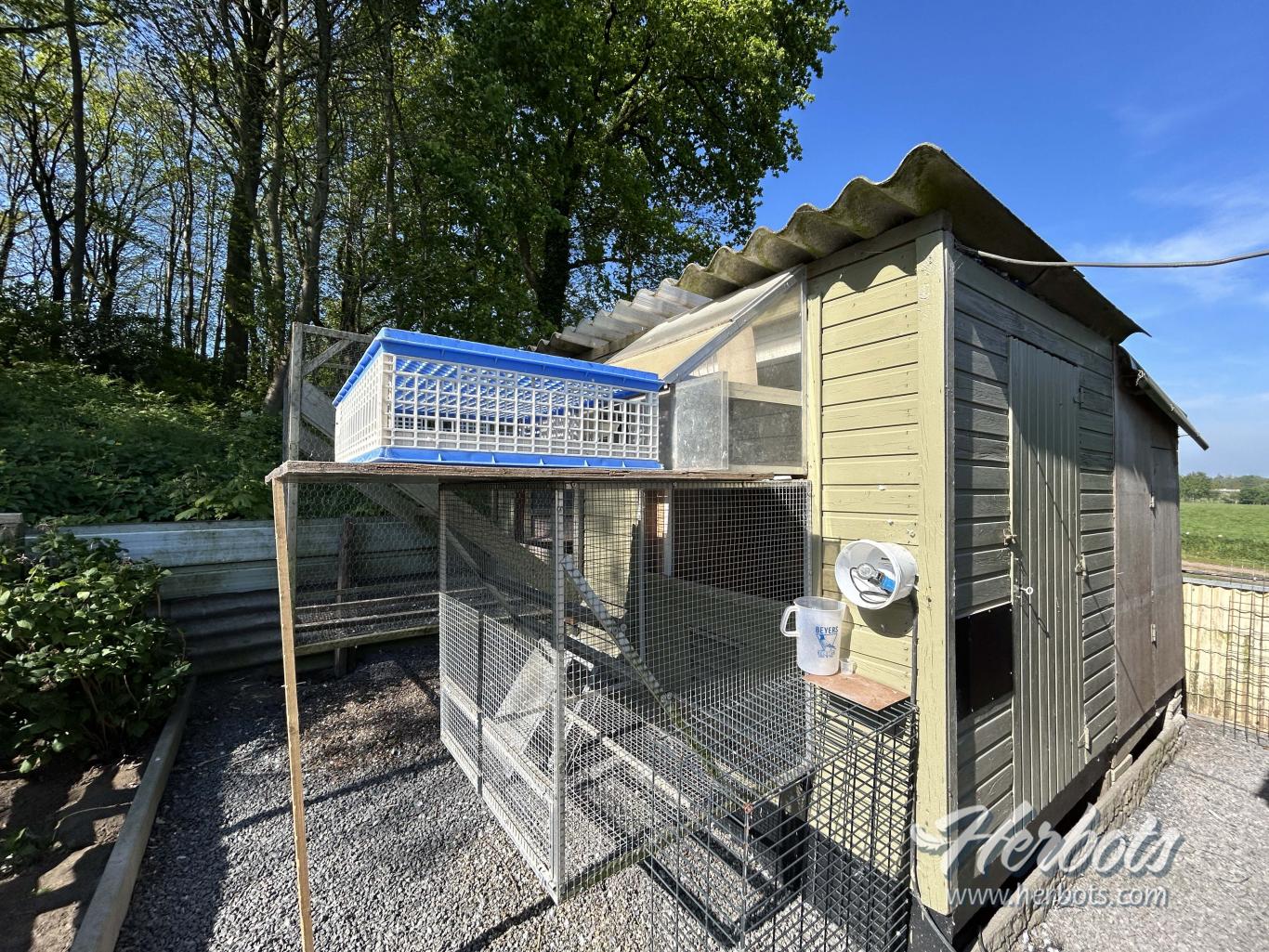
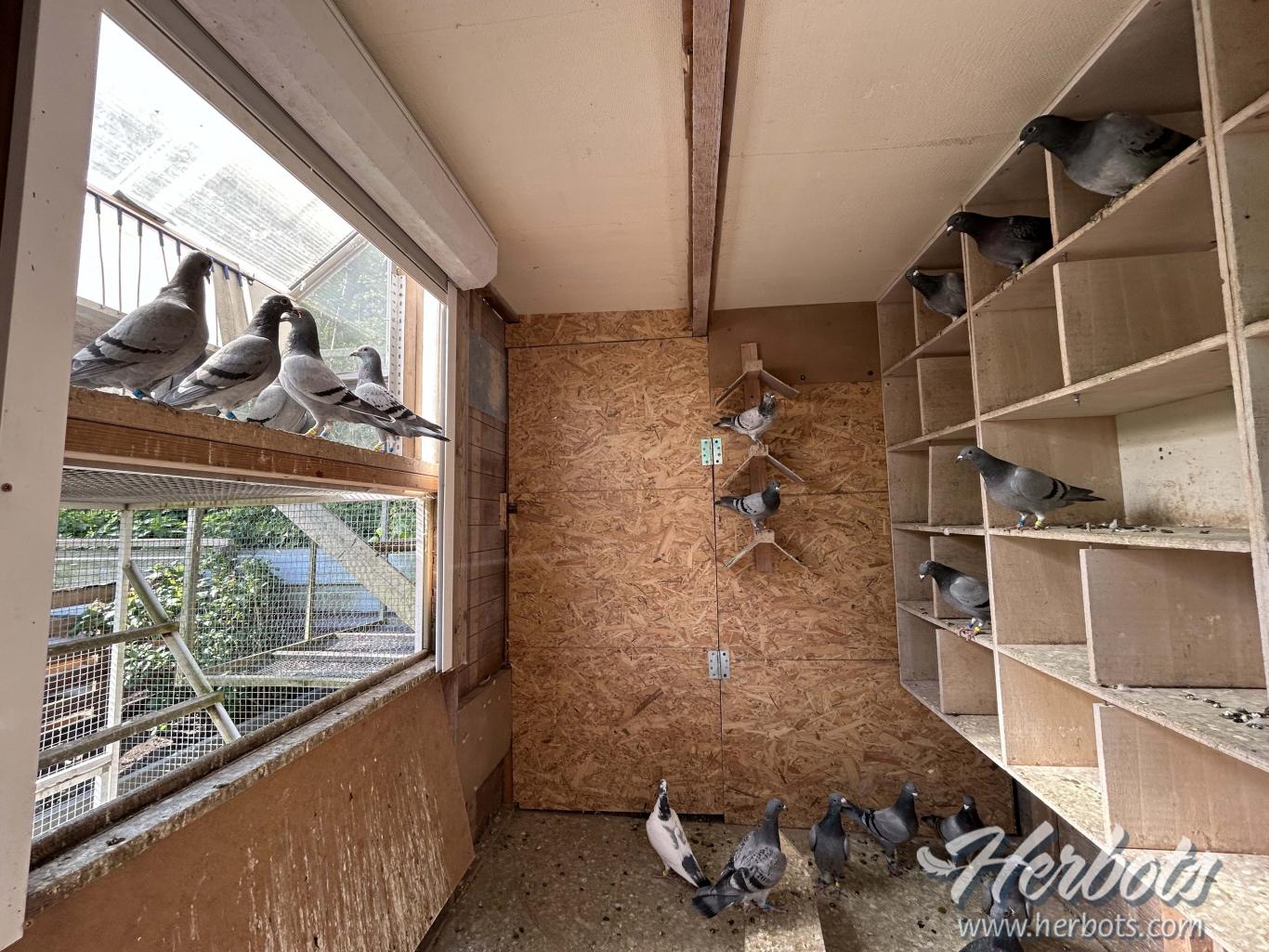
Upon returning from the races on Saturday, Herbo Ma Liquid (HerboVet) and Recup Forte (Tollisan/Schroeder) are added to the drinking water, while Herbo Protein (HerboVet) is mixed with the feed.
On Sunday and Monday, Naturaline (Natural) and homemade apple vinegar are added to the drinking water, and the pigeons receive Herbochol Plus and brewer’s yeast over the feed. On Tuesday and Wednesday, Herbial (HerboVet) is given over the feed. On Thursday, Quick (Tollisan/Schroeder) is provided over the feed, and each pigeon receives one drop of Yellow (HerboVet) in the throat. On Friday, the pigeons receive clean water, and in case of forecasted extreme heat, electrolytes are added. After the racing season, the pigeons are fed a moulting mixture, to which brewer’s yeast with garlic oil is regularly added. Daflor is also added to the drinking water. Regarding veterinary care, they rely on Kobe Herbots, who vaccinates the pigeons against paramyxovirus and paratyphoid. The racers are treated against trichomoniasis when they are sitting on eggs. A visit to the veterinarian takes place at the beginning of the season and, if necessary, also during the season. Once again, thank you for the warm welcome, and congratulations from Team Herbots to Aland Van Houcke and Johanna Roland for this result.
There is no doubt that we will hear more from this colony in 2026.
Bernard Henry