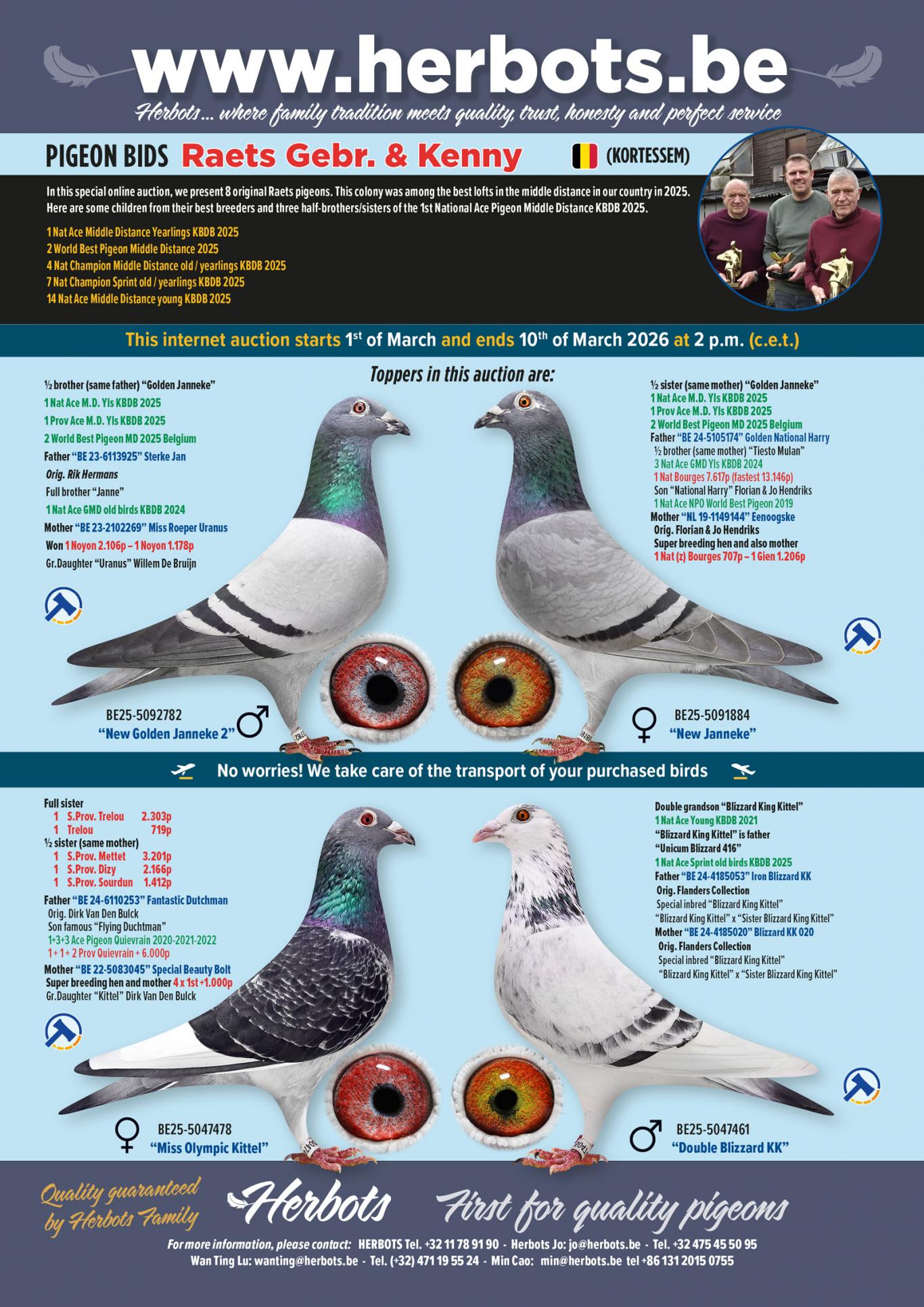
Raets Brothers and Kenny (Kortessem) win 1st Nat Ace Pigeon middle distance yearlings KBDB 2025
05 Mar 2026

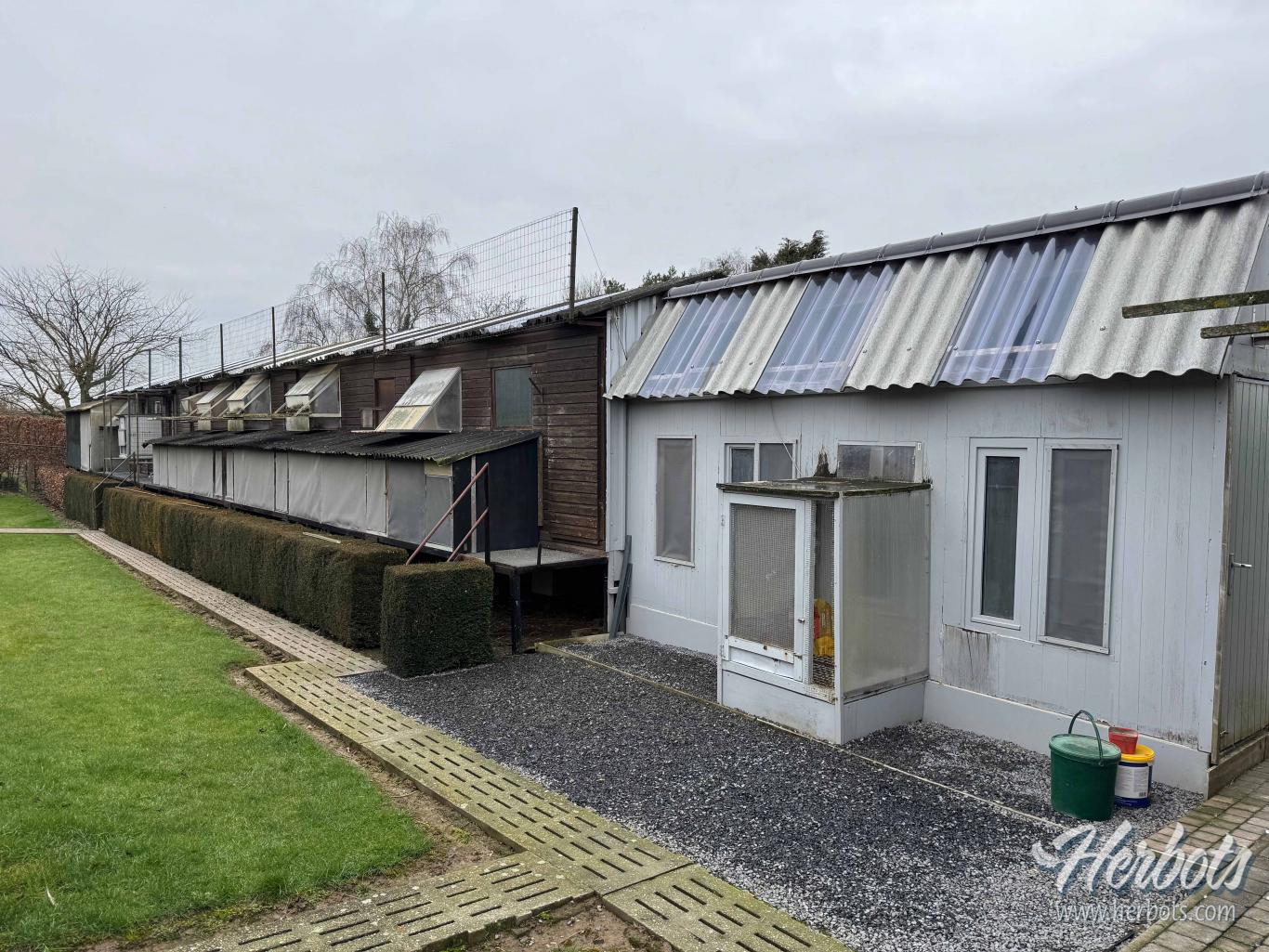
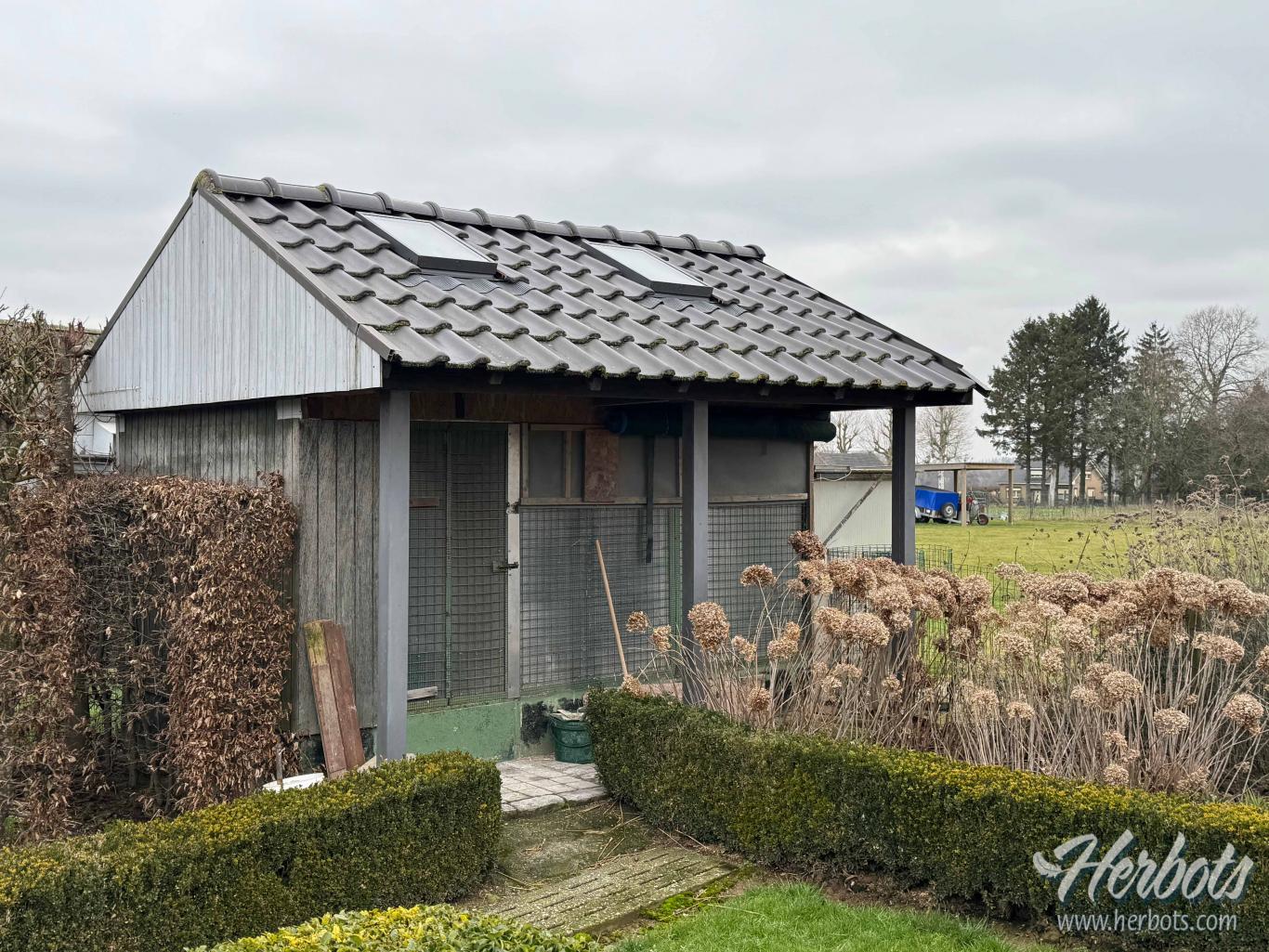
In Kortessem, Limburg, we arrive at the Raets colony. This consists of father Arnoud and son Kenny, who, along with their uncle Jean Marie, join forces to compete at a high level with the best. Because that's what it takes to compete with the best colonies at the provincial and national levels. Now, in 2025, they already have a 1st National Ace Pigeon middle distance with "Golden Janneke," a feat they also achieved in 2018. This was with the old birds in the middle distance, and in 2017 they also won the tough "Gouden Duif" competition. Now, in 2025, they are competing in several national championships, where their focus is primarily on the old birds and yearlings.
National Championships 2025
1st National Ace Pigeon Middle Distance Yearlings KBDB 2025
2nd World Best Pigeon Middle Distance 2025
4th National Champion Middle Distance Old/Yearlings KBDB 2025
7th National Champion Sprint Old/Yearlings KBDB 2025
14th National Ace Pigeon Middle Distance Young KBDB 2025
Provincial Championships 2025
1st Provincial Ace Pigeon Short Middle Distance Yearlings
1st Provincial Champion Short Middle Distance Yearlings
2nd Provincial Champion Short Middle Distance Young
3rd Provincial Champion Sprint Old
4th Provincial Champion Short Middle Distance Old
4th General Champion Limburg
System Old and Yearling Hens
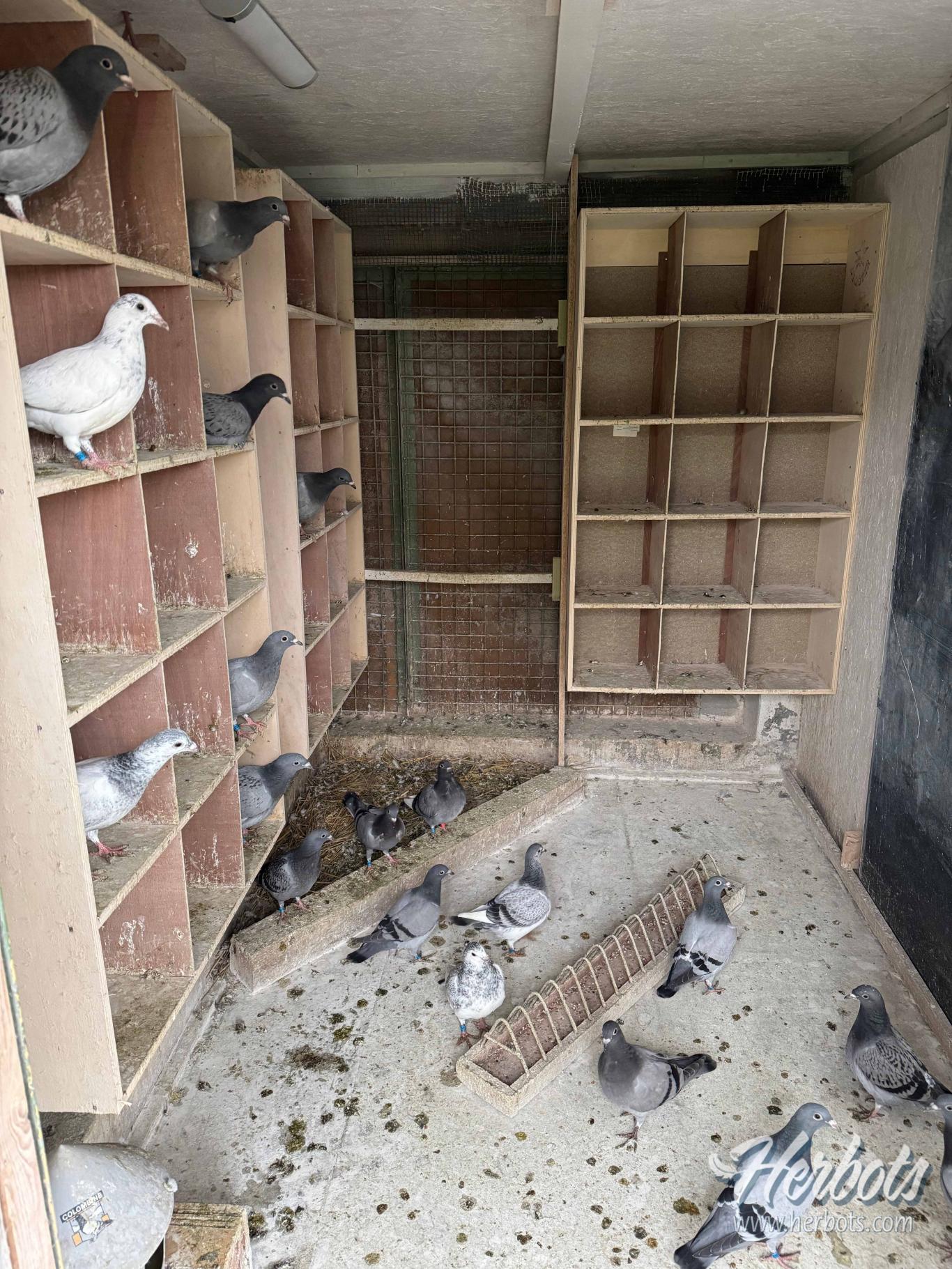
The racing team consists of 40 widowers and 20 hens. All these pigeons have partners that stay at home and therefore fly on classic widowhood. For the 2026 season, the hen racing team will be slightly larger, totaling 32. Most of these will be raced using a system of one cock for two hens.
The widowers always winter breed and are released fairly quickly afterward. Around the end of February, they are flying for 40 minutes daily, and when that time is extended to one hour, we start working with the pigeons. We do travel with the pigeons but never release them together. We try to maintain a fifteen-minute interval between the two groups so they don't see each other. We start by traveling up to 5 km and gradually increase this to 30 km. At this point, they are released twice, and then they are ready for the races.
The hens normally also raise a round of youngsters, and then they start the race in the same way as the cocks. However, for next year, we will have to adjust our system slightly. The first group will have youngsters in the winter, and the second group will then only breed. During the pairing period, we ensure the pigeons get used to the new environment, and pairing makes this easier than usual.
The only difference for next year is that we can only properly train the hens once the second group is released. Then they need to establish their foundation, and only then can we start racing them. But normally, this shouldn't be a problem, as there's still plenty of time before the season starts.
What kind of motivation do you use?
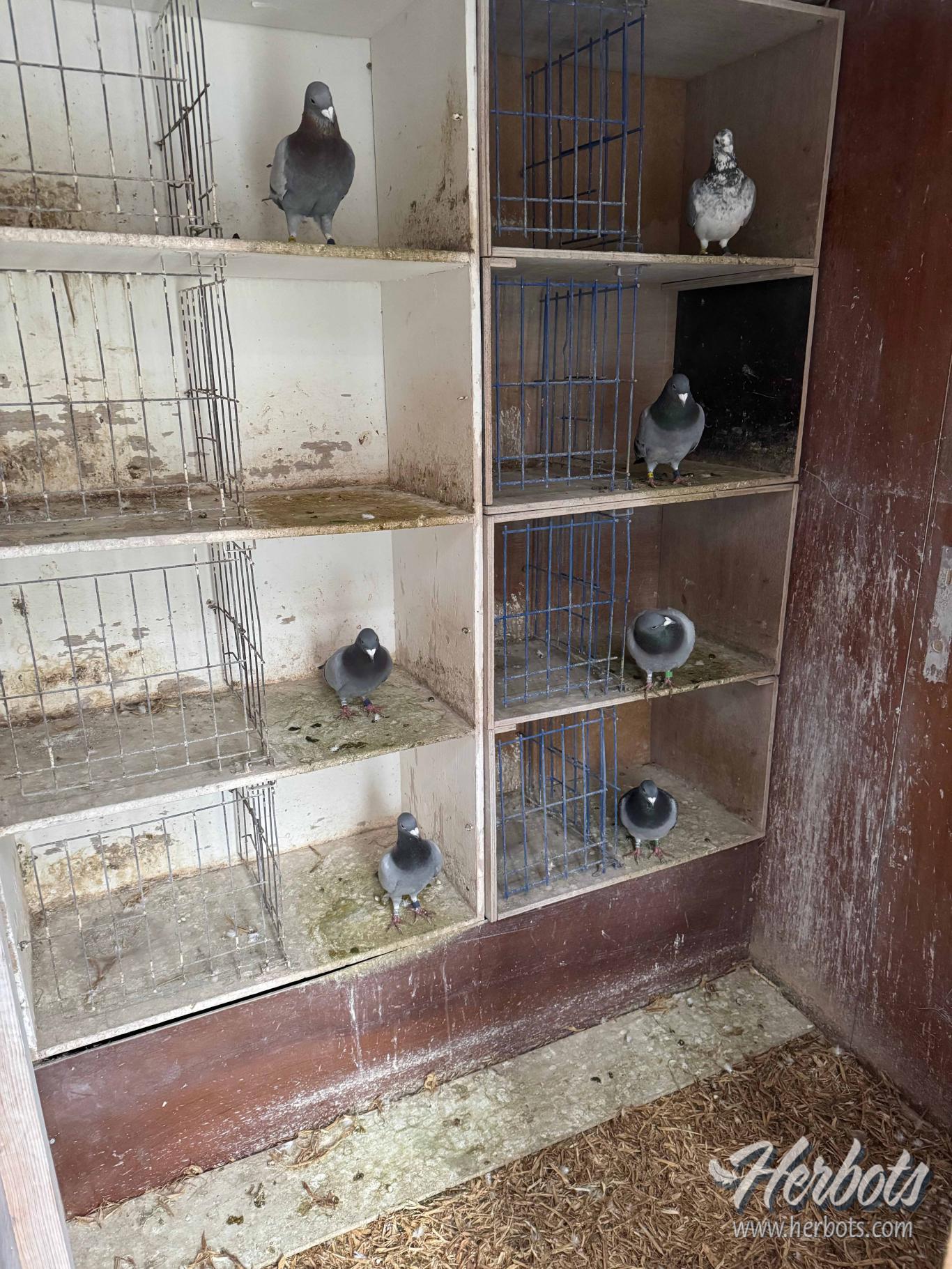
The pigeons train here once a day. We keep the sprint and middle-distance widowers separate, so they don't train together. The sprint pigeons train in the morning, while the others train in the afternoon. We also allow the pigeons to train on the day of basketing for the middle-distance, as this helps them eat better leading up to basketing.
The sprint pigeons always get to see their partner before the race. The middle-distance pigeons are usually trained on Wednesdays, and we also take the other pigeons with us. They then return home, and the middle-distance pigeons get to see their hens for an hour and a half, and then they don't get anything on Thursdays.
When the cocks return from a race, they get to see their hens for an hour and a half to two hours. We do this from the first race onwards, but never leave them together for hours longer. We maintain this pace. We only deviate from our system if it's a difficult race or a late release.
With the hens, we always separated them on the day of 2025, but now we'll have to adjust things here too. The plan is to let the first group in on the day itself and the others the next day. We'll have to wait and see and make adjustments if necessary.
How are your hens during the week?
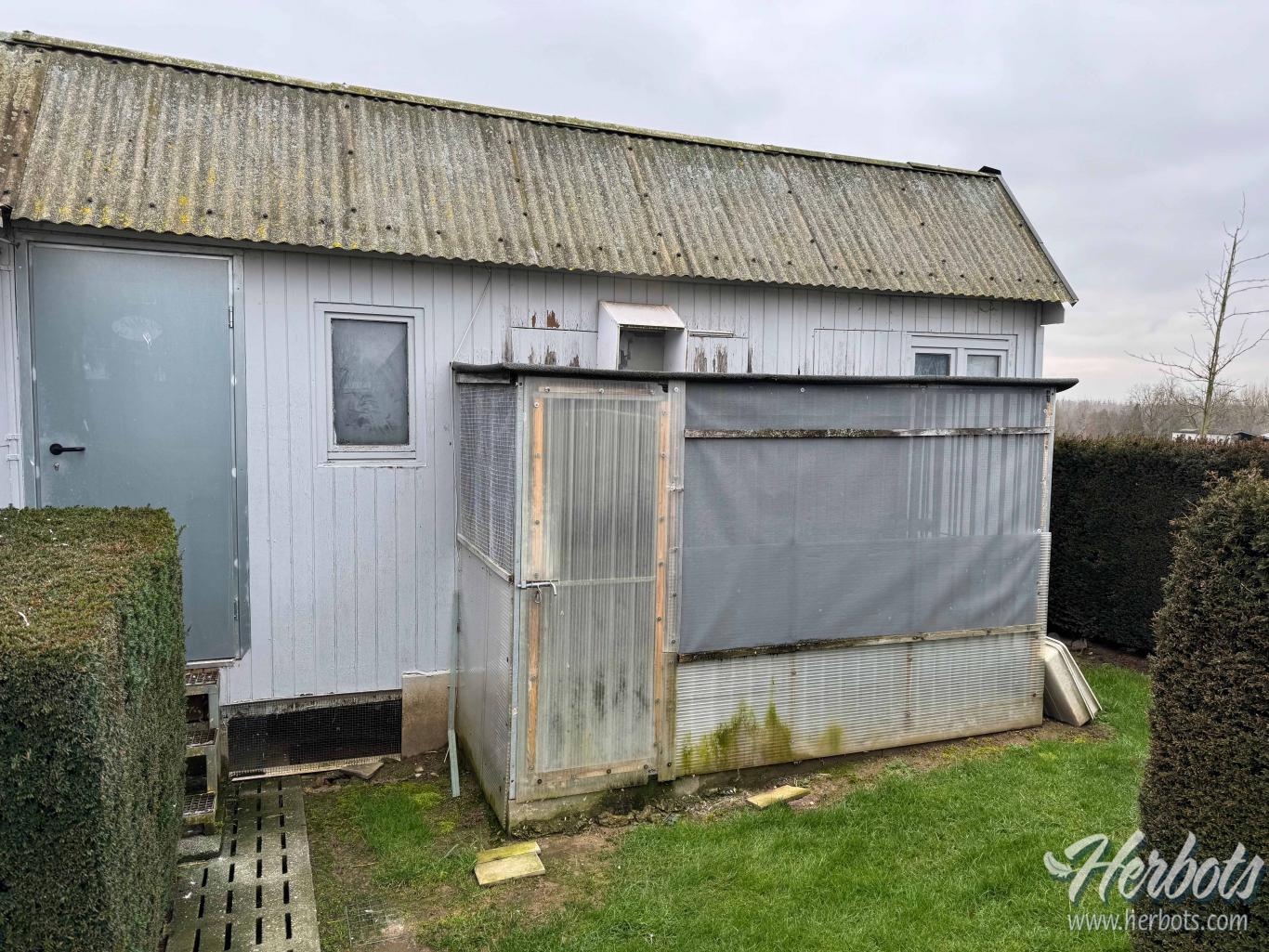
We bring them to a small 1m² aviary during the day. They always train in the late morning and then get fed inside in the loft, after which they go back to the aviary. In the evening, they can eat again and then they're locked in their cage.
We use the same system here as with the cocks. We take them out on Wednesdays when the weather is good and get to see their cocks for half an hour to an hour. Then they're basketed quietly the next day.
The new rule will be that we'll never leave our hens at home again. We did this again in 2025 because of the very hot weather, but that's detrimental to the hens' rhythm. They know this so well and know what's coming, so they'll fly a short flight in warm weather anyway.
Our lofts also need a good spring, preferably lots of sun and dry days to warm up properly. Then our lofts are much better in April and their condition improves faster than when the weather is humid. But I think that applies to everyone, provided you don't use heating panels.
How do you feed your pigeons?
During the winter period, when the pigeons aren't breeding, they receive winter mixture along with moulting feed and ¼ barley. We feed them sparingly to prevent them from gaining too much weight. During the season, we use Versele-Laga mixtures. On Mondays and Tuesdays, this is a light feed (Gerry Plus). On Tuesday evening, we switch the middle-distance pigeons to half Champion Plus I.C., and on Wednesdays, this is usually 50% Gerry Plus with 50% Sport food, Champion Plus I.C., and Energy Plus. On Thursdays, 100% Sport Champion Plus I.C. and Energy Plus for the middle-distance pigeons.
During the season, we primarily use Röhnfried products. These are primarily Energy Oil, Avidress for the young pigeons, K+K Protein Powder on the feed after returning home, along with Tolyamin Forte from Schroeder-Tollisan. We also add Nano Tolyamin to the feed upon departure on Wednesdays and Thursdays.
We follow the advice of Vincent Schroeder and Karlo Van Rompaey and alternate treatment against tricho during the season with ¼ Flagyl or ¼ Schroeder's TKK. We don't use yellow drops.
Before the racing season, we treat our racing pigeons for 10 days against paratyphoid without vaccination, 5 to 7 days against tricho, and then we have a check-up. If there's still something wrong, we can intervene; otherwise, we leave it alone. We generally have good respiratory lofts, so we only intervene after checking. Usually, it's just a short 2-day treatment to tighten things up a bit, but no more. We vaccinate our old and yearling pigeons only with regular paramyxovirus.
During the winter, the breeding pigeons do receive a 10-day treatment against paratyphoid, followed by a live vaccine and the paramyxovirus vaccine. We treat the young pigeons twice against rotavirus and smallpox (brush).
Top pigeons of recent years
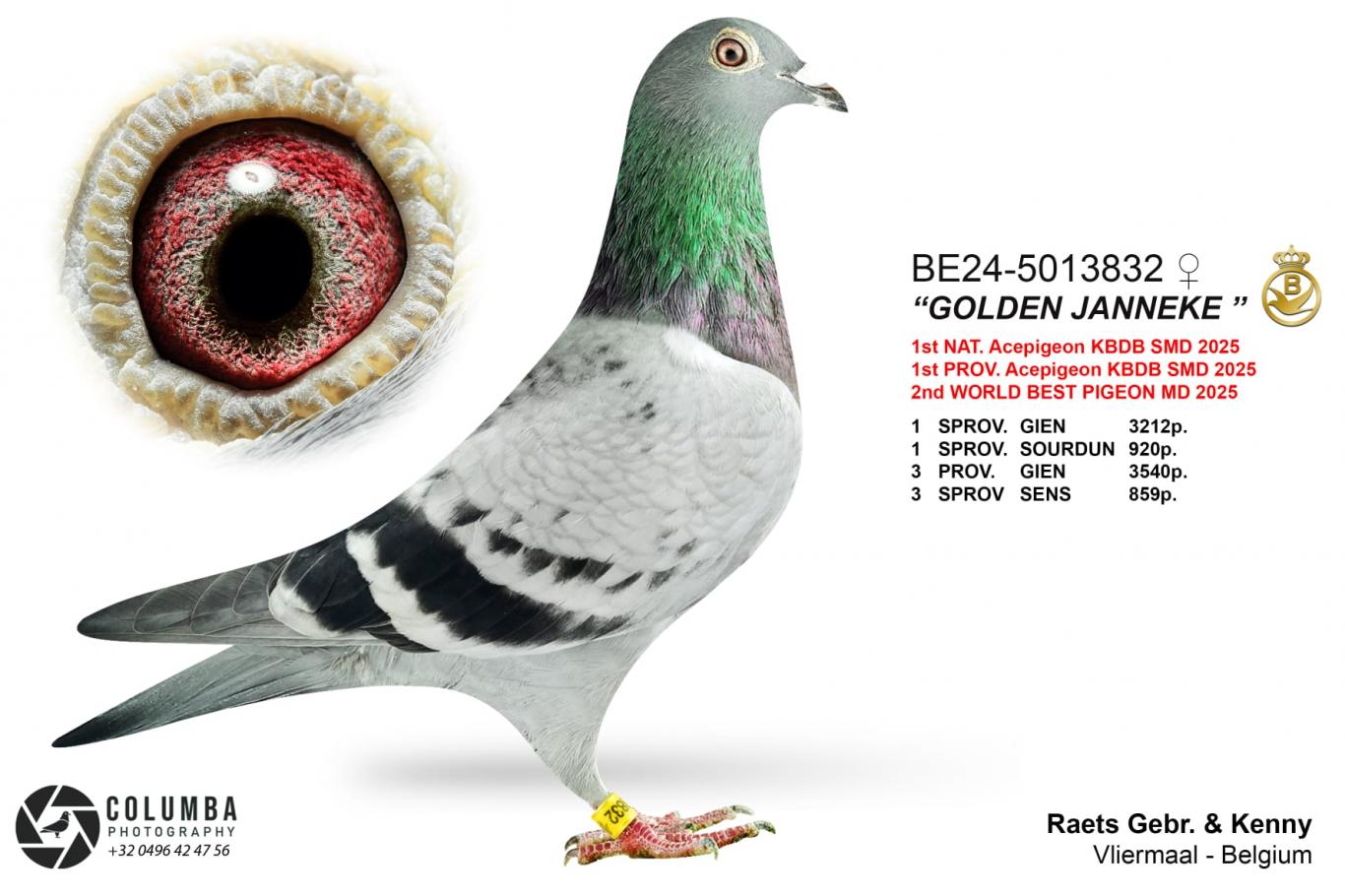
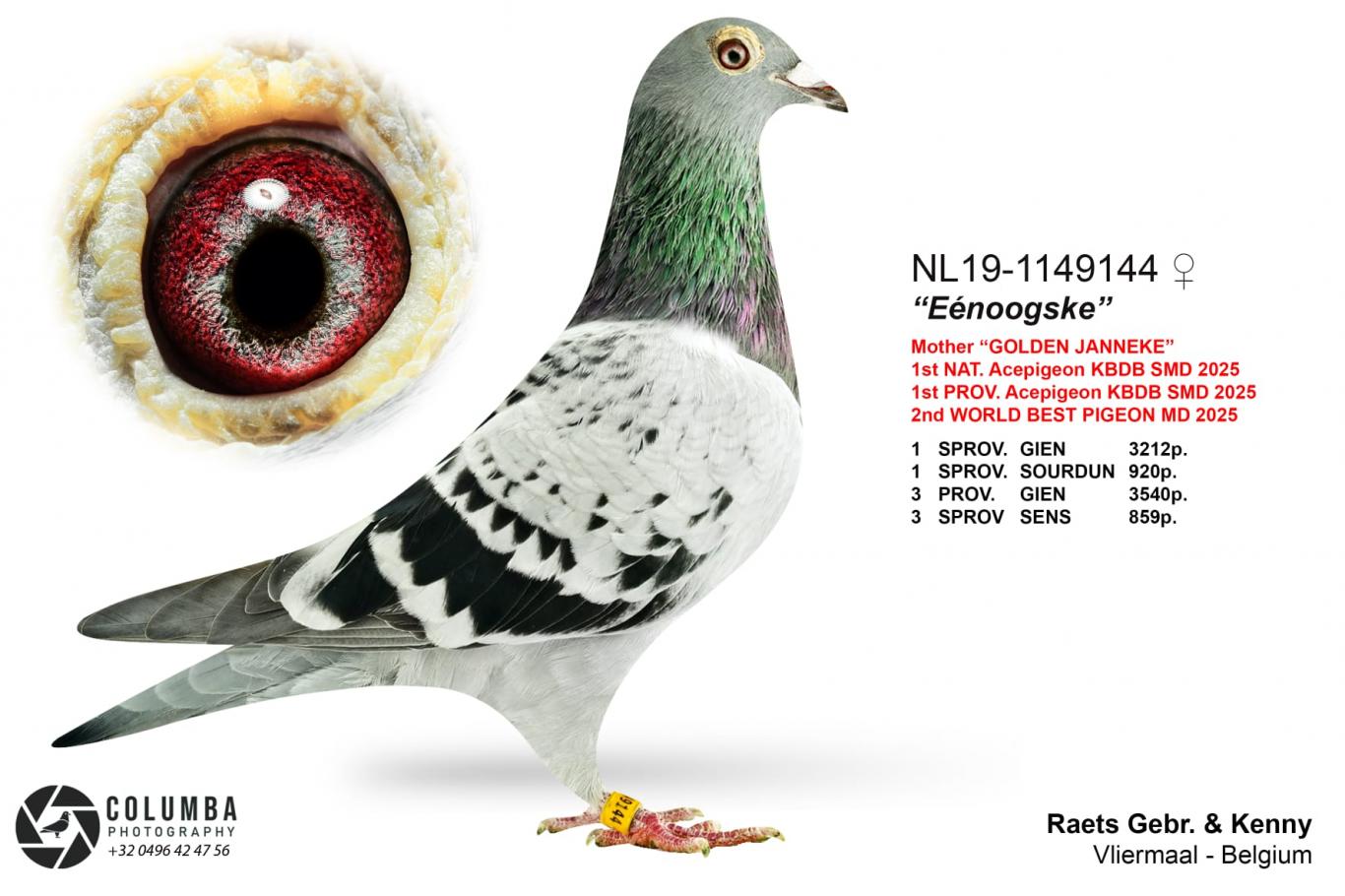
The 1st National Ace Pigeon, "Golden Janneke," wasn't eager to mate with other hens in the loft, nor did she have any special behavior there. Only when she returned from a race did we always have to look in a different direction than our other pigeons. She had a separate flight path, where she likely separated from the other pigeons and flew back to her familiar flight path. It's just our gut feeling, of course, and we can't control it.
BE 24-5013832 “Golden Janneke” Hen
1 Nat Ace Pigeon Middle Distance Yearlings KBDB 2025
1 Prov Ace Pigeon Middle Distance Yearlings KBDB 2025
2 World Best Pigeon Middle Distance 2025
1 S.Prov. Gien 3.212p
1 S.Prov. Sourdun 920p
3 Prov Gien 3.540p
3 S.Prov. Sens 859p
14 Prov Gien 2.607p
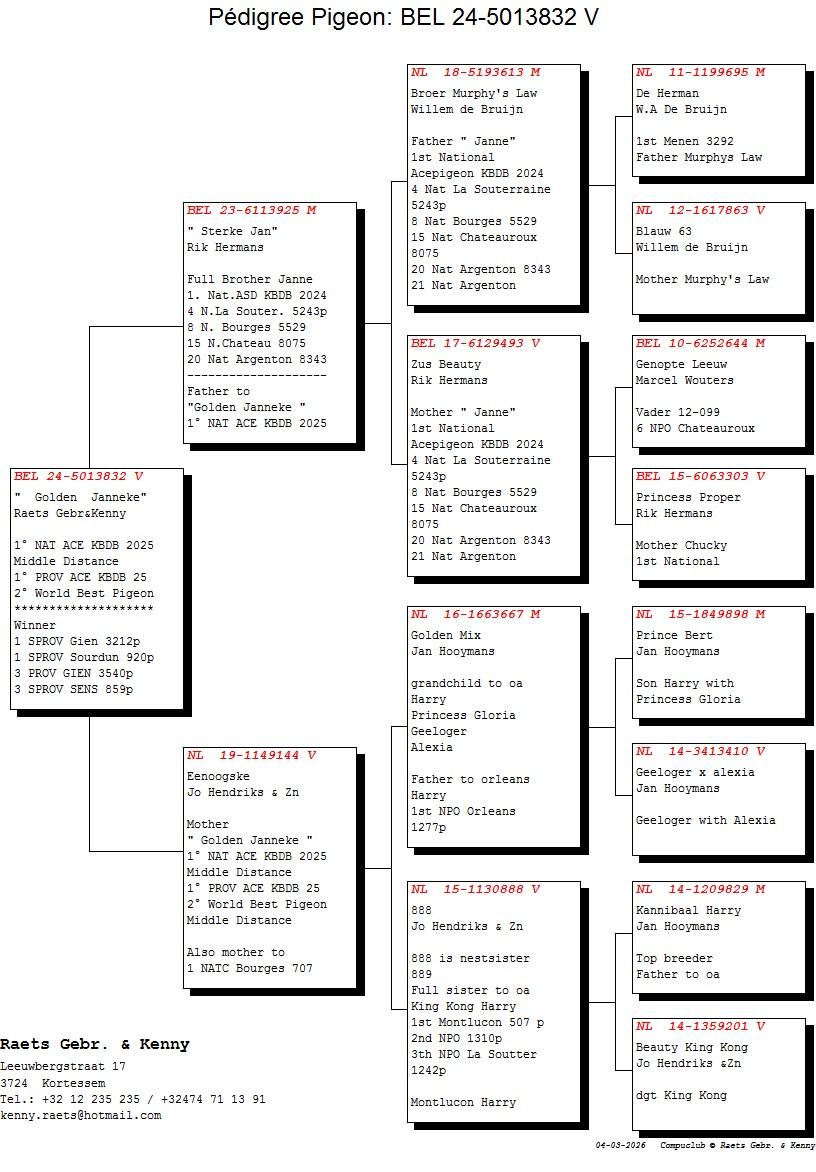
Father BE 23-6113925 “Sterke Jan” – Rik Hermans
Full brother “Janne” 1st Nat Ace Pigeon heavy Middle Distance KBDB 2024 with a.o. 4th Nat La Souterraine 5,243p – 8th Nat Bourges 5,529p – 15th Nat Chateauroux 8,075p – 20th Nat Argenton 8,343p
Son of “NL 613/18” Brother Murphy’s Law Willem De Bruijn x “493/17” Sister Beauty
Mother NL 19-1149144 Eenoogske - Jo & Florian Hendriks
Super breeding hen 1 Nat (z) Bourges 707 p - 1 Gien 1,206 p - 1 Gien 644 p - 2 Chimay 956 p - 2 Sourdun 778 p - 3 Melun 590 p - 3 Sourdun 1,315p - 4 Prov Bourges 2,344p - 5 Prov Melun 3,766p
Daughter of “NL 667/16” Golden Mix – Jan Hooymans is grandson Harry x “NL 888/15” is full sister “King Kong Harry” 2 NPO Montlucon 1,310p – 3 NPO La Souterraine 1,242p
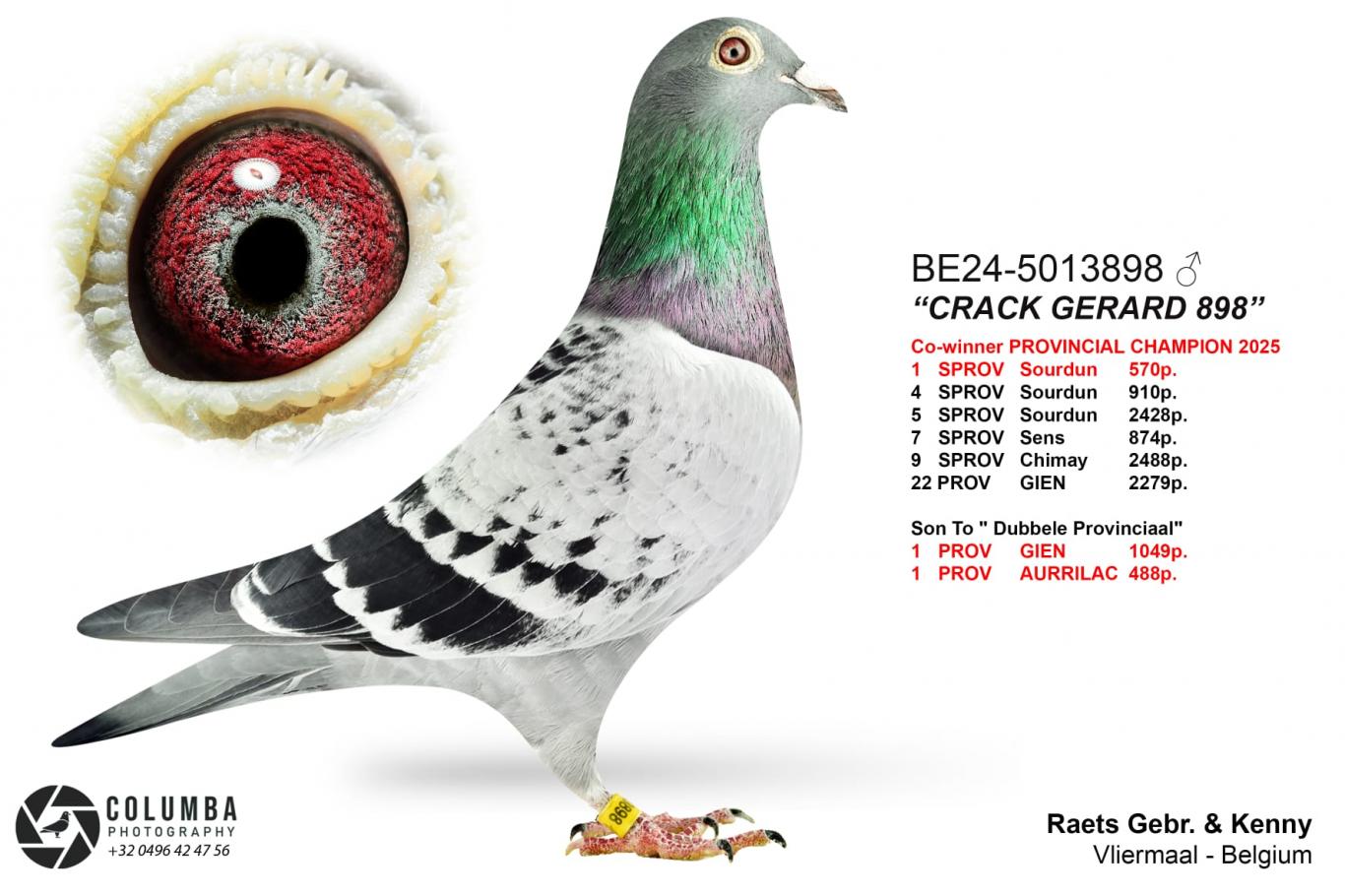
BE 24-5013898 “Crack 898” Cock
30 Nat Ace middle distance yearlings KBDB 2025
1 S.Prov. Sourdun 570p
4 S.Prov. Sourdun 910p
5 S.Prov. Sourdun 2.428p
7 S.Prov. Sens 874p
9 S.Prov. Chimay 2.488p
9 S.Prov. Sourdun 910p
22 Prov Gien 2.278p
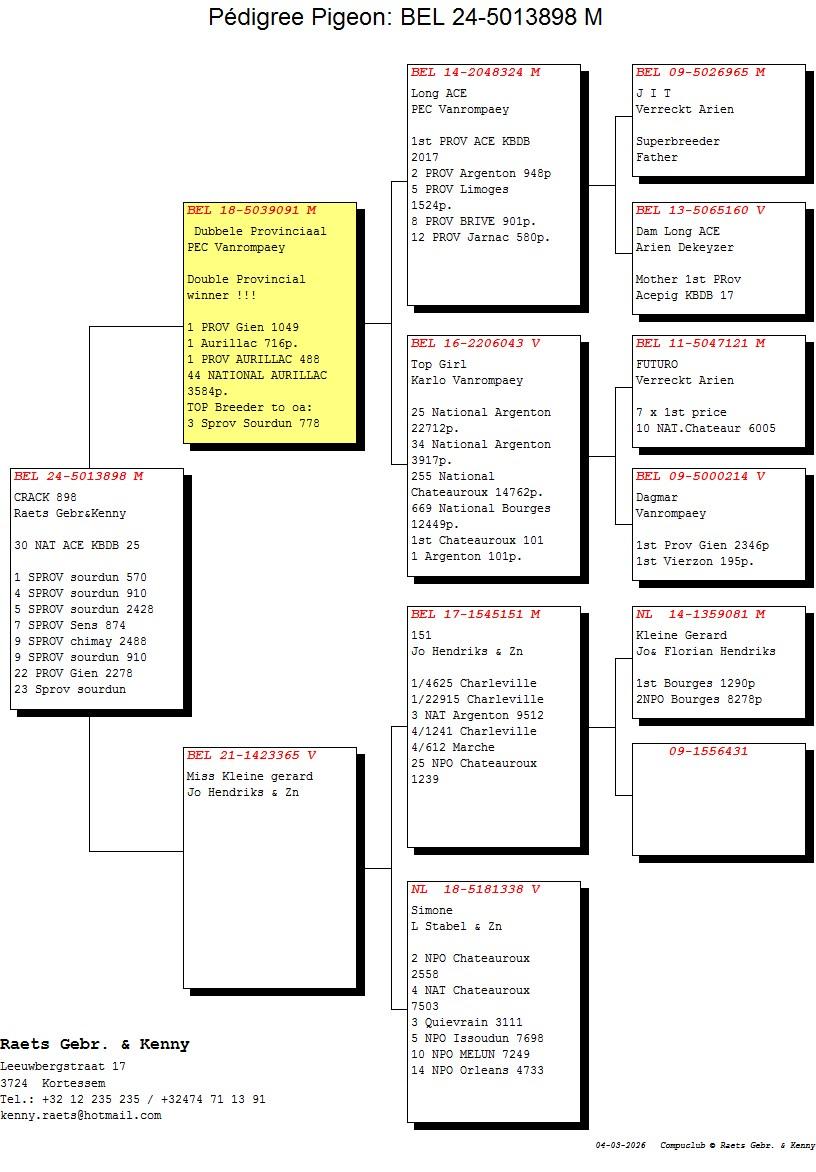
Father BE 18-5039091 Double Provincial – Karlo Van Rompaey.
Won 1st Provincial Gien 1,049 p. – 1st Provincial Aurillac 488 p. (44th Nat. 3,584 p.)
Son of “324/14” Long Ace 1st Provincial Ace KBDB 2017 x “043/16” Top Girl Karlo Van Rompaey won 25th Nat. Argenton 22,712 p. – 34th Nat. Argenton 3,917 p.
Mother NL 21-1423365 Miss Kleine Gerard – Jo & Florian Hendriks
Daughter of “151/17” Den 151 won 1 Charleville 22,915 p. – 3 Nat. Argenton 9,512 p. x "338/18” Simone Stabel & Son won 2 NPO Chateauroux 2,558p. - 4 Nat Chateauroux 7,503p – 5 NPO Issoudun 7,698p – 10 NPO Melun 7,249p
BE 23-5085194 “Kittelbolt 194” Hen
11 Nat Ace middle distance KBDB 2024
1 S.Prov. Sourdun 1.917p
3 S.Prov. Sens 2.351p
10 S.Prov. Sens 778p
11 S.Prov. Gien 1.159p
17 Prov Sourdun 2.183p
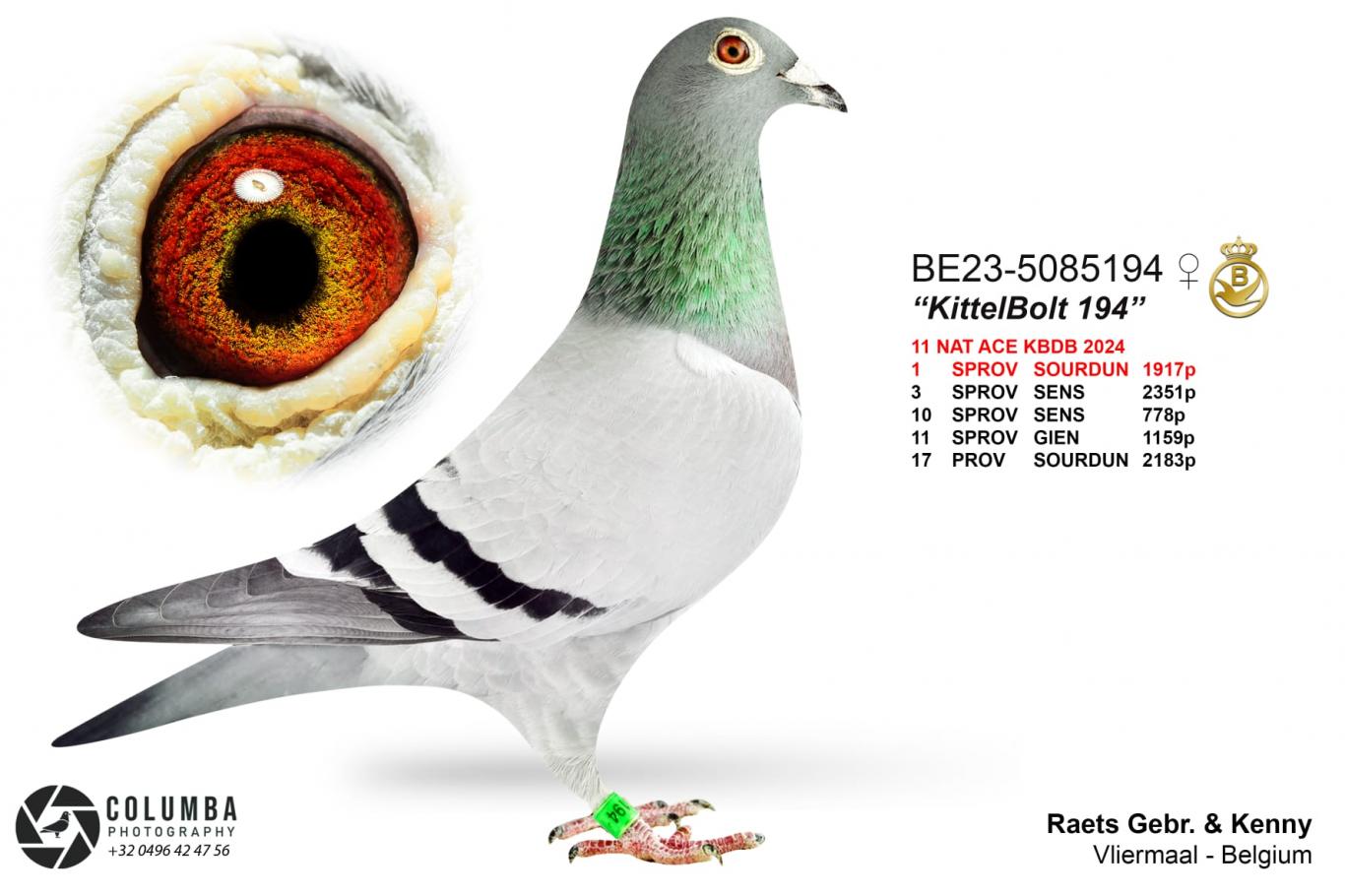
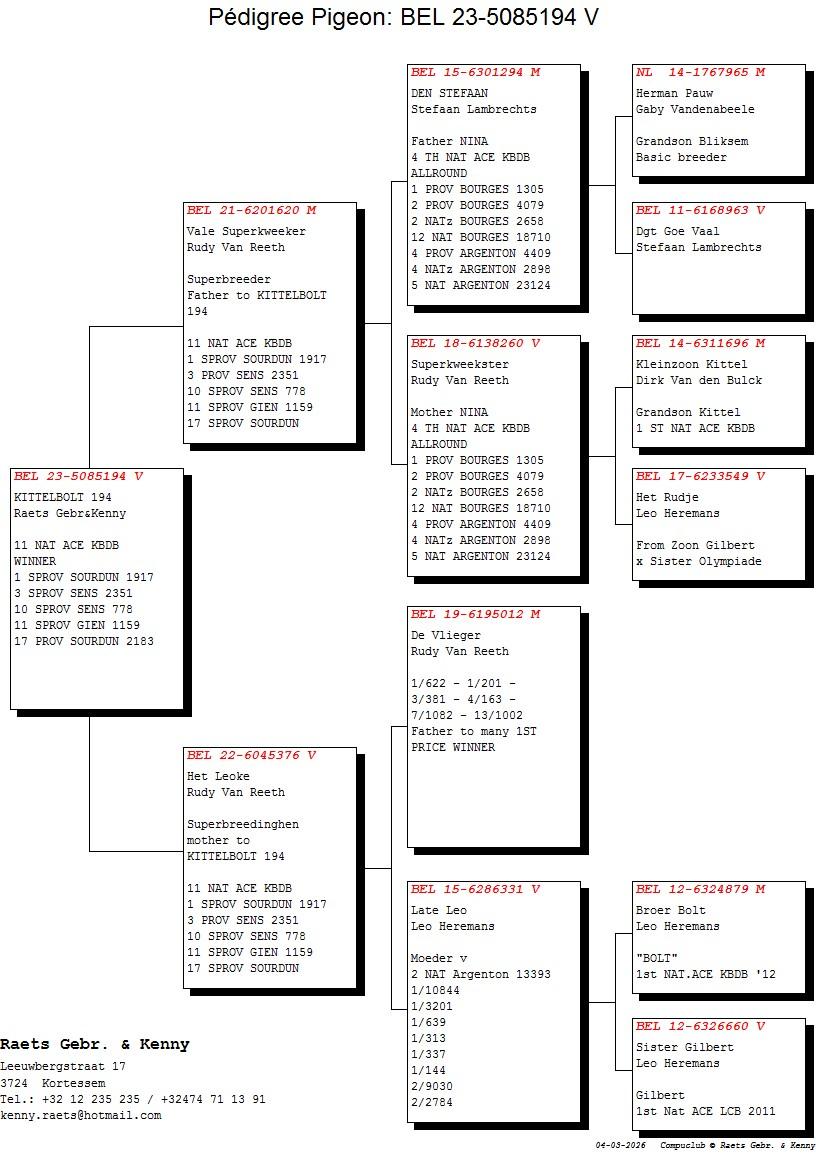
Father BE 21-6201620 Pale – Rudy Van Reeth.
Brother of 4th Nat. Ace Pigeon All Round KBDB.
Son of "294/15" Stefaan – Stefaan Lambrechts x "260/18" Line Kittel x Olympiade 003 Leo Heremans via Rudy Van Reeth.
Mother BE 22-6045376 Het Leoke – Rudy Van Reeth
Daughter of "012/19" De Vlieger, winner of 2 x 1st Rudy Van Reeth x "331/15" Late Leo is the line of Bolt and Gilbert Leo Heremans and dam of 2nd Nat. Argenton 13,393 p.
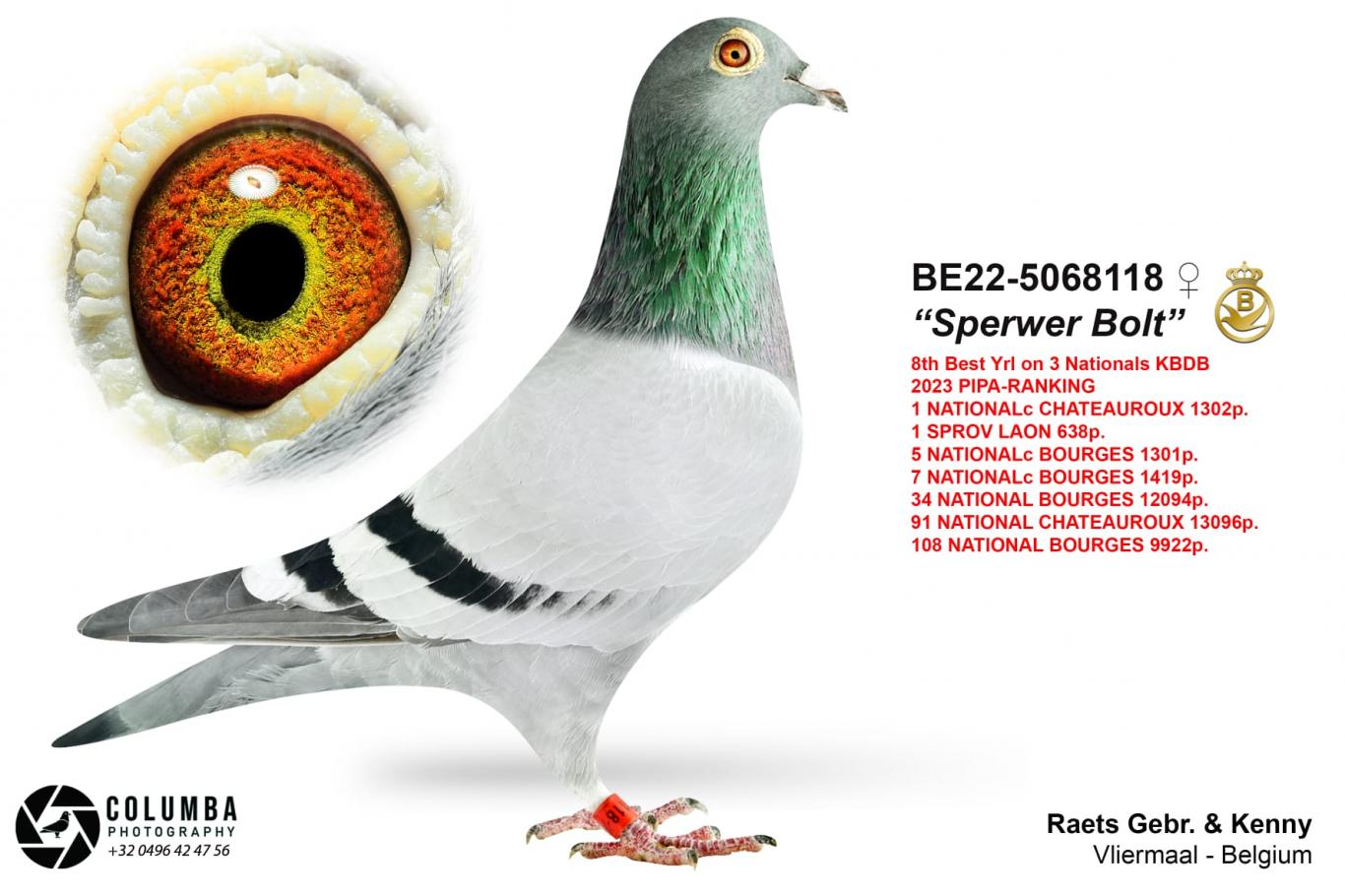
BE 22-5068118 “Sperwer Bolt”
8th Nat Ace Pigeon heavy middle distance PIPA ranking (3 KBDB races)
1 Nat (z) Chateauroux 1.302p
1 S.Prov. Laon 638p
5 Nat (z) Bourges 1.301p
7 Nat (z) Bourges 1.419p
34 Nat Bourges 12.094p
91 Nat Chateauroux 13.096p
108 Nat Bourges 9.922p
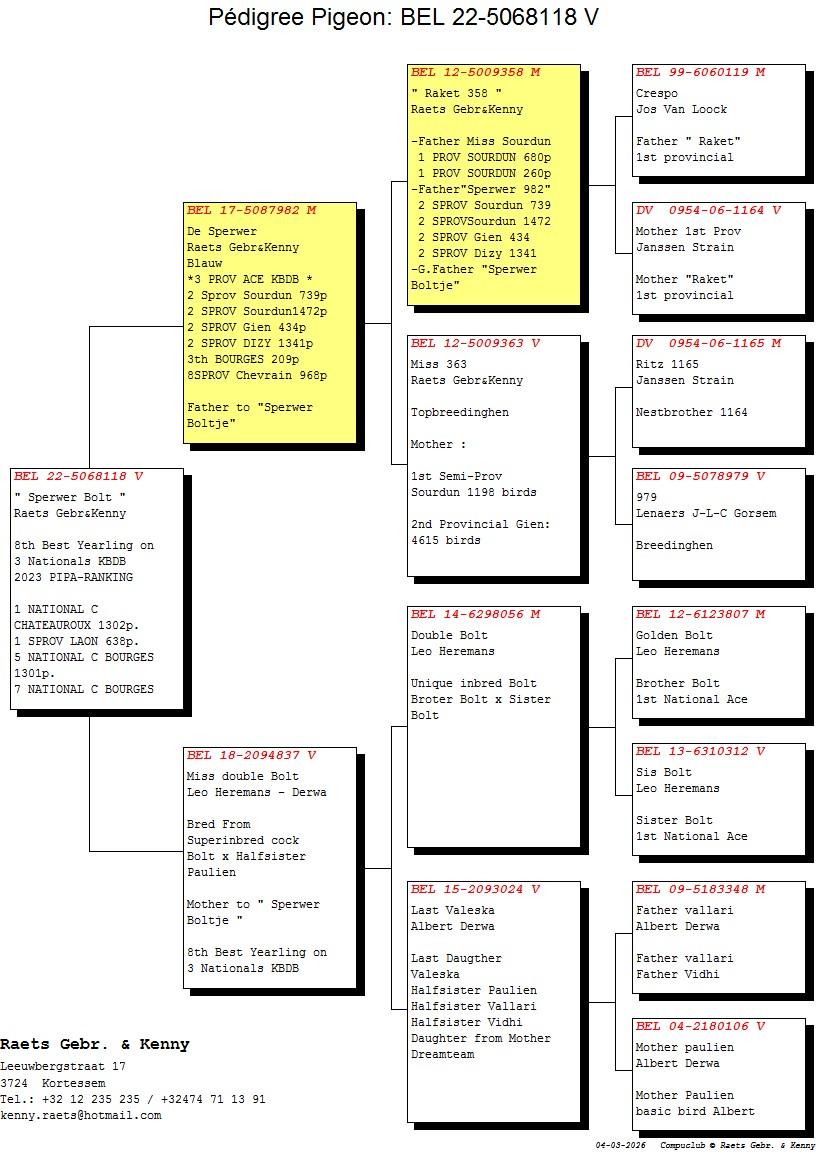
Father BE 17-5087982 De Sperwer
Won 3rd Prov Ace Pigeon Middle Distance KBDB – 2 S.Prov. Sourdun 1,472p – 2 S.Prov. Sourdun 739p, 2 S.Prov. Dizy 1,341p – 2 S.Prov. Gien 434p – 8 S.Prov. Chevrain 968 p.
Son of “358/12” Raket 358 x “363/12” Miss 363
Mother BE 18-2094837 Miss Double Bolt – Leo Heremans x Albert Derwa
Daughter of “056/14” Double Bolt Leo Heremans x “024/15” Last Valeska Albert Derwa
Young Pigeons
The young pigeon racing team isn't the main goal; they naturally hope to achieve good results here, but the main goal is to learn well and then select. Around 200 youngsters are bred over three breeding rounds for racing. All are darkened: the third round immediately after weaning and the others from early March until the longest day of the year. The third round is kept together if they don't breed together; otherwise, they are also placed on the sliding door system. The first and second rounds are always placed on the sliding door system and train together.
The young pigeons don't get any straw in the loft at the beginning of the weaning period. We keep the loft dry with loft white and, once the youngsters start sitting in the boxes, we switch to pea straw.
We continue to feed our young pigeons breeding mixture for a while after weaning. The reason for this is that we like pigeons that can develop properly thanks to the nutrition they receive. Afterwards, we switch to 3/4 Gerry Plus and 1/4 Breeding. Once they're really starting to train, we switch to 100% Moulting mixture, which we race them up to 250km. After that, we add Energy from Versele-Laga, but no Champion. We feed our youngsters once a day after release, and they're definitely getting enough.
The youngsters are trained very well for their first official race, but they don't travel further than the 30km where they stop with the old birds and yearlings. They do travel there more than the experienced pigeons, but once they're on the race, the travel stops. We don't focus on the youngsters, so we don't push them too hard. The goal is mainly to have good yearlings and then be strict with the old birds. Currently, only 13 old birds in total are ready for the 2026 season.
We congratulate the entire Raets family on these fantastic results and wish them a fantastic season in 2026.
Be sure to keep an eye on their current auction, where you can find the very best of their colony.
Buelens Kim