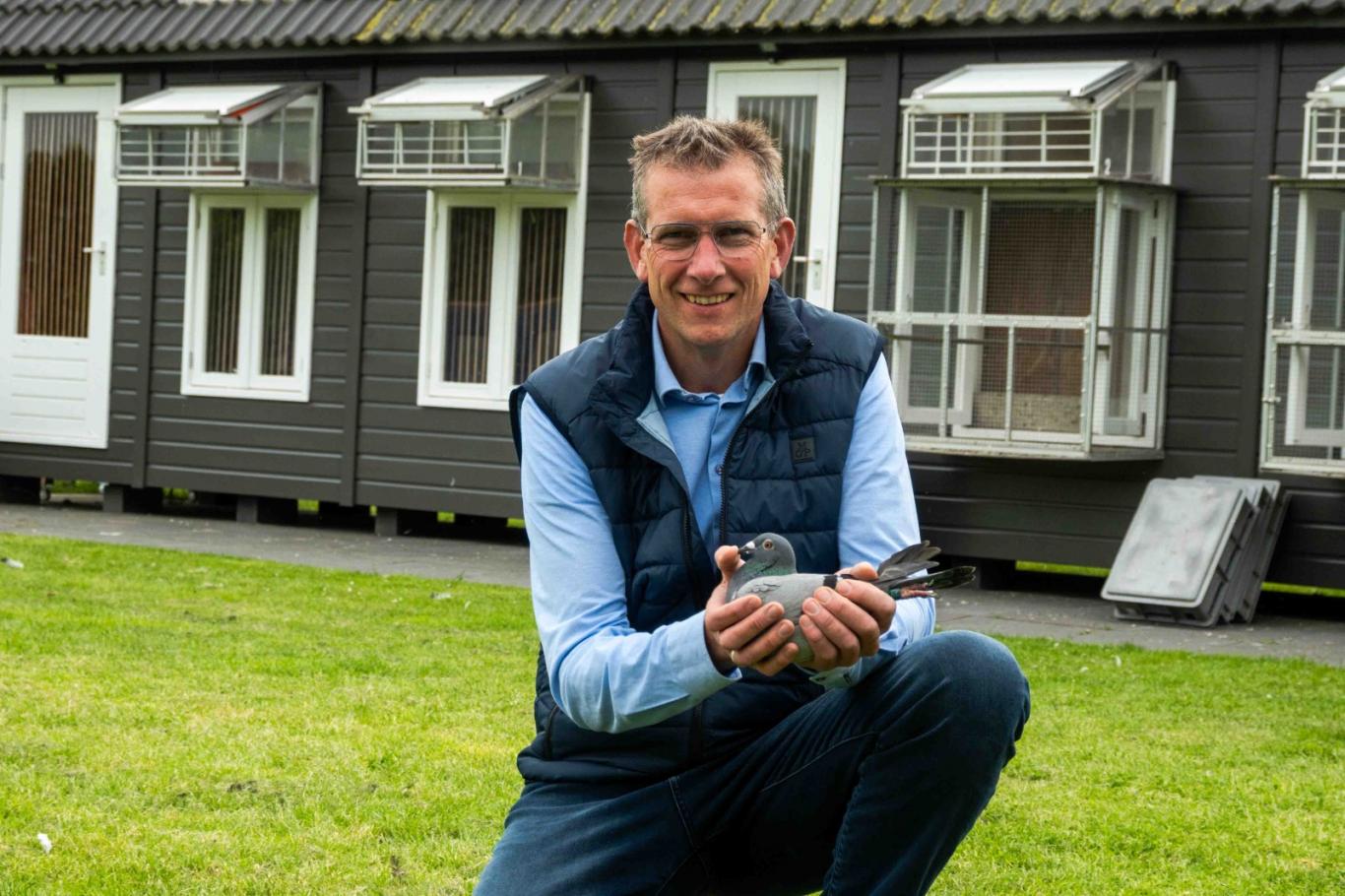
Strong start to the season for Bram ten Klei (Zuidoostbeemster, Netherlands) with a dominant performance from Duffel
22 Apr 2026
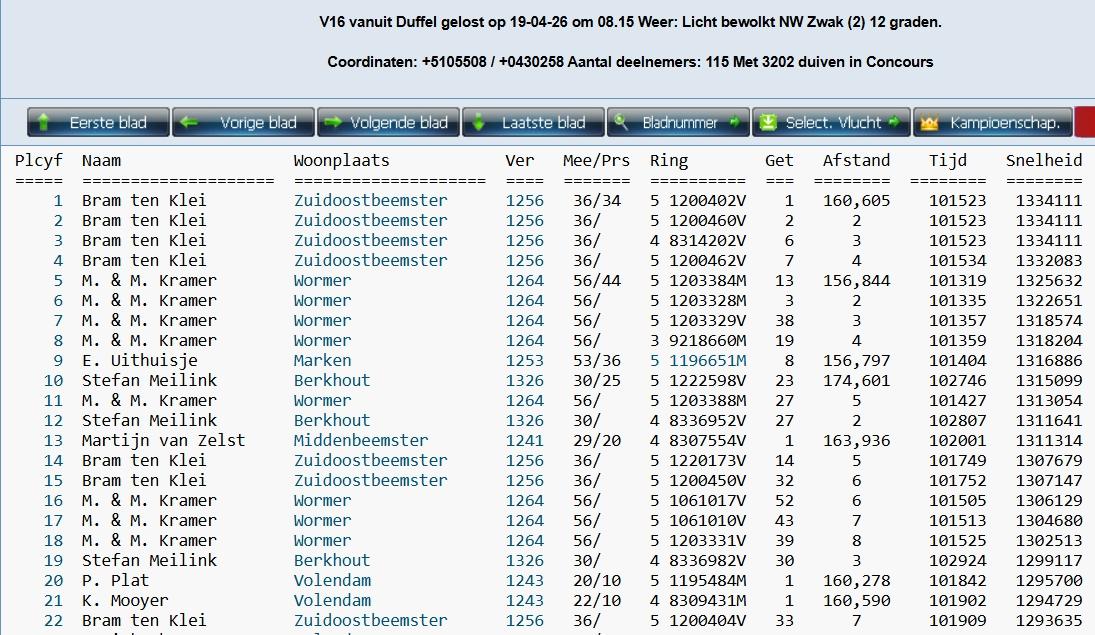
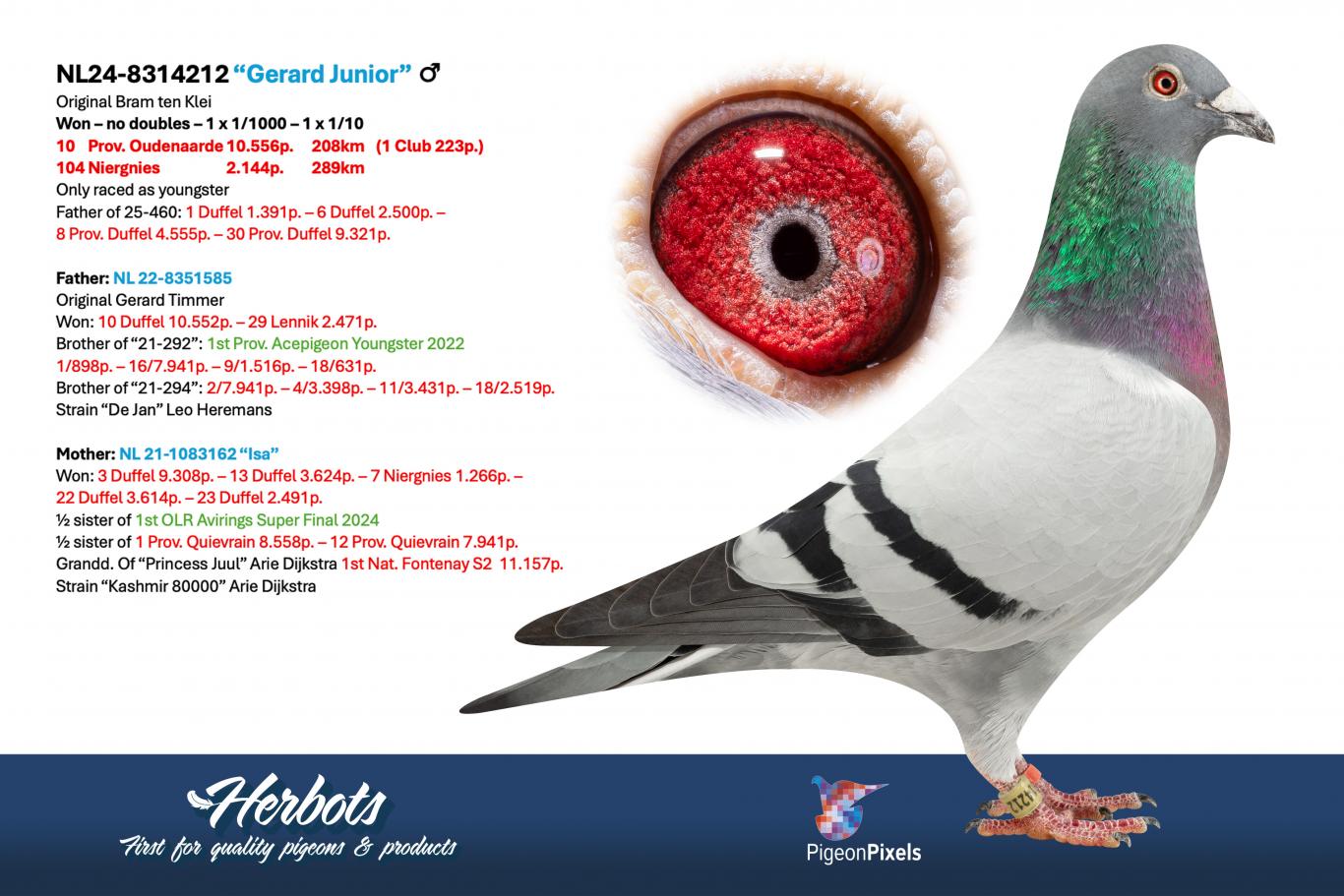
Bram ten Klei delivered an impressive performance during the first official race of the 2026 season from Duffel. The pigeons were released at 8:15 a.m. under slightly cloudy conditions, with a light northwest wind and a temperature of approximately 12 degrees. A total of 115 fanciers participated with 3202 pigeons. Against this strong field of competitors, Bram dominated the top of the results. He impressively took first, second, third, and fourth place with speeds around 1334 meters per minute. He remained strongly represented further down the results as well, with several pigeons well within the top twenty. With 34 prizes from 36 pigeons entered, Bram also achieved an exceptionally high prize percentage. A striking detail: two daughters 25-1200402 (1st place) and 24-8314202 (3rd place) from his foundation pair even managed to place in the top four.
Pedigree pair makes its mark
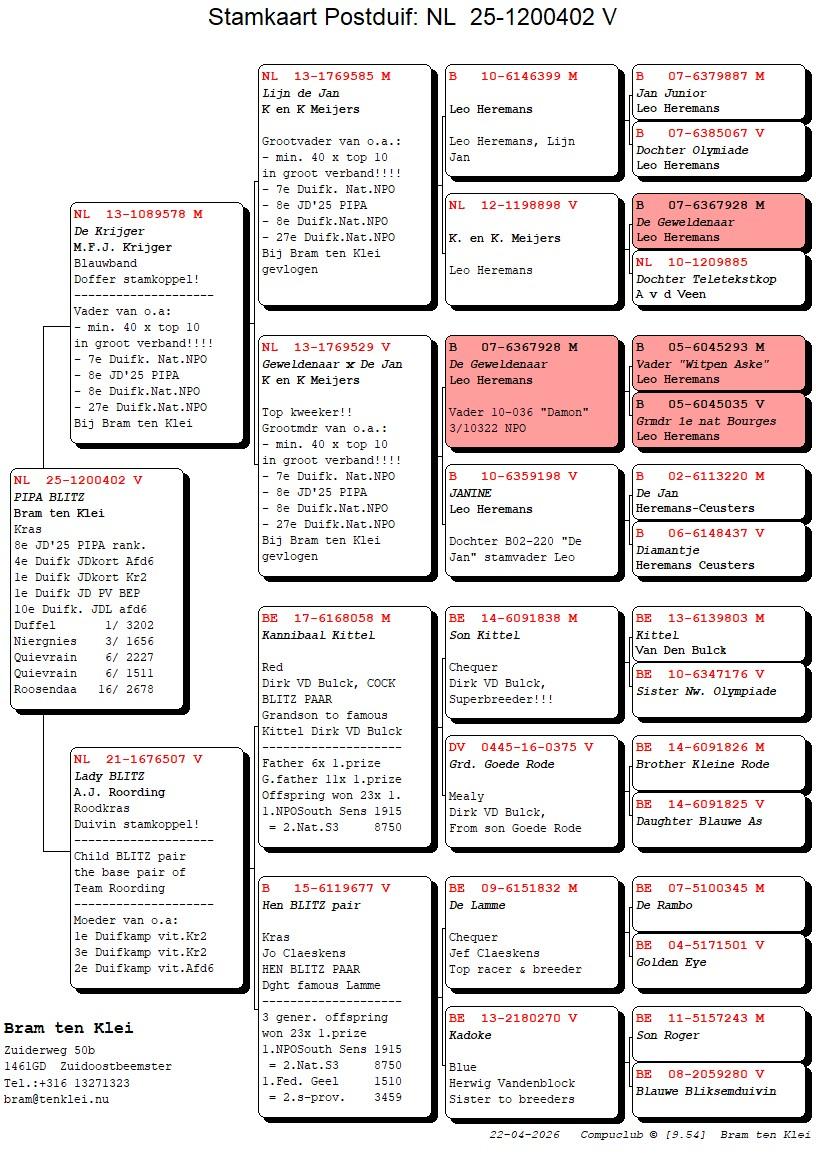
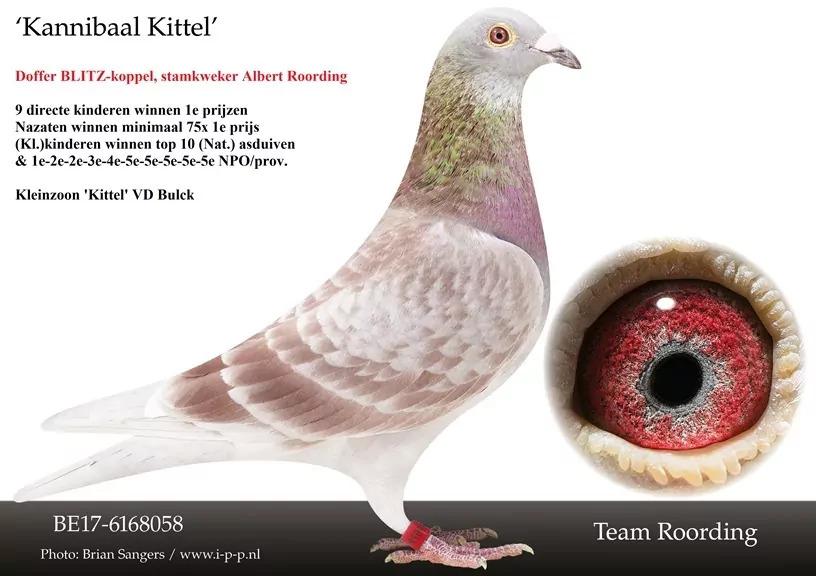
The combination brings together the best genes of M.F.J. Krijger and the world-famous BLITZ line of A.J. Roording, thereby combining the very best of Dirk van den Bulck, Kittel, Goede Rode, and Leo Heremans.
Paternal side “De Krijger” (NL13-1089578)
This stock cock has already produced several sprint and middle distance aces. His line goes back to Leo Heremans (Jan line) with breeders such as B10-6146399 and NL12-1198898, both pure Heremans pigeons.
Maternal side “Lady BLITZ” (NL21-1676507)
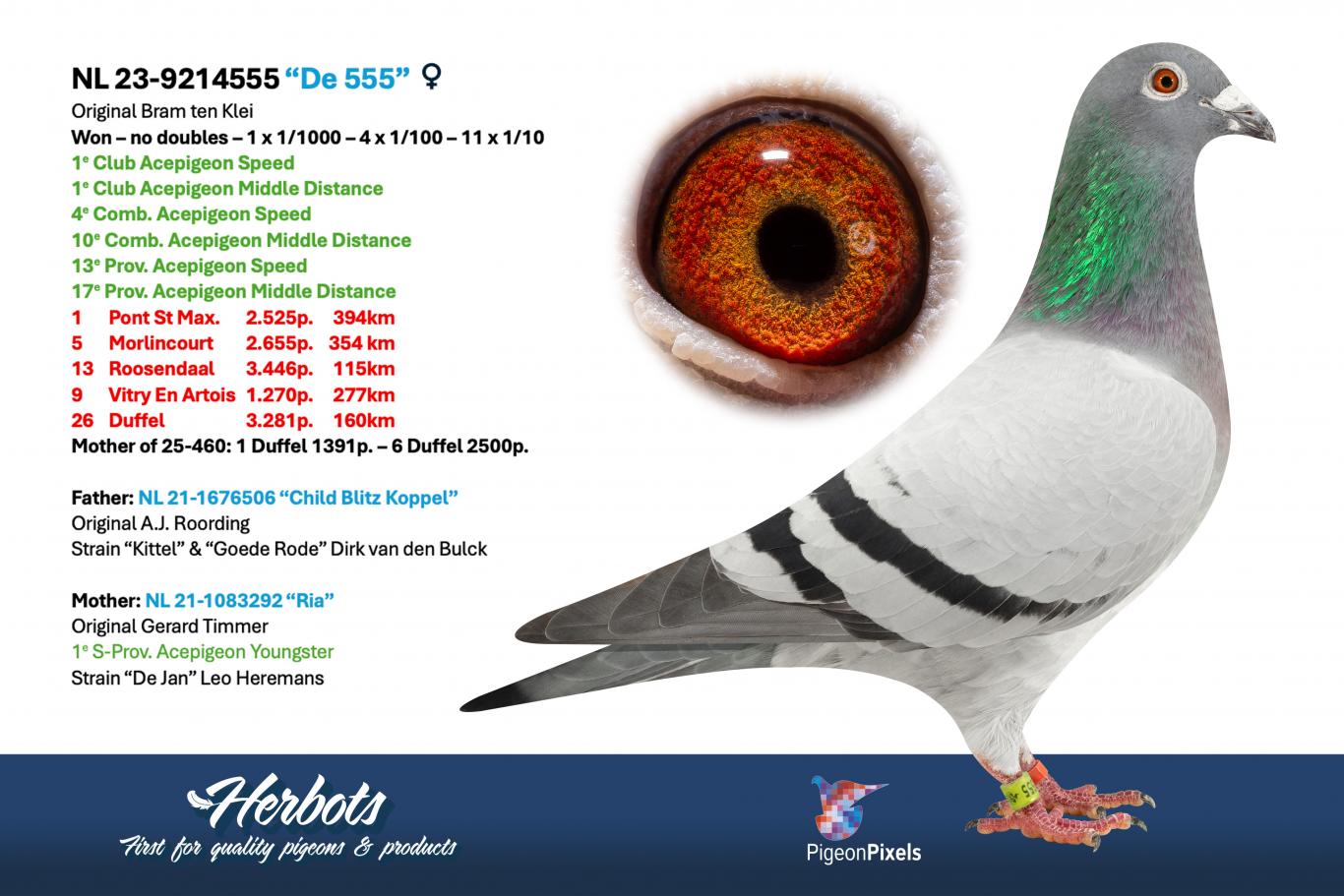
Daughter of the legendary BLITZ pair Roording. This line has produced generations of winners with countless 1st prizes and NPO victories. Grandfather is BE17-6168058 “Kannibaal Kittel”, grandson of the world-famous Kittel (Dirk van den Bulck). Grandmother is 15-6119677 “Hen BLITZ”, herself the mother of several NPO winners.
25-1200402 (results 2025)
- 3rd Young Bird Champion PV BEP
- 1st Young Bird Champion Short Distance Circle 2
- 10th Young Bird Champion Total Circle 2
- 4th Young Bird Champion Short Distance Department 6
- 8th PIPA ranking Best Young Bird Sprint
- Niergnies 289 km 7 / 6018 p. (Prov.)
- Quievrain 249 km 6 / 2227 p.
- Quievrain 249 km 16 / 5858 p. (Prov.)
- Roosendaal 115 km 52 / 9624 p. (Prov.)
- Duffel 161 km 14 / 1394 p.
- Roosendaal 115 km 9 / 204 p.
- Duffel 161 km 126 / 2500 p.
- Lennik 197 km 129 / 2401 p.
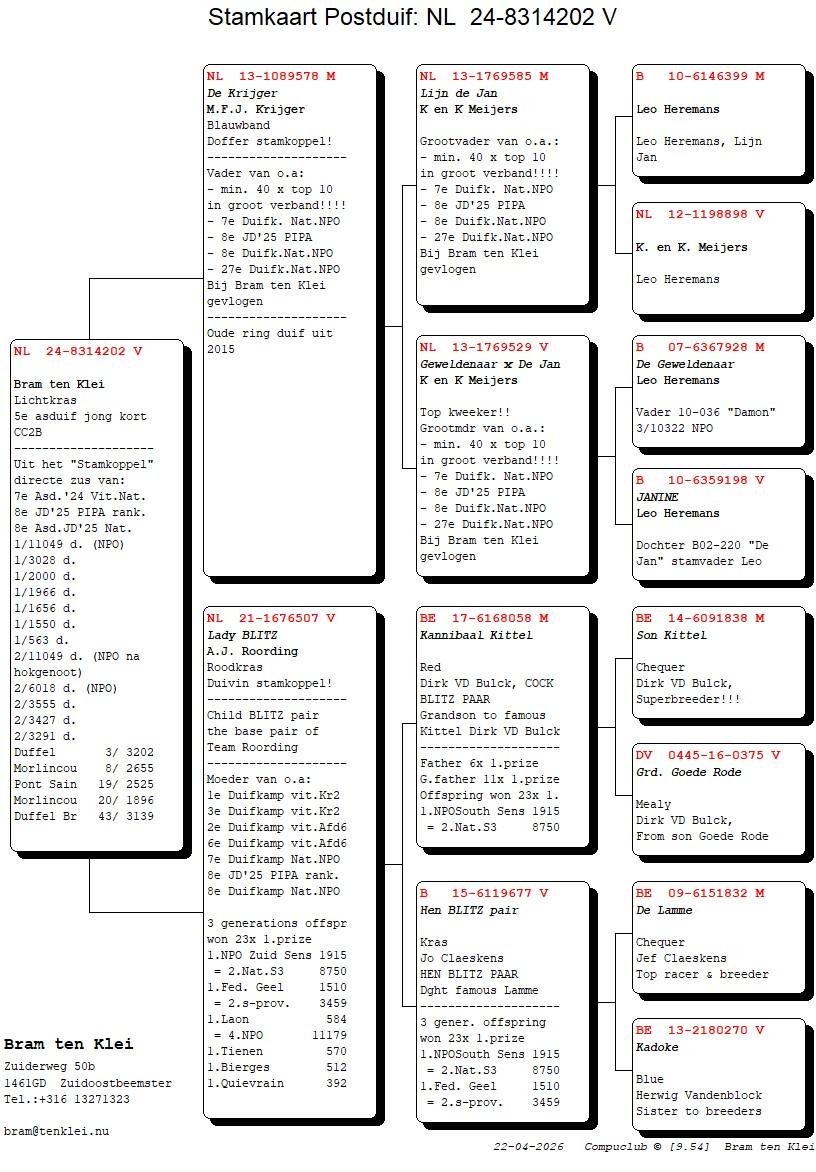
24-8314202 (results '24 - '25)
- Morlincourt/Noyon 354km 6/2655 p.
- Pont Saint Maxence 393km 19/2525 p.
- Morlincourt/Noyon 354km 89/7410 p. (Prov.)
- Duffel 160km 119/12110 p. (Prov.)
- Niergnies 289km 204/8365 p. (Prov.)
- Roosendaal 115km 150/3446 p.
- Duffel 160km 173/3555 p.
- Oudenaarde 208km 162/2854 p.
- Lennik 197 Km 206/3512 p.
- Quievrain 249km 215/3394 p.
- Duffel 160km 147/1975 p.
- Quievrain 249km 282/2635 p.

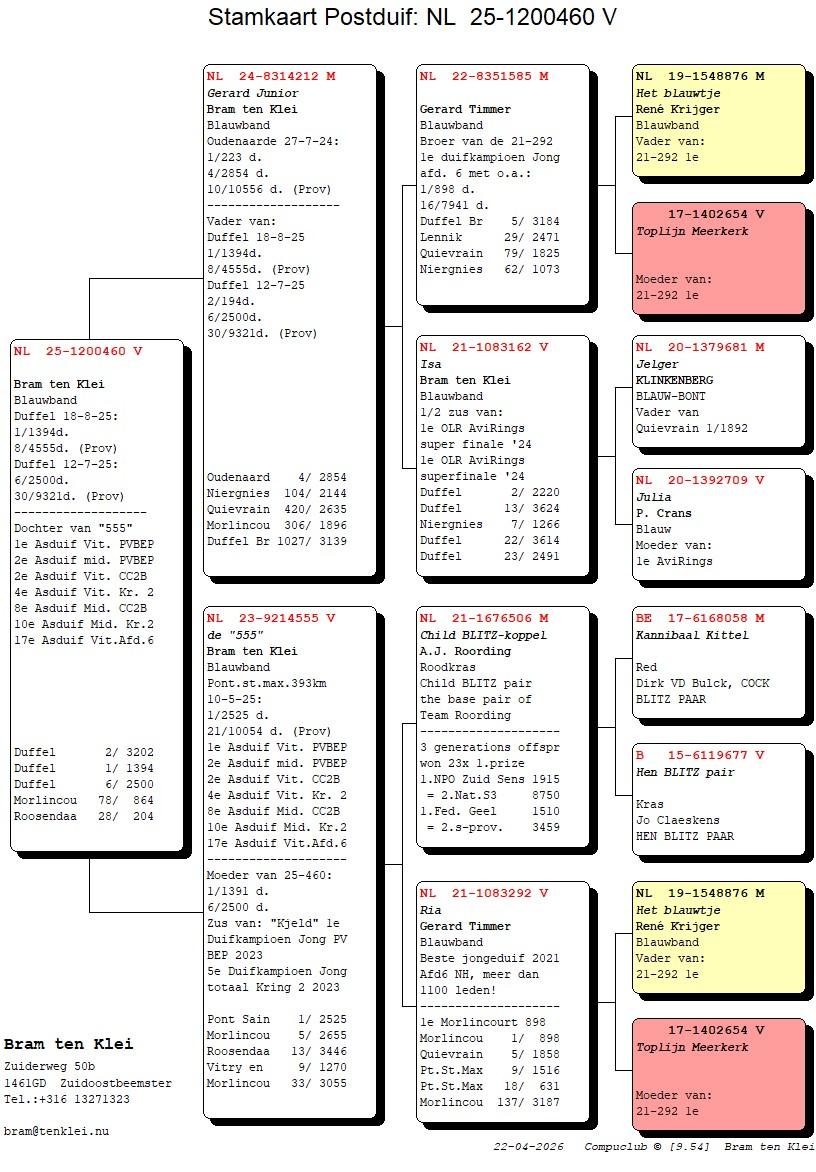
The second-place winner, 25-1200460: both of her parents were auctioned off through Herbots last December. This hen comes from the same bloodlines as the previous hens.
Hens on widowhood: simple, pleasant, and effective
In my system, I work exclusively with hens on widowhood, a system that suits me particularly well. The hens are kept on wire mesh, which keeps maintenance to a minimum during the week. Cleaning takes hardly any time, which fits in perfectly with my busy schedule. Bram only races his cocks as young birds. As far as training is concerned, when the hens are in good health, they often take the initiative themselves. They then train exuberantly and with visible pleasure, something I greatly enjoy as a fancier. Due to my work, I sometimes come home late. In that case, my wife or one of the children helps out. They just feed them and skip training that day. Interestingly, I have noticed that this has hardly any effect on their performance. For me, this confirms how crucial a strong basic health and sufficient rest in the loft are. This system suits me and my lifestyle perfectly. As long as the results continue, I see no reason to change anything. My hens are often motivated to basket by showing them the cocks. This method gives the pigeons that extra bit of spirit. However, I have noticed that even hens that are not shown a cock are capable of flying very hard. When showing them, I leave the cocks and hens together in their breeding box, including the nest plate, for half an hour. During that time, I observe how they calm down. As soon as they are relaxed, I quietly take the hens out of the loft to basket them.
The feeding schedule for old birds
On Sunday morning, they are fed generously with 45% Versele Laga Gerry plus/45% purification and 10% P40. The feed is moistened with a little Curol and Winmix from Comed is added, as well as Carbo from pigeonHP from time to time. They also have access to a pot of minerals from Dr. Marien every day and are regularly given the well-known multimix from Patagoon. Each feeding, they get about 1 tomato can (70 grams) of food per 4 pigeons, and I adjust the amount based on how I feel. After two nights in the basket, the pigeons receive a combination treatment from Stefan Göbel or a BS treatment from De Weerd in their water for disinfection on Sunday. On Monday and often on Tuesday, the pigeons also receive 45% Versle Laga Gerry plus / 45% purification and 10% P40. A handful of fresh peanuts is also fed at every feeding. Winmix from Comed is then added to the food. On Wednesday and Thursday mornings, the mixture consists of 70% Gerry Plus / 20% NPO mix / 10% P40 and a handful of peanuts per feeding. If the flights are a bit heavier, they also get more sport instead of Gerry Plus. On Thursday evening, they get 50% Gerry Plus / sport, 30% NPO mix, and 20% P40. Depending on the flight, they get 1.5x to 2x the normal amount. On a flight with two days in the basket, they get a little extra food on Thursday morning.On Fridays, the pigeons receive their normal amount of Gerry Plus in the morning and evening. On short speed flights, they only receive a little Zoontjes feed in the evening. Before basketing for the heavier flights, I want to replace the Gerry Plus with a little NPO mix. A littleༀalways mixed into the feed so that the pigeons are offered fresh grit every day. In addition, feeding is also done based on intuition; depending on the weather forecast and the distance, more/heavier or less/lighter feed is given. On Saturday, when they return home, a generous mixture of Zoontjes/Embregts NPO mix/Gerry Plus is ready on the ground. About 1-2 hours after their return, the cocks are removed and the perches are replaced in front of the nesting boxes. They are also fed generously. Belgasol is added to the water, and for heavier flights, Recup Fast from pigeonHP is added to the water. The hens are then given rest to recover from the flight.
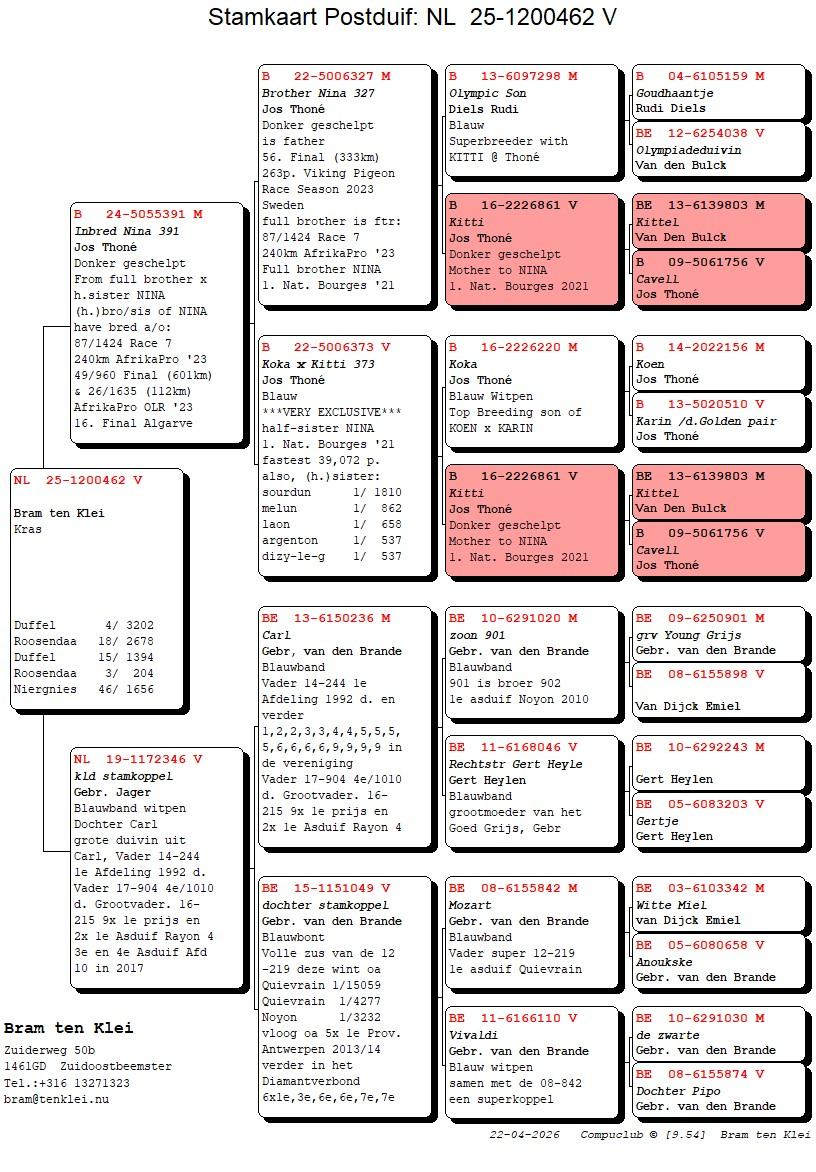
25-1200462 thus took 4th place, behind three loftmates. As you can see, this hen has 50% Jos Thoné bloodlines and 50% Gebr. van den Brande bloodlines in her genes.

Bram, congratulations on this wonderful season opener on behalf of the entire Herbots team!
Christophe Mathues