Van Oeckel Bart & Nance (Oud-Turnhout) 1st Overall Provincial Champion KBDB Antwerp for the second consecutive year
26 Nov 2026
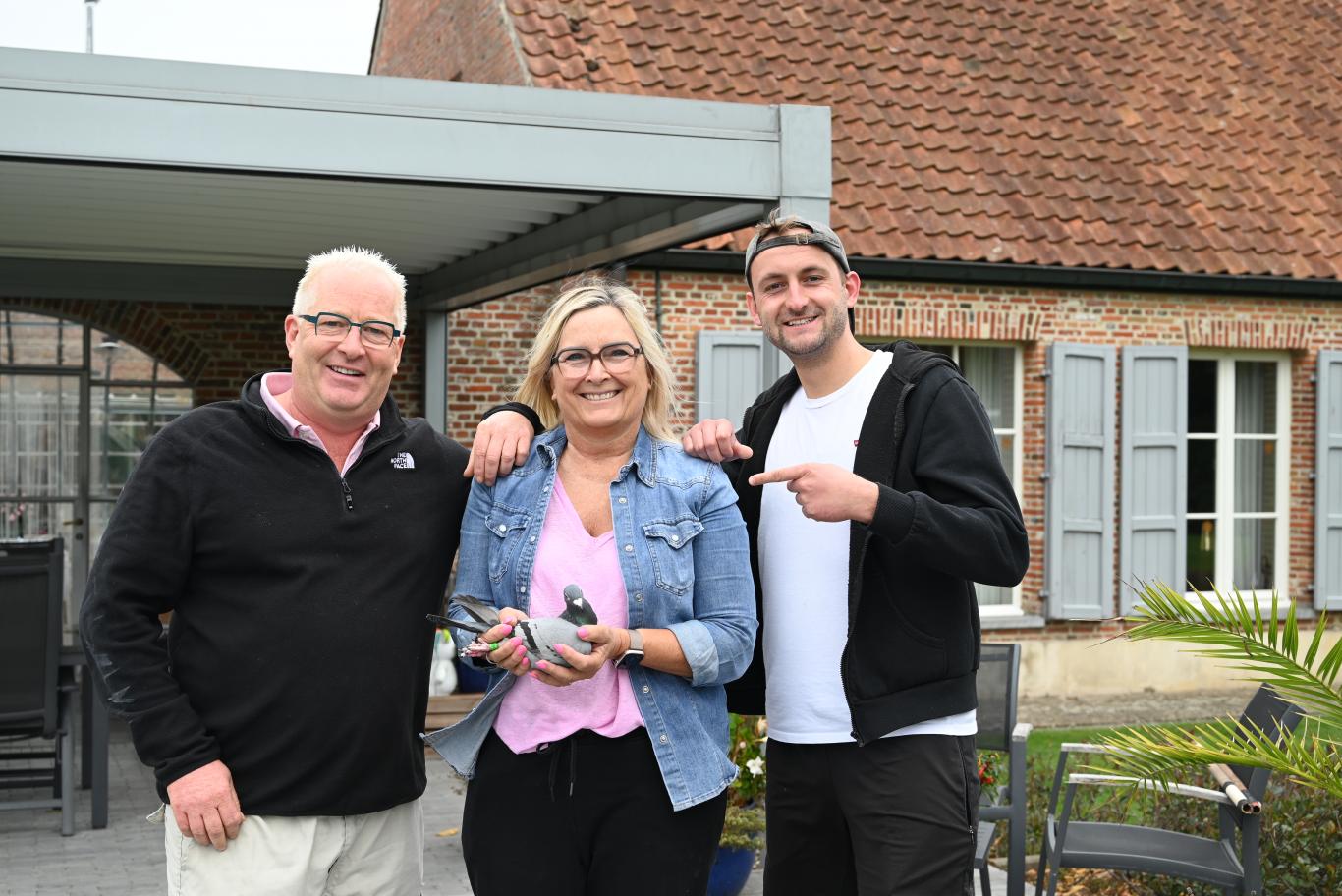
Nothing but good news from the Van Oeckel household! Daughter Charlien and son-in-law Kjenten (who is also the loft manager) welcomed a new addition to the Van Oeckel family with the birth of Lou. They are now the proud parents of a son and a daughter – the perfect pair – who will undoubtedly bring them a great deal of happiness and joy.
Things are also going exceptionally well on the pigeon racing front, as Team Van Oeckel has deservedly been crowned 1st Overall Provincial Champion KBDB Antwerp. This is the second consecutive year they have claimed this prestigious title, having also been crowned Overall Provincial Champion in 2025.
Kjenten: “For years, this overall provincial title was missing from our list of achievements. When we won it in 2025, we were delighted to finally tick that box. And now, here we are… enjoying this success for the second time!”
A first question: given that you are the Overall Provincial Champions, can we describe your colony as an all-round colony? Bart: “If we have a team ready for five different disciplines, you can hardly call it specialization. Nance takes care of the 100 breeding pairs (including nurse pairs), and Kjenten and I are in charge of the racing pigeons. Our racing loft is divided into two sections. Kjenten looks after the racing pigeons in the right section, and I look after those in the left sections. On the left, we have 18 hens that are raced weekly in the sprint races (Quievrain and Noyon). In addition, we have 60 hens for the middle distance.
Kjenten looks after a group of 70 hens and 50 cocks that are raced in the long-distance and even marathon races.
The different groups are raced either on pure widowhood (with a partner staying home) or according to the "chaos" system. When asked which of the two systems is best, the answer was "ace pigeons are usually raced on..." the cages with partners staying at home” tactically answered
Among the elite of Belgian pigeon racing
For those who may not remember quite so well, here is a recap of their most impressive performances over the past few seasons:

Outstanding performances that can be attributed to the exceptionally strong breeding foundation on which Team Van Oeckel can rely. Rarely have we seen a breeding loft where so much quality comes together and further enhances the overall strength of the colony.
Let us highlight some of their exceptional breeders:
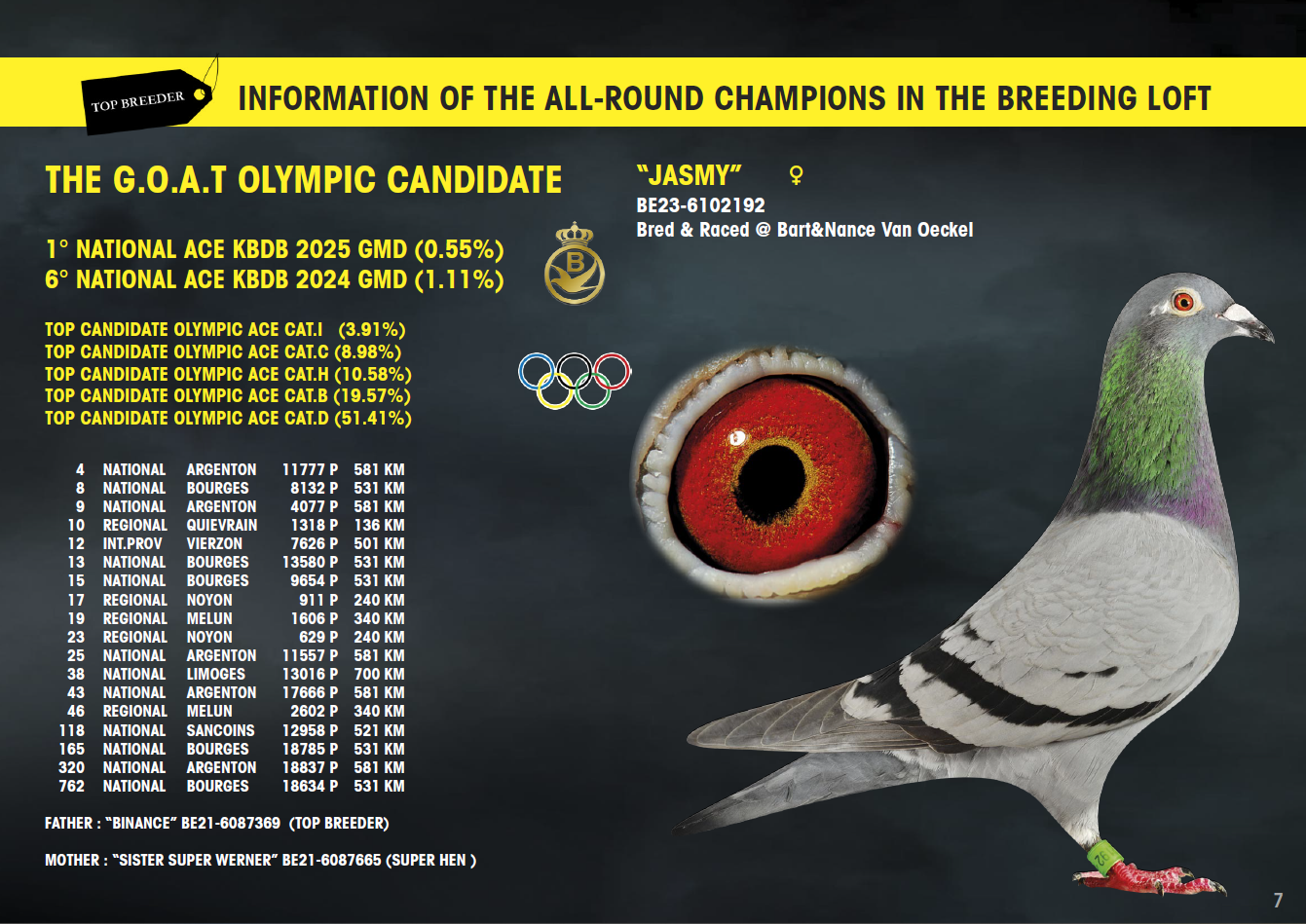
“Jasmy”
We were fortunate enough to admire them, and we're talking about "Jasmy," the 1st National KBDB Ace Pigeon Extreme Middle Distance Old Birds. "Jasmy" (B23-6102192) is perfection itself. Not only because of her unique performances, but also because of her beauty in the hand. A pigeon you'll still remember for decades to come.
“Binance”

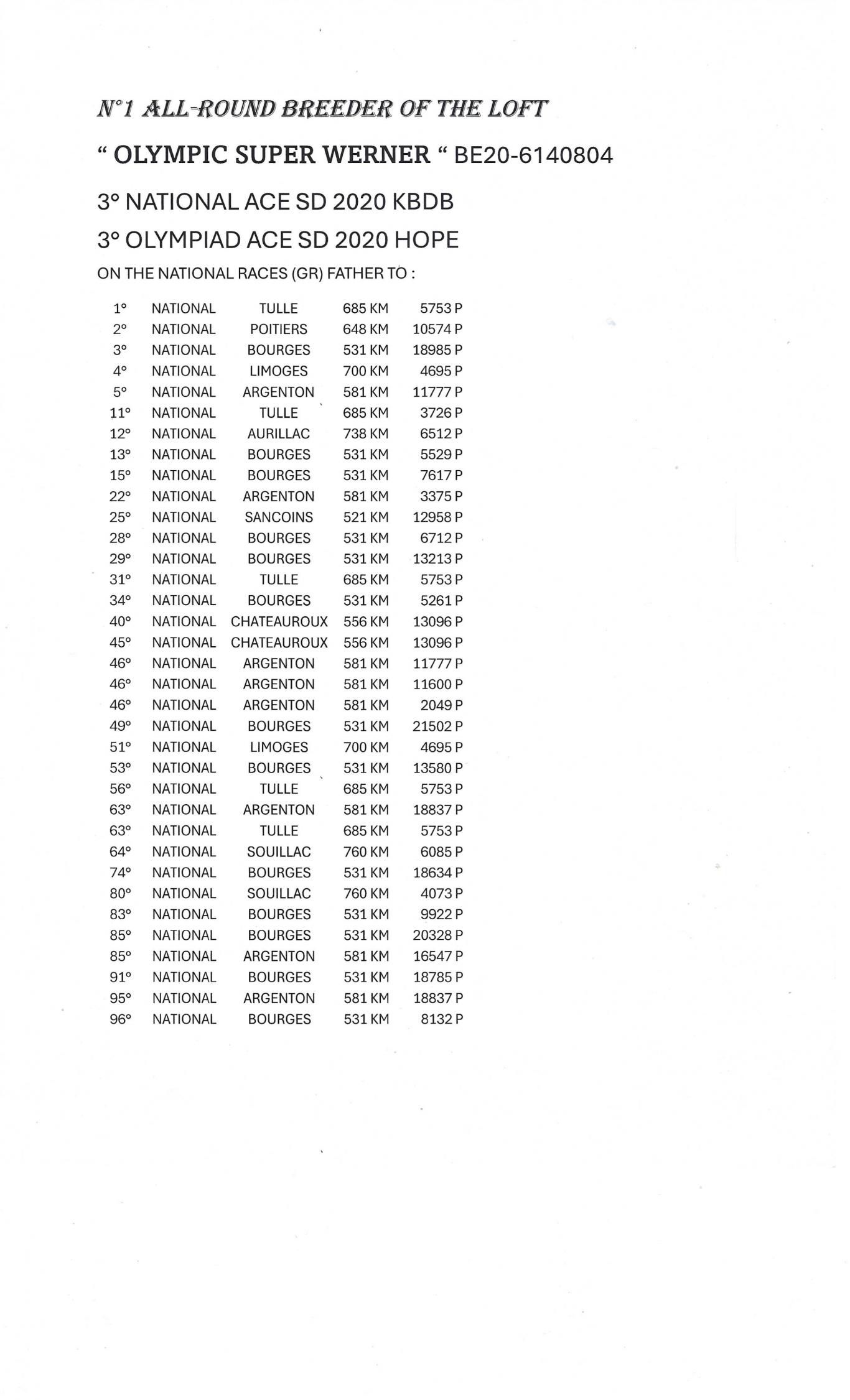
“Olympic Super Werner”

“Olympic Elena”

“Solana”

“Zilliqa”

And we could go on like this for quite some time.
Too complicated
And now for the "care" chapter. Honestly, on the way home, I wondered how Bart and Kjenten could possibly manage everything. The different groups, the different play methods, and then even more so, the different care methods. In short, "the only regularity in their entire system is the irregularity."
Each loft has its own preparation, each loft has its own feeding method, each loft has its own motivation method, each loft has its own training schedule. But we're trying to create some clarity.
Medical – food and by-products
We use feed mixtures from Beyers and Van Robaeys, ranging from light to heavy, and for these we use low-protein, breeding, and energy mixtures. Everything is based purely on feeling and consultation. Please don't ask for schedules, as we certainly won't be able to provide them.
Medically, all pigeons are treated against trichomonas and paramyxovirus before their first and after their last flight. In October, they are treated with Dokamox for 10 days in preparation for a paratyphoid vaccination with a live vaccine.
The breeders and does are vaccinated with rota-paramyxovirus when they are laying eggs for the first time. They are also treated for trichomonas and paramyxovirus before and after breeding. The racing pigeons are also vaccinated in the spring against rota/paramyxovirus, herpesvirus, and paratyphoid without prior treatment. The young pigeons are vaccinated against herpes at weaning, three weeks later against Rota/Paramyxovirus, another three weeks later against paratyphoid, and finally against pox using a brush. During the season, the familiar yellow drops are administered weekly. Supplements come from the Herbo-Vet range. Products like Herbochol, Herbosol, Herbo Elite Pigeon, and Omega Oil are readily available.
And regarding ornithosis, the cocks receive one treatment during the season; the hens do not. Worse still, we believe that a course of antibiotics for hens has a counterproductive effect. It can, however, provide a boost for cocks.
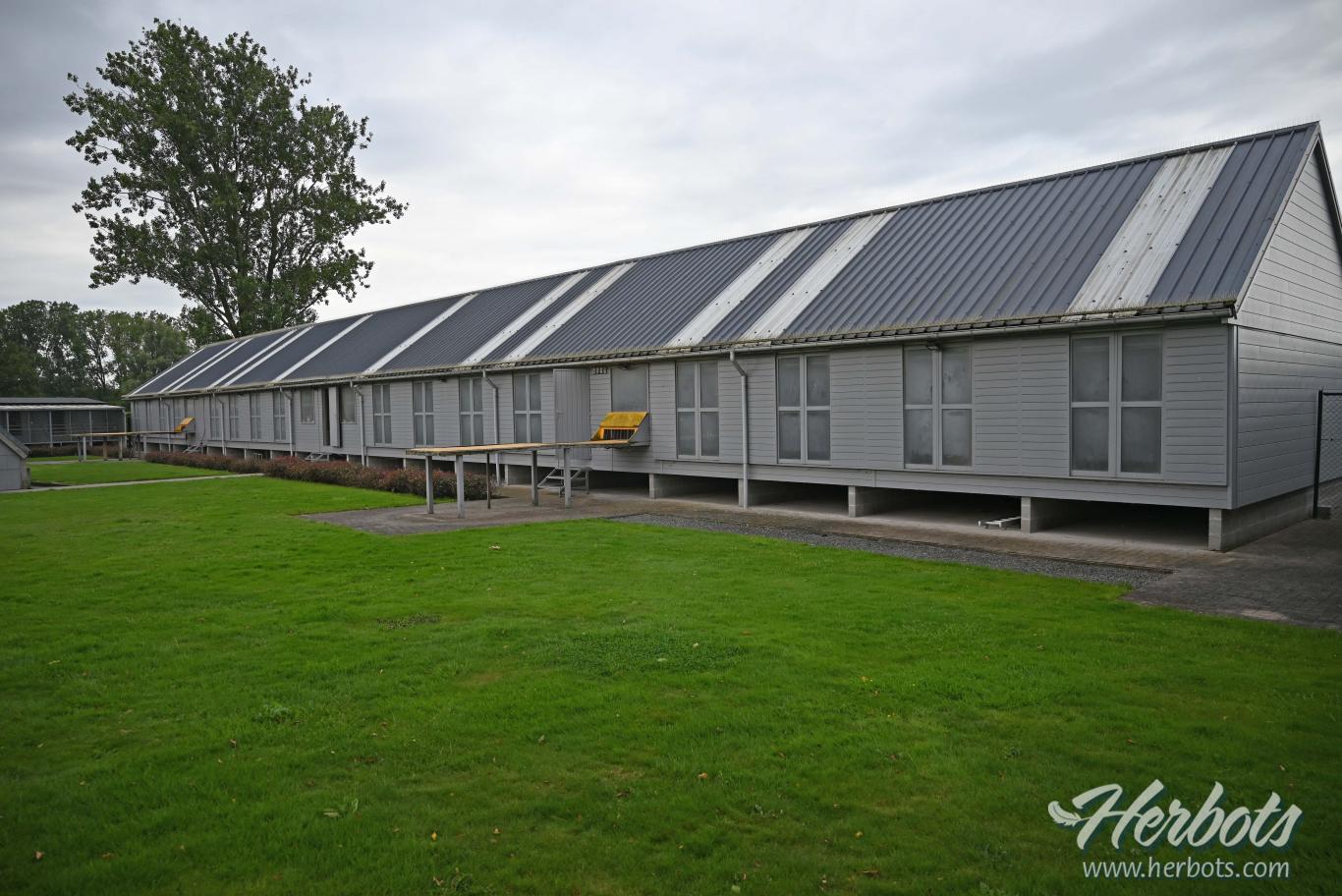
Quarantine cage.
It's all mentioned in passing, but we feel it's a very important link in the chain. Pigeons that arrive too late, or those that are brought back, or those that don't recover well, are placed in a quarantine section. There, they receive "the necessary love," are treated for tricho and coxi, and when they look a bit better, they can rejoin their former loft mates and return to the system. By placing pigeons that need rest in a separate section, we ensure that those who are still picking up the pace aren't held back in any way. Here, all pigeons get a second chance, but our experience shows that not all take this second chance.
Quievrain on Wednesdays
A question we get asked a lot is whether we fly the pigeons a lot during the week. If you're referring to the training period, we can say that from mid-March onwards, the training baskets are dusted off, and all the racing pigeons (including those destined for the long-distance and extreme long-distance) are in Vilvoorde within five days. Afterwards, they travel with the club to Quievrain, and from then on, they see the inside of a basket every week (unless the weather is very bad).
Once the pigeons are in good form, they're no longer flown, but we send them on a training flight from Quievrain on Wednesdays. Even the long-distance pigeons complete this sprint race, before being basketed in the evening for a national race.
The young birds from the first round are flown about 30 times, those from the fourth round only 15 more times, and the rest are in between. We used to train the young pigeons regularly at Vilvoorde (57km), but on their way home, they encounter too many loose-flying flocks of pigeons, so now we only drive to Oelegem (28km).
But again...everything here is based on instinct. What we think is best at this or that moment, happens.
Motivated or not?
Where do you want us to begin? This is another thing that's purely based on feeling. What do we think the pigeons' condition is like? What's the weather forecast? These are all factors that influence our actions.
Generally speaking, sprint pigeons never come together at basketing, but after the race they do stay together for a long time. This is to prevent the hens from pairing with each other. Upon their return, the partner is always waiting half-baked.
We follow roughly the same pattern with the middle-distance pigeons. If it's a normal race, the partner is ready upon arrival; if it's a tough race, we wait until the next day to show them.
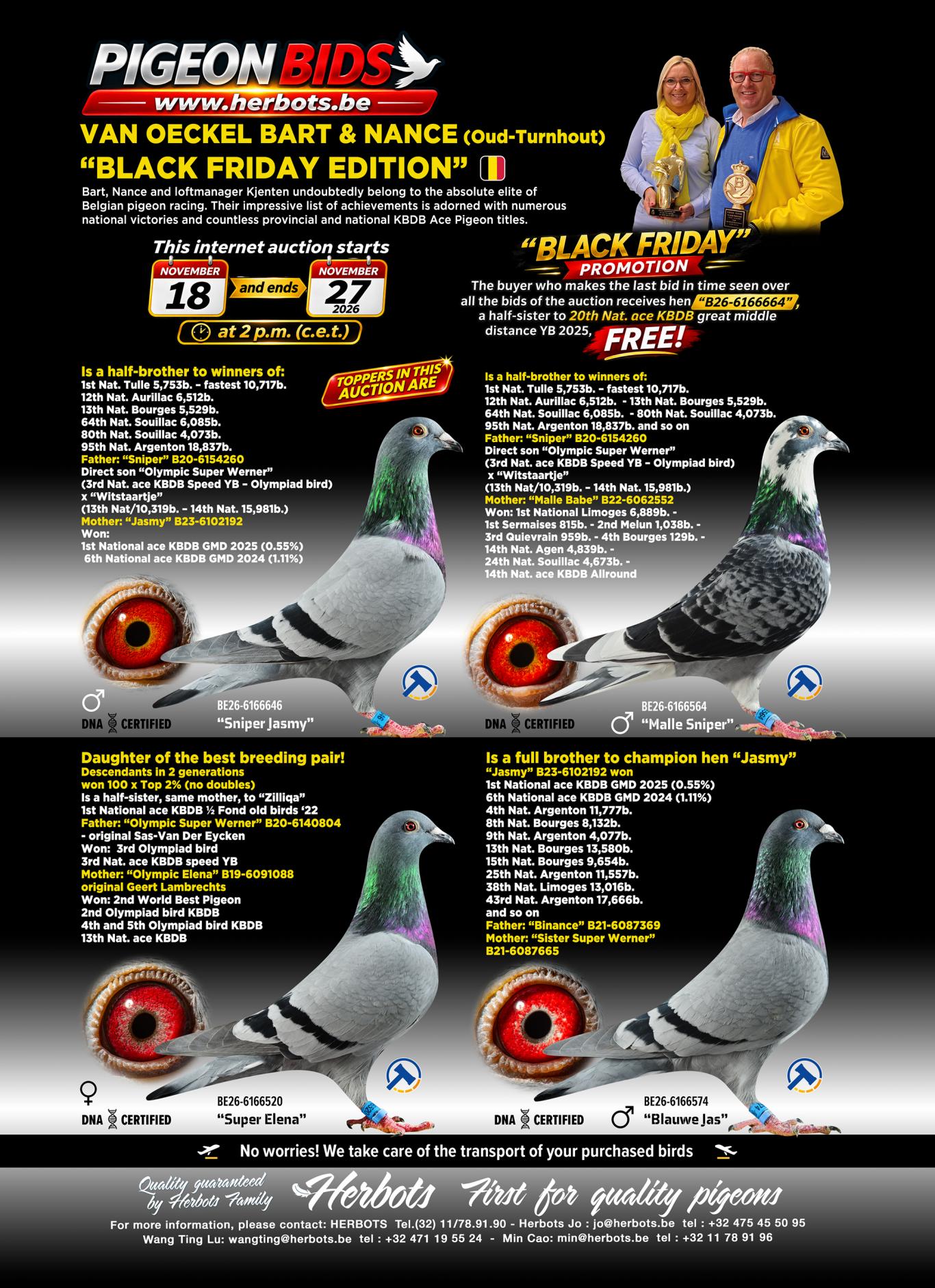
Bart and Nance Van Oeckel are currently offering a carefully selected group of pigeons in an online auction on Pigeon Bids. All are bred from their very best breeders!
This online auction ends on Friday, 27 November at 2 pm. (CET)