There they go!
27 Feb 2026
I hate traffic jams, trucks overtaking and barely moving forward. Phones ringing at inappropriate times. Unannounced visitors, but especially birds of prey that arrive uninvited to devour their meal! The latter are currently back and busy pestering "pigeon fanciers."
Young pigeons currently exploring their surroundings are, of course, the chosen prey! Whether there's anything you can do about it, according to some, bird-of-prey spray came on the market about ten years ago. Many tested it then, and according to some, it was successful, while others had no effect. Since then, mirror balls, CDs, balloons, and even the sounds of an eagle owl and a flock of crows have been played. Perhaps it all helps, but I think they'll eventually get used to it. We have an owl ourselves that gets moved occasionally.
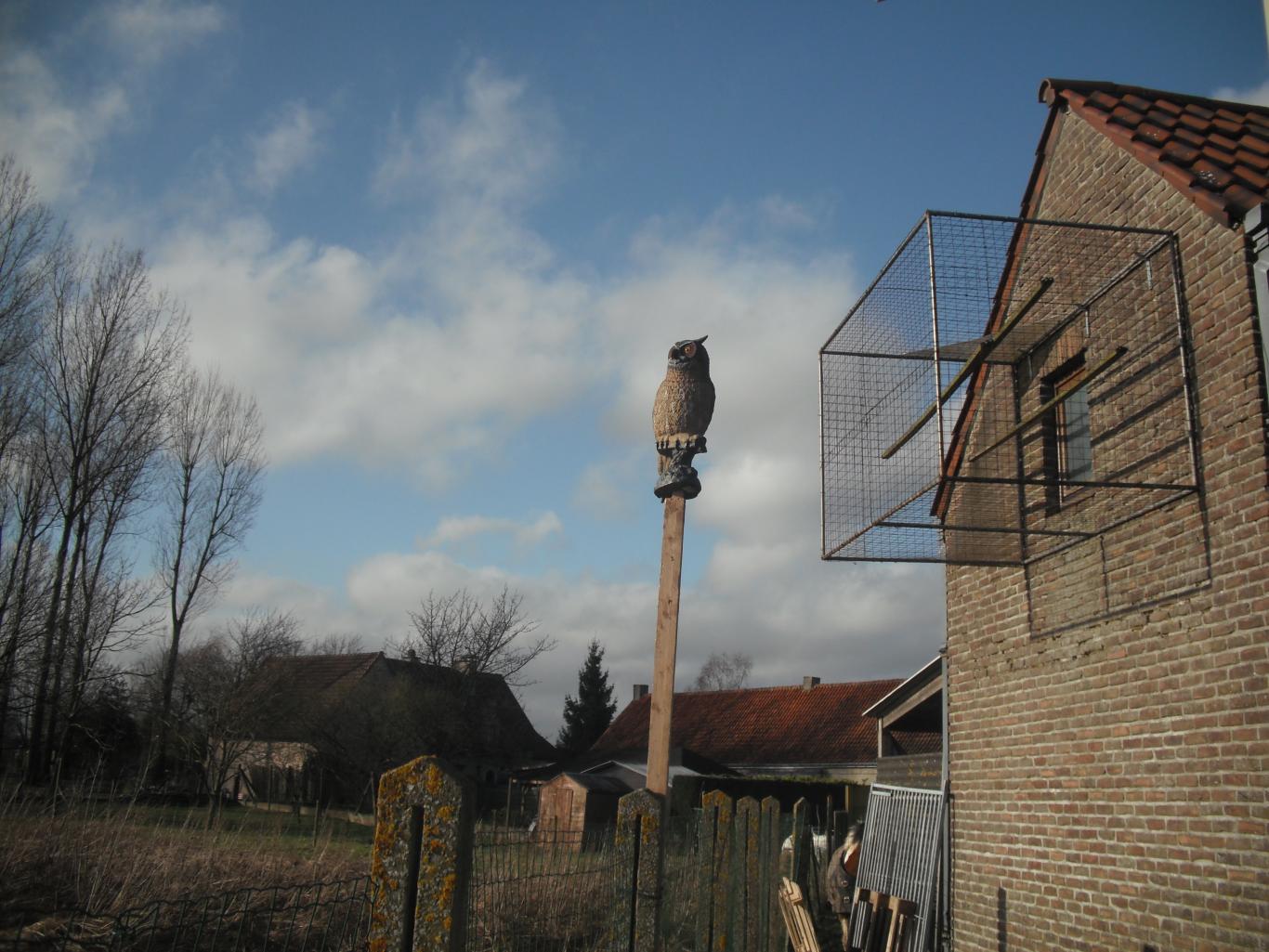
We also use the spray annually, and admittedly, when the youngsters are painted, some look awful. But I'd rather have a painted young pigeon than a dead one!
If, like us, you live on the edge of a forest, you're always bothered by it. You could say you shouldn't live there if you're involved with pigeons, but we lived there first, and the forest came later. It used to be a beautiful meadow where cows grazed in the summer, and you could see the pigeons coming from miles away, but that's over now. We got trees instead, and the birds of prey came along for free! The last bird count showed that sparrows are almost nonexistent, and you hardly see a blackbird or thrush anymore. This is the result of the ever-increasing population of birds of prey! You're not allowed to catch them because they're protected, although cursing is also not allowed.
YOUNG PIGEONS!
Quite a few young pigeons have already been weaned, with or without older hens.Here, older hens never go into the youngsters' loft. Some young pigeons follow the hens, and that's never good. It's best to select them immediately; you don't have to separate youngsters you don't like; nothing will come of it anyway. Quality must come before quantity if you want to achieve any success in our sport. For the first breeding round on December 5th, we place an insulating board in a corner with some straw on top. The waterer is left without a lid for two days, and the smartest ones quickly find it. For the first two or three weeks, they only come into the aviary to explore everything thoroughly; only then do they actually go outside. When weaning, I throw in some small colored balloons to keep them from being startled by the slightest sight. My experience, considering the birds of prey, is that it's best never to let them out before 10:00 AM and to bring them back in no later than 4:00 PM. And it's best to let them out at different times, because those "killers" know exactly when the table is being set. You can't see them, but they can see you. The most dangerous are peregrine falcons; they also possess the highest speed. They catch their prey in the air, drive the flock apart, and then they strike. The pigeons don't stand a chance, and that's very discouraging for the fancier. John, a friend of Bas Verkerk, had 60 young pigeons in his last year, and within two months, they were all taken by the birds of prey. John said goodbye to the sport and will be helping Bas during the racing season.
INCOMPREHENSIBLE!
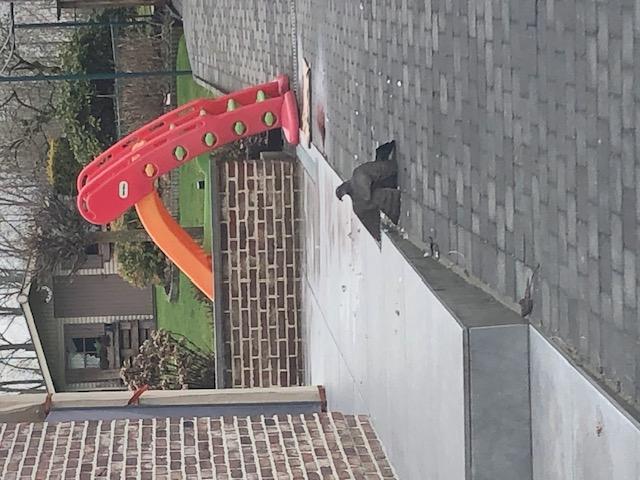
What's incomprehensible is that a bird count is conducted every year, and they always conclude that there are fewer birds each year! I personally can't remember the last time I've seen a blackbird or a thrush, even though I live next to a forest! And then you notice that the "green" falcons are putting up more and more cages and boxes to provide birds of prey with a safe nest!!! How do you explain that? The reason is supposedly to eradicate feral pigeons perched on churches and tall buildings, come on! We live just 350 meters from a castle, and there are also boxes there where peregrine falcons live. If the pigeons are outside for just five minutes, they're already there; you can set your watch by it. And forget it, they'll attack while you're watching! The peregrine falcon is the fastest bird in the world, reaching speeds of over 300 km/h in a dive. They'll almost never catch a sitting pigeon; they'll always catch them in flight! Back then, none of that existed. You could leave your youngsters outside all day without one being caught. Do that today, and a month later your loft will be empty! There used to be a lot more of us enthusiasts, but when you live like we do, with no enthusiasts around anymore, they only have to come to one place!Why? You could also ask yourself why illiterate people eat soup with letters, or why you press harder on the TV remote control even though you know the battery is flat!
FUGARE!
If at all possible, my friend Hendrik and I visit the Kortrijk trade fair every year. We usually do so on Sundays because there are fewer visitors than on Saturdays. Albert Derwa and Gaby Vandenabeele also usually come to the fair on Sundays, and then, of course, it's all about pigeons. This year, there were no pigeons at the fair, even though everything was sold out on Monday. If the fair started two days later, there would most likely have been pigeons on display. How unlucky can you be as a seller!

As usual, the Herbots stand was packed, and Benzing was also more than busy. It's a fantastic device, which we actually use ourselves and are, of course, extremely satisfied with. The service is fantastic, and when we call Tom, he always answers – a great guy, as Eddy Wally would have said! And with the beautiful weather forecast, we'll soon see the "quievrainists" taking their baskets down from the attic to take their pigeons for a spin. March is just around the corner, and things move quickly. Pure "quievrainists" usually start on the nest; if the weather isn't ideal, nest pigeons are usually better off than widowers. Widowers prefer warmer weather. As for preparation, there are many ways to prepare: some breed in winter, others let them brood once or twice and then go into widowhood. Albert Derwa's hens were winter-bred; in other years, he paired them so they were bred at the same time as the second round of his breeding pigeons. Here, they were paired so the youngsters were ready to be released around March 20th, and after that, they weren't paired again. Gaby Vandenabeele's widowers never bred before the racing season; they were allowed to brood twice, and that was it. So you see that any method is good as long as there is class in the lofts!