Tom Van Den Berghe (Meerbeke) 1st and 2nd Prov. Sancoins 3,091 yearbirds (East-Flanders)
09 Jul 2026
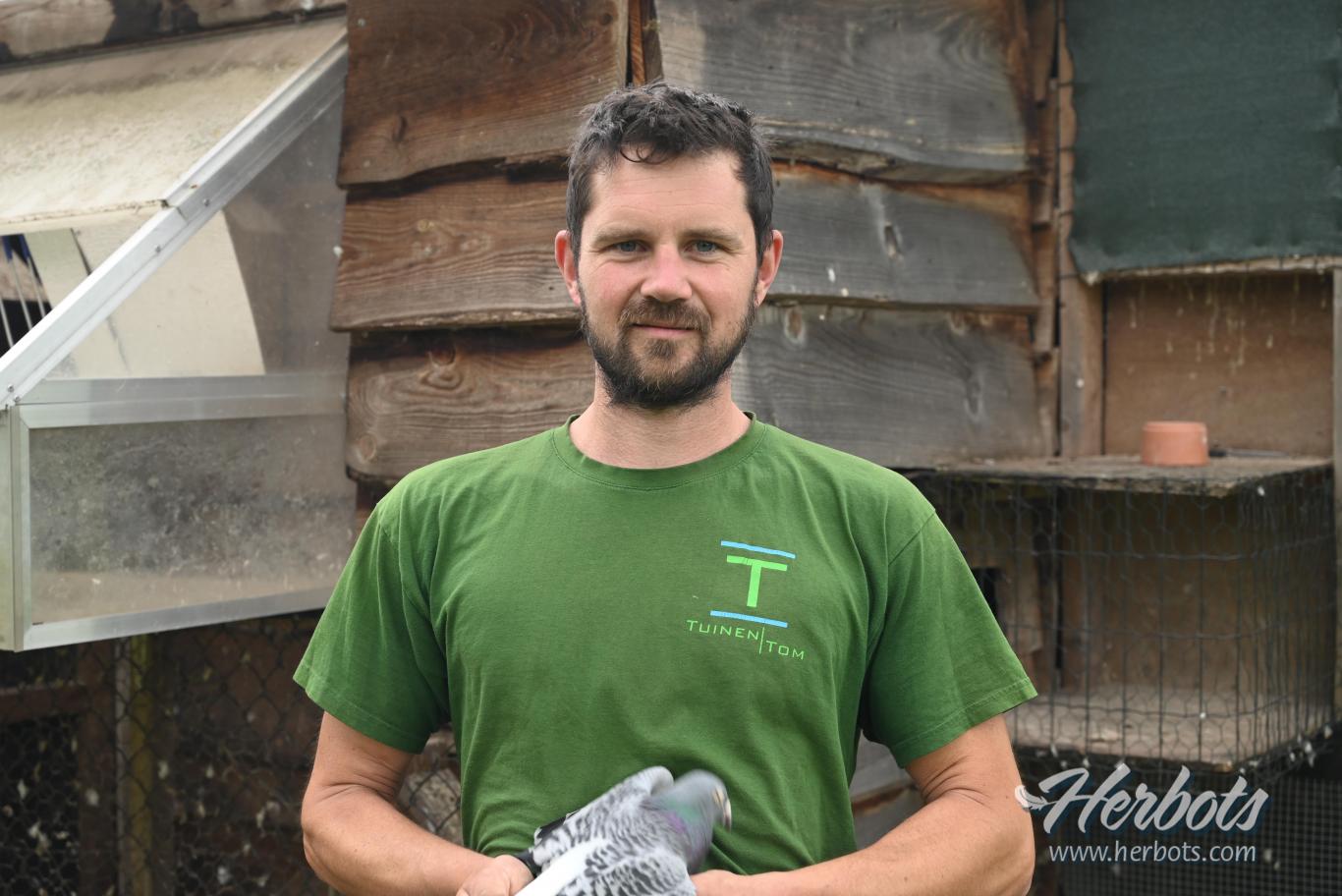
The power of youth enabled Tom Van de Berghe to strike again, this time at provincial level in a national race. Tom does not hide anything and tells it exactly as it is… up to now, the racing season had not gone as he had hoped. The first races had been very promising, producing top performances and first prizes, but in the first national race of the 2026 season from Bourges, the results were very disappointing. Tom thought, “Everyone can have one bad race.” However, when the following race also failed to produce the desired result, the alarm bells started ringing. Veterinarian Van der Cruyssen was consulted and diagnosed a severe trichomoniasis infection. Tom first had to clear all his pigeons of trichomoniasis with Flagyl, followed by a three-day treatment against ornithosis. And… Tom had made up his mind not to rush things. Instead, he allowed his team of hens to regain their confidence in the sprint races, and only when they showed at that level that they were once again eager to race at the very front of the results did he enter them in a national race. In other words… Sancoins was their first national race after their “rehabilitation”, and it immediately turned into a great success. At provincial level, against 3,091 yearlings, they won 1st and 2nd prize, but what makes the story even more remarkable is that these two yearling hens were also the two fastest pigeons among all 5,052 Sancoins competitors. The provincial winner was BE25-4023179. She won with an average speed of 1,343.81 m/min.
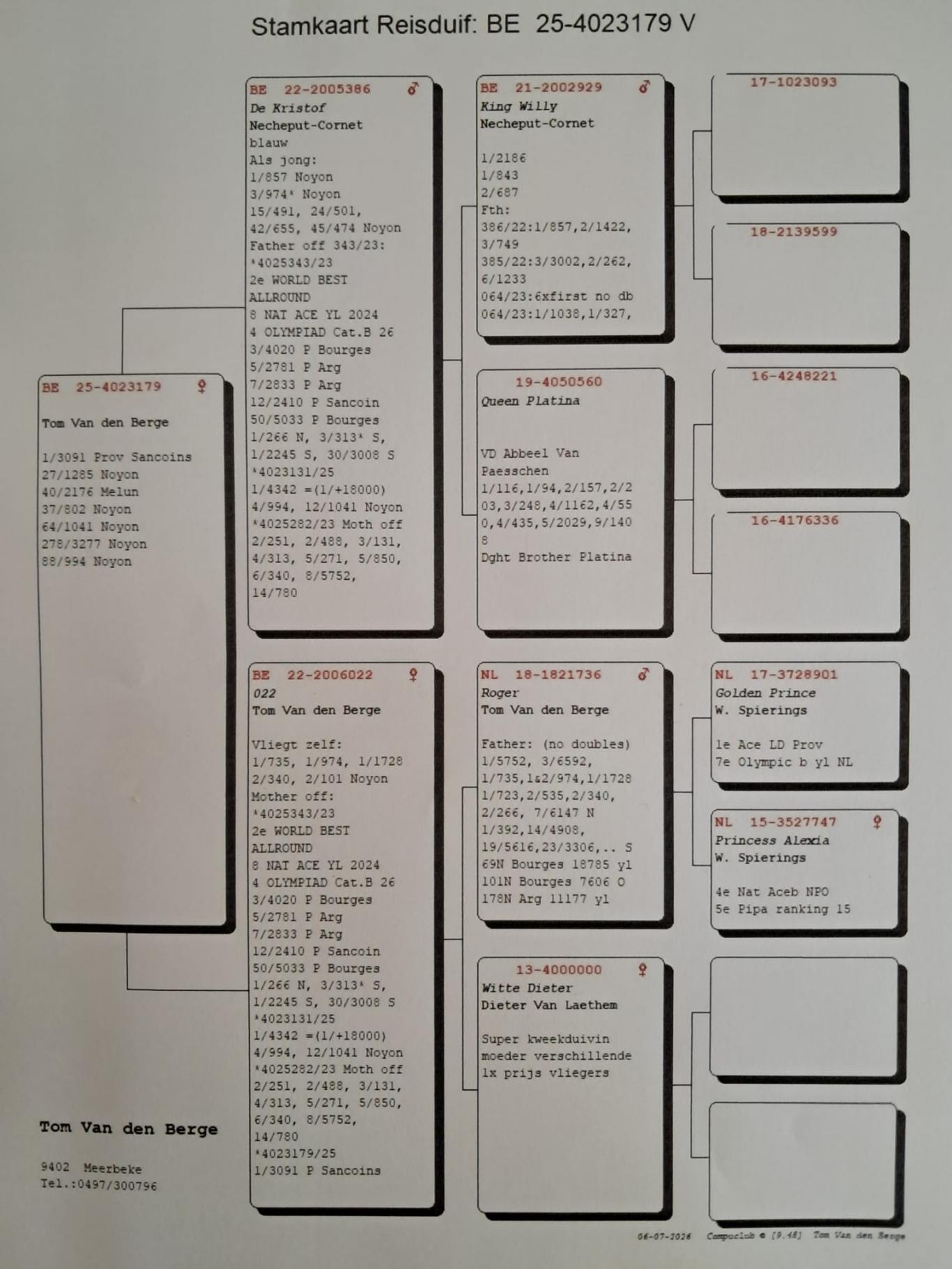
Was the provincial winner highly motivated? “Well,” says Tom, “she had found herself a new partner. A cock that had lost his hen immediately took a liking to her, and by now we all know that a new love can lead to outstanding performances.”
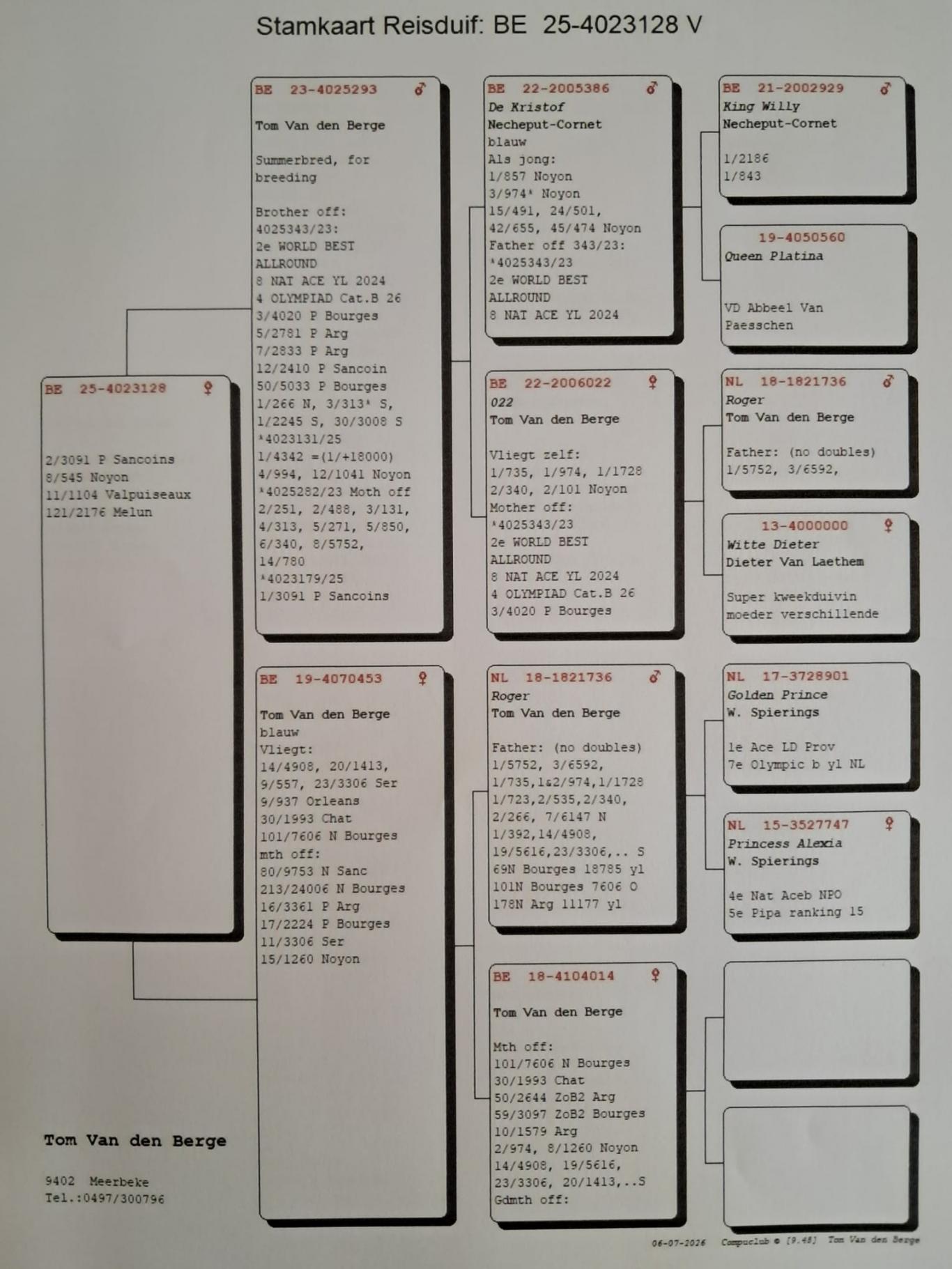
Exactly 1 minute and 16 seconds later, hen BE25-4023128 was clocked, winning 2nd Provincial prize behind her loftmate.
Racing with hens only
Tom (born in 1987) is a self-employed landscape gardener, which means there is very little free time. His working day starts early and an extra hour of work never bothers him. But everyone needs a way to relax, and Tom finds that relaxation in the pigeon sport we all love so much. Those who know Tom know that he never does things by halves. That is why he chose to focus exclusively on racing with hens. There are no widowhood cocks here, while the youngsters are simply given an excellent education. A few sprint races and, if possible, a few middle-distance races are the only racing experience they gain during their first year of life. Tom started the 2026 season with a team of 35 hens (old birds and yearlings). For this group of hens, he keeps 17 cocks.
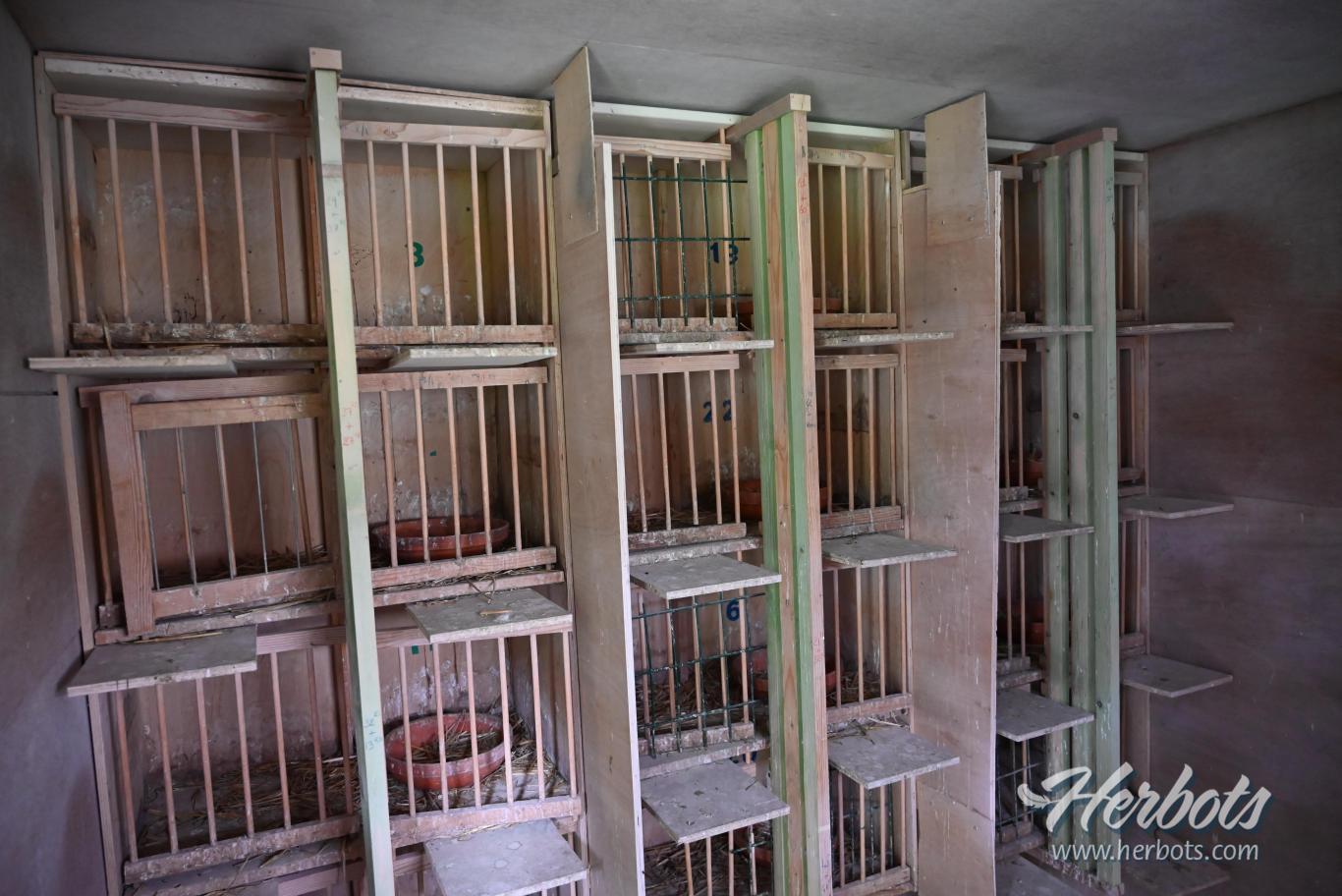
Part of the hens are paired early and are allowed to rear a round of youngsters, while the other group does not see a cock during the spring. The first time this second group of hens sees a cock is during the first training tosses. For them, everything is still new. The cock is confined in a nest box, and in front of the box are two small landing boards separated by a divider. The fact that the hens from this second group are still searching for a partner and move from one place to another provides extra motivation for the hens that have already bred youngsters. On the other hand, when one of the hens from the second group finally finds the love of her life, that also becomes an extra source of motivation.
“My hens train at 6 a.m.,” Tom begins. “So far, they train easily for one hour and sometimes even for one hour and twenty minutes, all on their own initiative. I really don't need a flag to keep them flying. When, as a fancier, you see this kind of training behaviour, you always go to bed with peace of mind. Around 6 p.m. they have their second training session of the day. The hens are therefore fed twice a day. I use the Beyers mixtures (Vandenabeele, Sport Light and Galaxy Energy), as well as all Beyers supplements. Actually, it’s very easy to explain… just take the Beyers promotional brochure and you have my entire system. I literally copy and paste it.
The racing hens are taken for a training toss once a week at 27 km. One week I drive them myself, the next week my friend Dieter Van Laethem takes care of it. During that time, the cocks remain locked in their nest boxes and, upon returning home, the hens are allowed to admire their cock behind the bars for about fifteen minutes. On basketing day they no longer see their cock and are taken straight from the loft. When the hens return from a national race, they are allowed about fifteen minutes of half-box contact with their cock before being moved back to the hens' section. The following day, once they have fully recovered, they are allowed to spend one full hour with their cock. This is done one by one so that each hen enjoys a full hour alone with her partner.
Tom, on behalf of the entire Herbots team, congratulations on this provincial victory and we wish you many more successes in the future.

Stefan Mertens