Part 1 - In conversation with living legend Hans Eijerkamp
04 May 2026
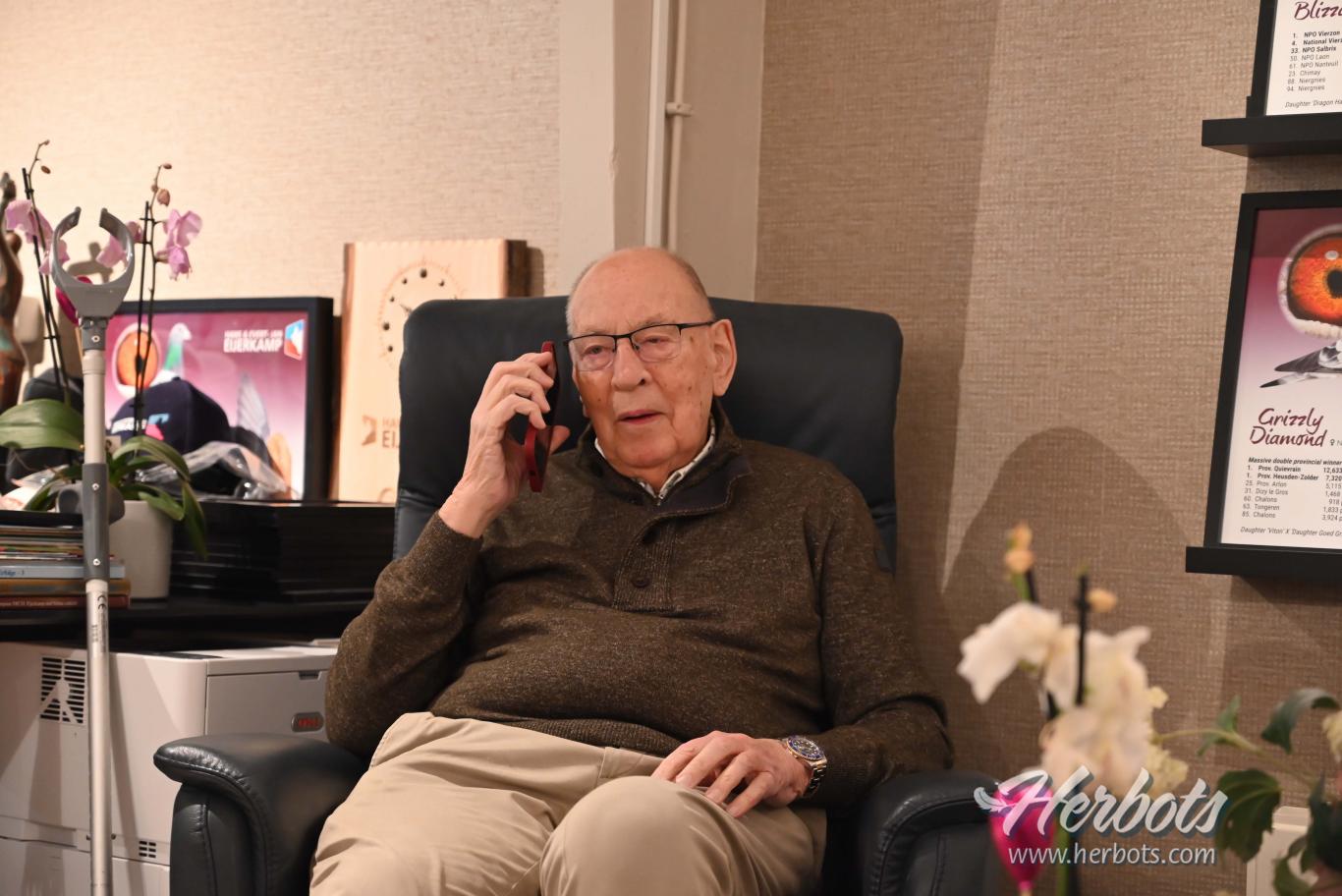
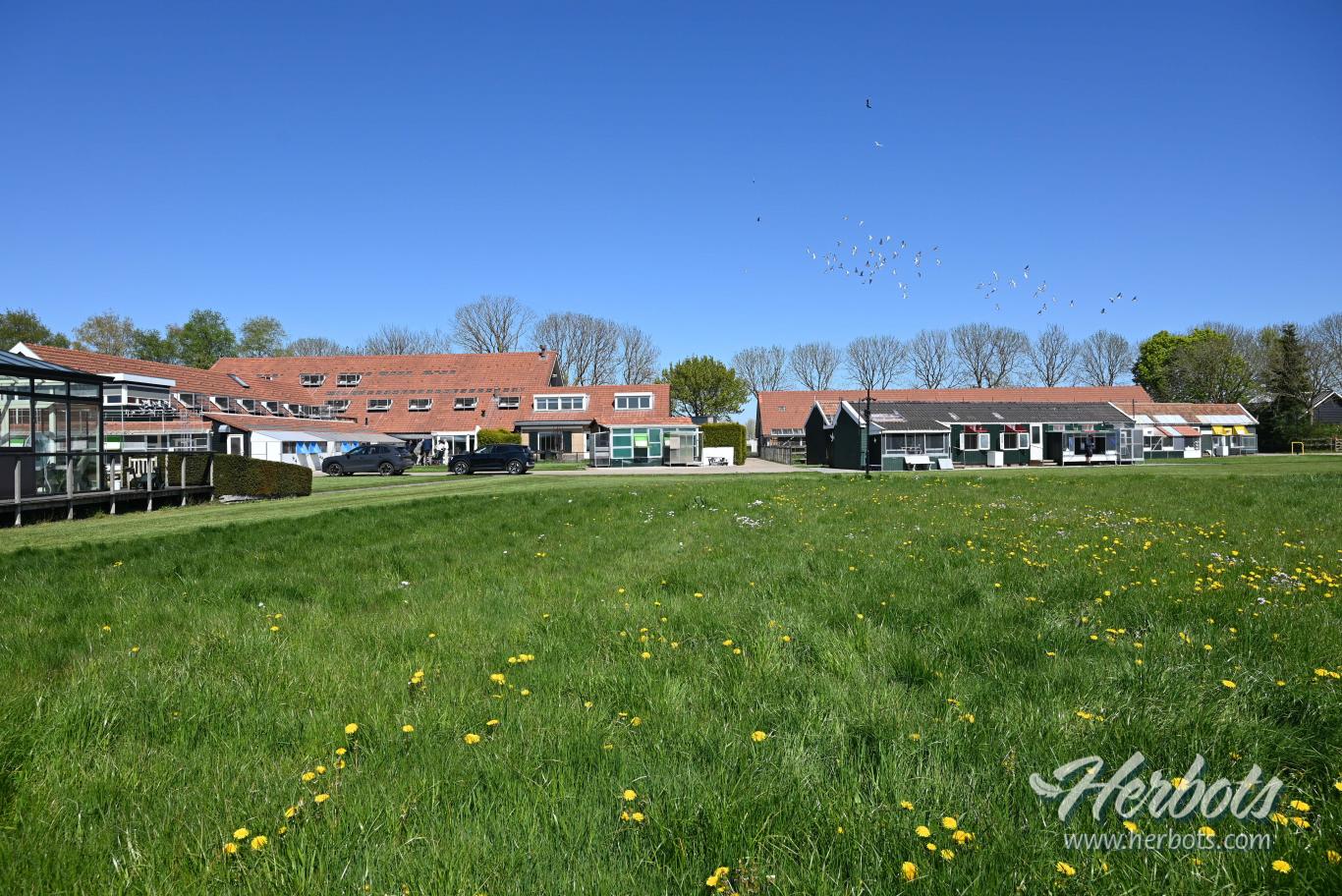
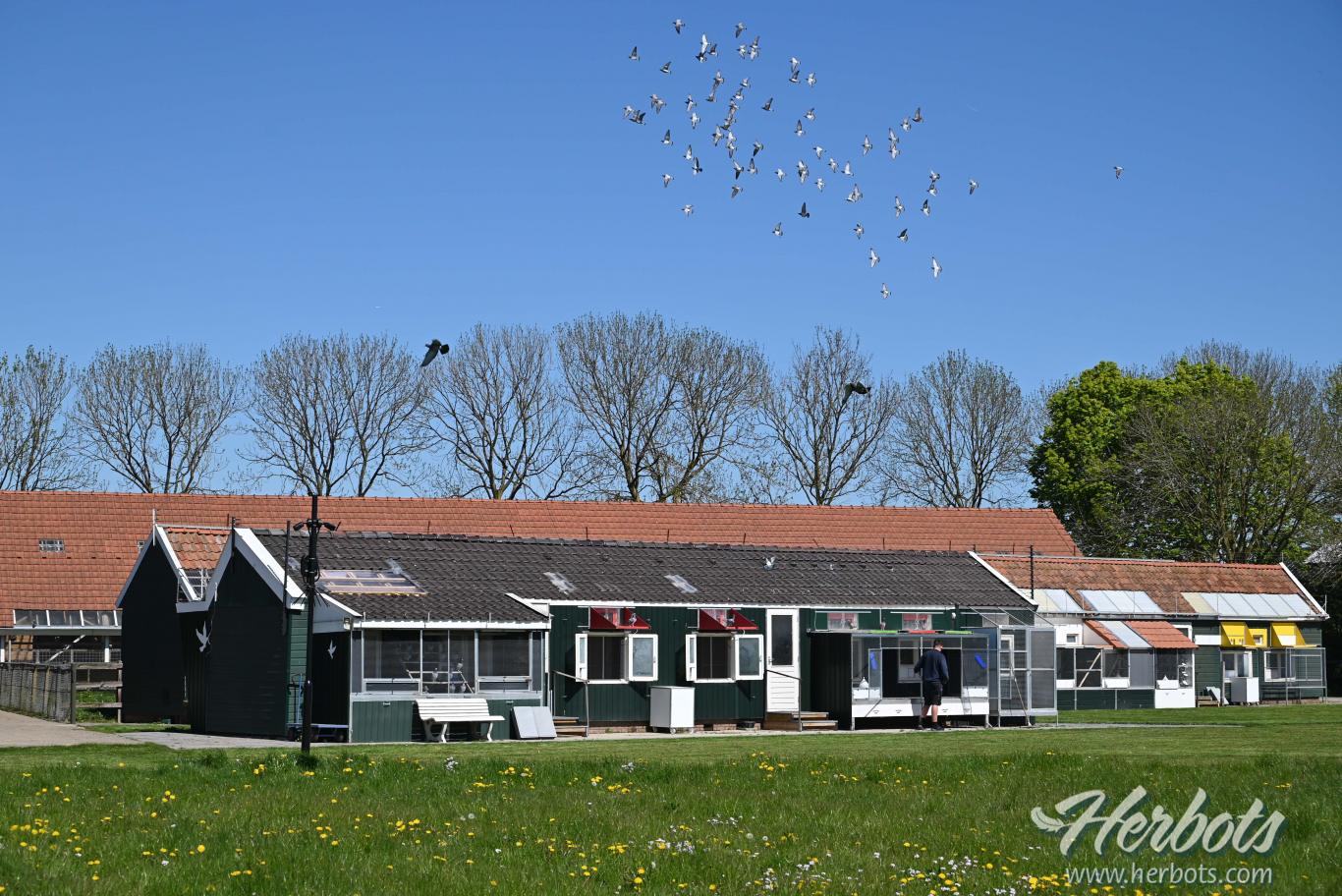
Together with Miet and Jo Herbots, we headed to Brummen to visit living legend and international pigeon icon Hans Eijerkamp.
Hans runs “Greenfield Stud” together with his son Evert-Jan, where phenomenal top performances have been recorded for decades.
The purpose of our visit was to browse through Hans’s “collection of stories.”
We were looking for stories about and with Hans that have not yet been written down.
This report will be published online in two parts.
Rhetorician
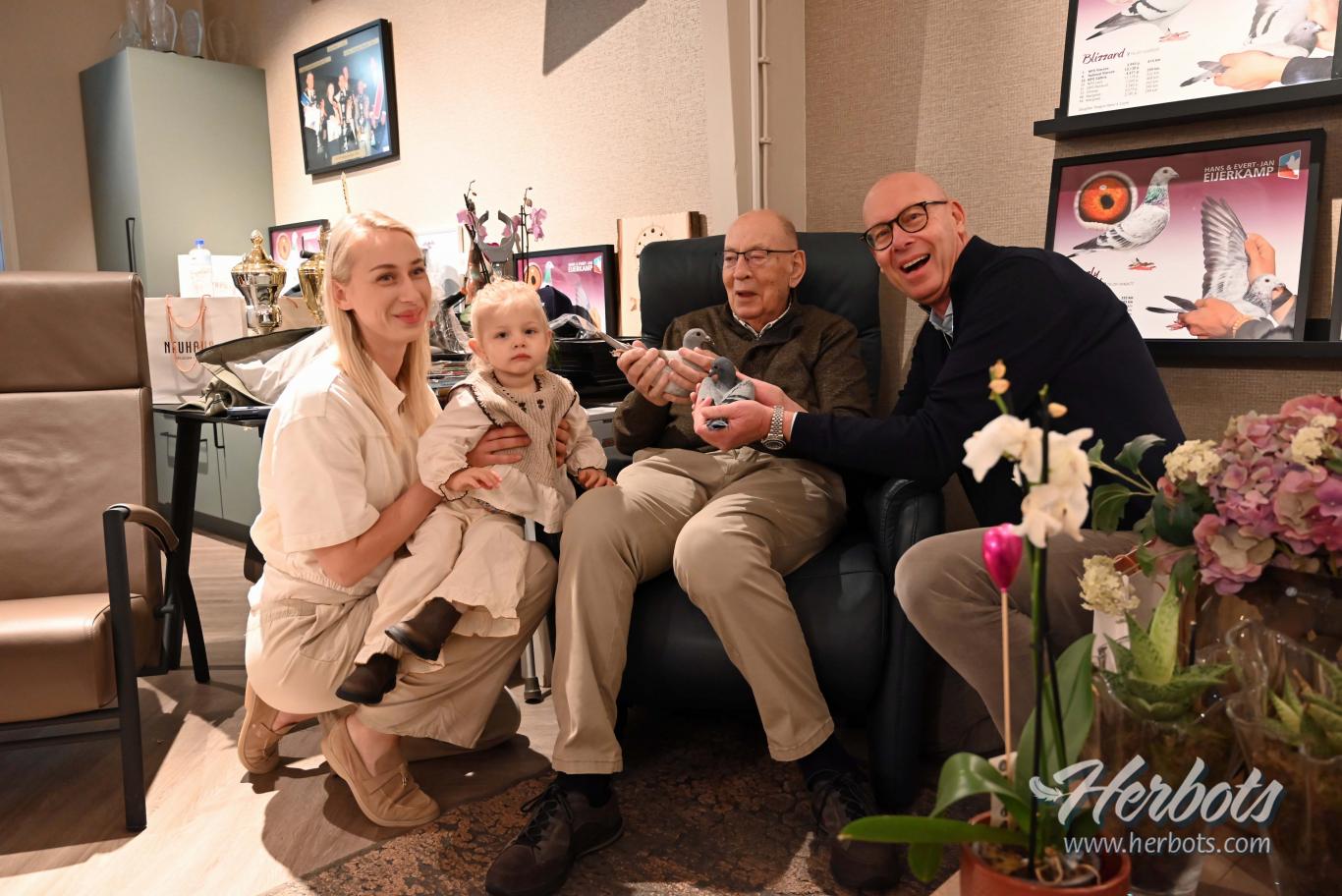
The apple doesn’t fall far from the tree, and both Hans and Evert-Jan master the art of rhetoric. Both are exceptional speakers who command the five basic skills: “inventio” (knowledge of the subject), “dispositio” (a logical storyline), “elocutio” (a flawless style), “memoria” (the art of telling anecdotes), and “actio” (conviction in the delivery). When Hans and Evert-Jan tell their story, it becomes completely silent; they have everyone’s attention, and there is no doubt that many stories were told during our visit to “Greenfield Stud.” Stories that always contain a message or a “lesson to be learned.” Hans is currently still recovering from a major operation on both knees, but thanks to the help of his son Evert-Jan and granddaughter Fleur, he has comfortably settled into “his armchair.” An armchair positioned in a central place in the beautiful VIP room—this is the space where all visitors are received, a room where dozens of trophies and diplomas can be admired, a room that breathes pigeon sport and where the great class of so many well-known “Eijerkamp pigeons” makes visiting enthusiasts’ hearts beat faster. Hans and pigeons… when his son Evert-Jan places a 30-day-old youngster (a joint breeding with the Herbots family from “White Man” x “Daughter Zoë”) in his hands, you can immediately see the sparkle in his eyes. It is wonderful to see how the 91-year-old, passionate Hans, with 75 years of pigeon experience, judges the quality of the presented pigeon within a few seconds. In a similar and equally refined manner as his great example and mentor, the late Piet de Weerd, Hans delivers his “judgment” on this young grey pigeon. Only when this youngster makes a good “first impression” and has the desired appearance and qualities (soft, silky plumage, good muscles) does he look at the pedigree. Hans is impressed by the result of this joint breeding… and the youngster in question receives a “pollice compresso” (the sign for mercy in the time of the Roman emperors)… “this one will be for our breeding loft,” he says to his son. Correctly evaluating pigeons is an art that few among us truly master.
The “Fingerspitzengefühl” needed to judge pigeons is a quality many claim to possess, but few master as Hans Eijerkamp does. “No one really knows it,” he apologizes to us, but we know better. Hans may say he doesn’t know it, but I certainly wouldn’t let him choose from your loft—because he would undoubtedly walk away with your very best pigeons.
Always try to stay at the front…
As a visitor, you can feel within just a few minutes that a well-thought-out strategy lies behind this “Eijerkamp pigeon empire.” Nothing is done hastily here; no impulsive decisions are made, and tasks and responsibilities are clearly set out on paper.Hans and Evert-Jan are masters of “leading by example.”
Their own dedication, knowledge, and life experience are generously shared with their employees, ensuring that everyone remains motivated to make the Eijerkamp name world-famous.There are no secrets between them, and everyone is fully supported in achieving their goals.
“One team, same target — united to succeed.”
1950
Hans takes a sip from his bottle of sparkling water, picks up a black notebook, takes a deep breath, and begins his story. “In 1950, I started with pigeons. At first, I had chickens, and they obeyed perfectly. I could line them up, and when I called one of them forward by name, only that chicken would step forward. With that act, I could have performed in the circus, so to speak. But a neighbor raced pigeons, and that fascinated me more. Pigeon racing captured my heart. The various odd jobs I did as a young boy brought in some guilders, which allowed me to buy feed from the miller. With five young pigeons, I took part in my first races, and the Dutch pigeon federation had gained a new fancier. My father, Evert-Jan Senior, had opened his own mattress factory in Zutphen in 1928, and it was only natural that I helped out in the business. Things went very well, and in 1962 we even opened a second furniture store.”
In addition to the business side, there was also the ambition to make the Eijerkamp name famous in pigeon racing, and Hans quickly realized it… “We need to go to the Janssen Brothers in Arendonk,” he told his father, and the long journey to Arendonk was made. Hans thought he would return home with a few pigeons, but that was not how the brothers’ sales strategy worked. When he asked if he could call to find out when he could pick up youngsters, Hans was told “no.”
“Then give me your phone number, and I’ll call myself”… but again, the brothers answered “no.” “What now?” Hans thought to himself. He took another sip of the lemonade he had been offered (from a bottle, not a glass), gathered his best “Dutch charm,” and addressed the lady of the house. She gave in and handed Hans the phone number. “I must have called at least 15 times before I could return to Schoolstraat to pick up newly ringed young pigeons,” Hans continues his story. “When I wanted to pay, they only accepted cash, and the shutter of the street-facing window was first pulled down so the neighbors couldn’t see it. These purchases later turned out to be the most successful investment I ever made,” Hans says with a touch of nostalgia in his voice. “The Janssen pigeons lived up to expectations, and the results made an impression throughout the Netherlands.”
Furniture pigeons
We can already tell you that you won’t find this word in the dictionary— even ChatGPT doesn’t know what to make of it—yet it is the word that perfectly captures what the Eijerkamp family owes its success to, both in business and in pigeon racing. “Furniture pigeons”… no, they are not pigeons that no longer perform and are only kept “for decoration” in the loft—like furniture in a house. Rather, it is a brilliant commercial move by the Eijerkamp family that has paid off tremendously. “We owe everything to our ‘Furniture Pigeons,’” Hans begins his next story. “The idea came about when a fancier from Nijmegen came to buy furniture together with his wife. We’re talking about the year 1966. He had bought new furniture worth several thousand guilders, and before we could finalize the deal, he said, ‘We’ll only buy this furniture if I also get a few young pigeons with it.’ I didn’t hesitate for a second, and when those people left the shop, I thought to myself: that’s it… all those fanciers in the Netherlands… I’m going to start a promotion where, for every 1,000 guilders spent on furniture, they can choose a young pigeon. Believe it or not, we were amazed by the success of this campaign. A year later, we made another golden move. All those pigeon fanciers also have a brother, sister, or cousin, and when buying furniture, they could mention the name of their pigeon-loving friend. All fanciers in the Netherlands encouraged their relatives to come and buy furniture from us. It became a huge success. ‘Would this also work in Germany?’ was brought up during a brainstorming session, and it was decided to place pigeons on display at a major furniture fair in Germany to promote our campaign. ‘Bull’s eye’… a perfect hit… I still remember a German customer who wanted to take full advantage of the promotion. His wife chose furniture worth 6,000 guilders, and the man replied… “Aber für 6000 Gulden Möbel ausgesucht. Das ist viel zu wenig, geh ruhig noch einmal richtig im Geschäft schauen.“ “Experiences like that, you never forget.” Meanwhile, the story of the “Furniture Pigeons” has become a thing of the past, as it got a bit out of hand. When Hans discovered that the vouchers for “Furniture Pigeons” were being resold and that some fanciers were becoming demanding about which pigeon they received, it was wisely decided to quietly discontinue the concept. And so Hans still had many wonderful stories to tell—stories that always showed how thoughtfully he approached everything. One more example… when Hans visited people at home to sell new furniture, he would first carefully look around, and if he saw a photo of the children, he would address the mother and ask how old they were. Afterwards, he would examine the sofas, inspect them from all sides, and say, “those pieces of furniture are that old and due for replacement.” People couldn’t believe that Hans could estimate the age of their furniture so accurately. His trick… ask the age of the children and then add a year. That wouldn’t work today, but it did in the past. Back then, people bought furniture when they moved in together, and a year later, children would arrive. So Hans constantly applied the art of rhetoric, using it every second, and in this way, he sold furniture in a fair and proper manner. “Honesty is very important,” he emphasizes. “Those who act honestly will not go bankrupt easily. Honesty is appreciated by everyone, and the saying ‘honesty lasts the longest’ is something every businessman should write on the door of his office.”
1971.. Olympiad Brussels
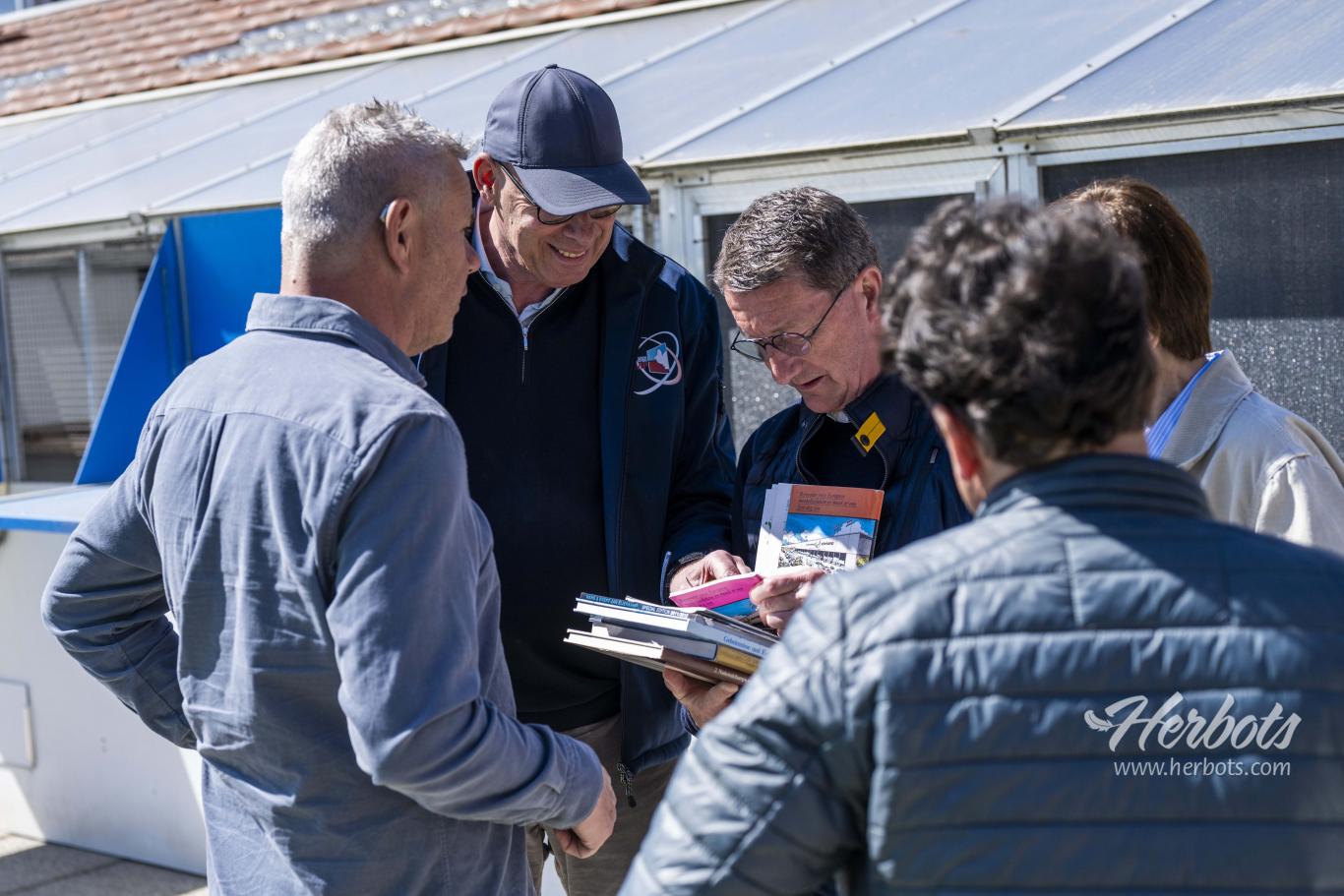
The first “pigeon highlight” of the Eijerkamp family. Their “Bange van 67” (NL67-1328552) was selected to represent the Netherlands at the Pigeon Olympiad in Brussels. “We had a buyer from the USA who put a blank check on the table to buy the ‘Bange van 67.’ Fortunately, we refused at the time, because he became a top breeder. Even today, we still find his ring number in the pedigrees of our current champions. Once again, the commercial aspect was linked to pigeon racing, and Hans was present at a fair where both pigeons and furniture were exhibited. “Believe it or not, that’s where we first met Eric Limbourg,” Hans says. “Eric was there with his parents, and I can still hear him telling them… buy furniture so I can also get free pigeons. That story came up again later when we purchased the ‘Geeloger.’ Eric also remembered it very well.”
Evert-Jan takes over the conversation: “Both my brother, the late Martin (who passed away at the age of 20 in 1990), and I were crazy about pigeons. In the 1970s and ’80s, we traveled with our father to visit many well-known fanciers in the Netherlands, but especially in Belgium. Belgium is and remains the cradle of pigeon racing. Thanks to your racing system, you have developed true specialists in Belgium for every distance (sprint, middle distance, long distance). As a result, everyone continues to perform at the highest level, no mistakes can be made, and the standard keeps rising higher and higher. That, in our opinion, is the strength of Belgian pigeons. But let’s go back to the many visits. I don’t think you can name a top fancier we didn’t visit, and everywhere we went, we observed and learned. For example, at Vanhee’s, we saw that he raced young cocks on widowhood—this was back in 1974. And we will also never forget our visits to Jan Grondelaers, Tournier, Cobut Raymond, and Raoul Verstraete. Another little trick we always used during our visits was that, as young boys, when we went to the lofts, we would lightly tap against the drinking pot. Our father would immediately apologize for the misbehavior of his sons, but in the meantime, we could see the color of the drinking water and ask questions about it. We used the same trick at Raoul Verstraete’s, but there the drinking pot turned out to be empty. We asked Raoul why it was empty, and he replied… these are pigeons raced on long-distance events. During transport, they also go without water for several hours, so they are already somewhat accustomed to it. We are talking about the year 1977.”
As the “Furniture Pigeons” concept had run its course, we started looking for a new challenge to bring fanciers together, and that’s when the breeding station “Ponderosa Green Field Stud”—here at the same location where we are now—was founded. The formula was simple… we purchased top pigeons and birds from well-known fanciers, and the youngsters bred from them were sold. It became a tremendous success—so much so that we even linked a championship to it. Even today, fanciers still talk about these unique championship days, and you can still see the diplomas from our competitions hanging in their living rooms. We made it a point to make our championship days “unforgettable.” We were, so to speak, only truly satisfied when the fancier’s wife shed a tear of pride and joy as her partner was being honored. Many beautiful prizes were awarded, with a car as the top prize. One of those cars was won by the young Bas Verkerk (then still racing in Alphen aan den Rijn). We spoke with Bas many times afterwards, and we could sense that he was a special young man—someone who thinks and lives like a pigeon. When he asked us for advice on becoming a “pigeon professional,” we fully supported him in that decision.
To be continued